Global Issues
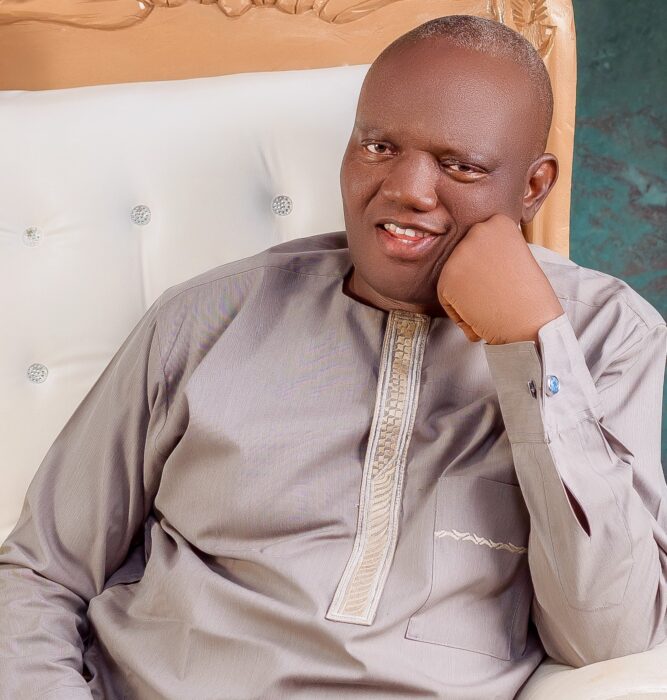
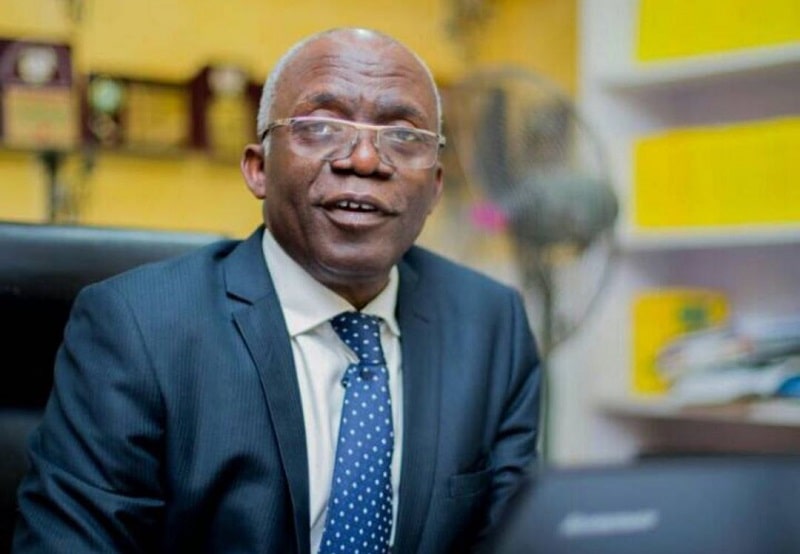
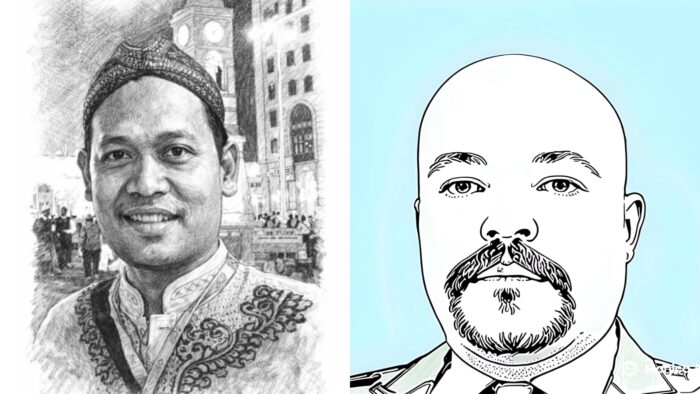
Reading Global Conflict through the Lens of Islam and Political Theory -By Moh. Ja’far Sodiq Maksum & Edy Rudyanto
Ultimately, the world needs a redefinition of power, not as an instrument of superiority, but as a trust to uphold justice and compassion. In Islamic language, power is a means to realize rahmatan lil ‘alamin. In political theory, it is a contract to protect fundamental human rights. Without this foundation, power is nothing more than tyranny waiting to collapse under the weight of its own contradictions.

Power has always had two faces: it can serve as an instrument of justice, yet it can also transform into a tool of oppression. In modern political thought, Lord Acton famously warned that “power tends to corrupt, and absolute power corrupts absolutely.” This statement is not merely a historical reflection, but a moral warning that power without ethical limits inevitably produces tyranny. In today’s global context, this warning feels increasingly relevant as the exercise of power often disregards fundamental human rights and the sovereignty of nations.
From an Islamic perspective, power is never value-neutral. It is a trust (amanah) rooted in divine attributes, particularly Ar-Rahman (The Most Compassionate). This concept affirms that the legitimacy of power is not determined solely by formal procedures, but by its capacity to embody compassion and justice. Within this framework, humans as khalifah fil ardh (vicegerents on earth) are not merely rulers, but guardians of moral and social balance.
When examined through modern political theory, this idea resonates strongly with social contract theory. Thomas Hobbes, in Leviathan (1651), viewed the state as a product of agreement to escape the chaotic “state of nature.” However, Hobbes tended to justify absolute power in the name of stability. In contrast, John Locke argued that the primary purpose of the state is to protect fundamental rights: life, liberty, and property. According to Locke, when the state fails to fulfill this role, the people have the right to resist.
Locke’s view is further reinforced by Jean-Jacques Rousseau, who radically positioned sovereignty in the hands of the people rather than rulers or political elites. In his seminal work Du Contrat Social (1762), Rousseau asserted that the legitimacy of the state arises from the general will, the collective will that reflects the common good, not merely the aggregation of individual or dominant group interests. The general will is not a manipulable majority opinion, but a moral-political expression of collective justice. Thus, the state must not become an instrument of a select few, but must function as an authentic representation of the people’s aspirations oriented toward substantive justice.
The implications of this perspective are profound: when the state deviates from the general will and fails to protect fundamental rights, its moral legitimacy collapses. At this point, there is a clear intersection between social contract theory and Islamic principles. Both regard power as a trust that must be accounted for, not as an unlimited and absolute right. Power must be subject to the protection of fundamental human rights, whether articulated in Western tradition as natural rights, or in Islam as part of the objectives of the law (maqashid al-shari’ah). The common thread is clear: legitimate power is not the strongest, but the one most capable of preserving human dignity and justice.
In Islam, this principle is systematically articulated through the concept of maqashid al-shari’ah, which prioritizes the protection of religion, life, intellect, lineage, and property. Abu Ishaq al-Shatibi, in Al-Muwafaqat, emphasized that all legal instruments in Islam ultimately aim to safeguard human welfare. In this sense, power that fails to protect these five essential elements loses its moral legitimacy.
This principle of protection also underpins the Islamic concept of war. Unlike the classical realist paradigm in international relations, articulated by Hans Morgenthau, which views power as the primary objective of politics, Islam regards war as a last resort and fundamentally defensive in nature. Historical evidence shows that early Islamic battles, such as Badr and Uhud, were responses to existential threats rather than acts of aggressive expansion.
In the context of modern geopolitics, questions about the legitimacy of violence continue to arise. Data from the Stockholm International Peace Research Institute (SIPRI) indicates that global military spending exceeded USD 2.2 trillion in 2023, with the largest share concentrated among major powers. This fact suggests that global politics is still dominated by the logic of power rather than justice.
Historical patterns of military intervention further reinforce this concern. The cases of Muammar Gaddafi in Libya (2011) and Saddam Hussein in Iraq (2003) are often cited as examples of how external interventions can lead to prolonged instability. A report by the Brown University Watson Institute for International and Public Affairs through its Costs of War Project notes that the Iraq War alone resulted in hundreds of thousands of civilian deaths and costs exceeding USD 2 trillion. These findings strengthen critiques of interventions often justified in the name of democracy but resulting in humanitarian crises.
Within this framework, some analysts interpret Iran’s responses in certain conflict episodes as acts of self-defense. From the perspective of international law, Article 51 of the Charter of the United Nations explicitly recognizes the right of states to defend themselves when attacked. If military action is undertaken in response to a real threat to sovereignty, it may be understood within a defensive framework, provided it adheres to principles of proportionality and civilian protection.
Nevertheless, it is crucial to emphasize that no exercise of power is exempt from ethical limits. Even in warfare, Islam prohibits the killing of non-combatants, environmental destruction, and excess. This demonstrates that self-defense is not a license for uncontrolled violence, but an action bounded by humanitarian principles.
At this juncture, we observe a strong convergence between Islamic political ethics and modern political theory: the legitimacy of power is not measured by its coercive capacity, but by its ability to protect and guarantee fundamental human rights. In Islam, power is a trust that must realize justice (al-‘adl) and welfare (maslahah), while in social contract theory, the state derives legitimacy from its commitment to safeguarding citizens’ rights. Thus, both frameworks bind power to a moral responsibility to protect, not merely to control.
Conversely, when power shifts into an instrument of expansion, domination, and hegemony, it simultaneously loses its ethical foundation. In Islamic terms, such actions contradict the principle of rahmatan lil ‘alamin (mercy to all creation), which places compassion at the center of social life. In political philosophy, such deviation represents a breach of the social contract that underpins the state itself. Power that no longer protects but oppresses is, in essence, dismantling its own legitimacy, and in the long run, paving the way for resistance, delegitimization, and even inevitable political collapse.
As Michel Foucault reminds us, power operates not only through violence but also through discourse that shapes perceptions of truth. Therefore, narratives of “stability,” “security,” or “democracy” must always be critically examined: do they truly protect humanity, or do they serve as new justifications for domination?
Ultimately, the world needs a redefinition of power, not as an instrument of superiority, but as a trust to uphold justice and compassion. In Islamic language, power is a means to realize rahmatan lil ‘alamin. In political theory, it is a contract to protect fundamental human rights. Without this foundation, power is nothing more than tyranny waiting to collapse under the weight of its own contradictions.
Moh. Ja’far Sodiq Maksum & Edy Rudyanto
Doctoral Students in Law, Universitas 17 Agustus 1945 Surabaya