
Forgotten Dairies
The Failure of Humanity: How Syria Exposed the Collapse of International Law -By Fransiscus Nanga Roka, Eka Marini
Syria is not just a reminder but also proof. When international law fails, the happening of unspeakable atrocities turns into a enablement of them. The world cannot be seen as standing by and certainly not standing apart.

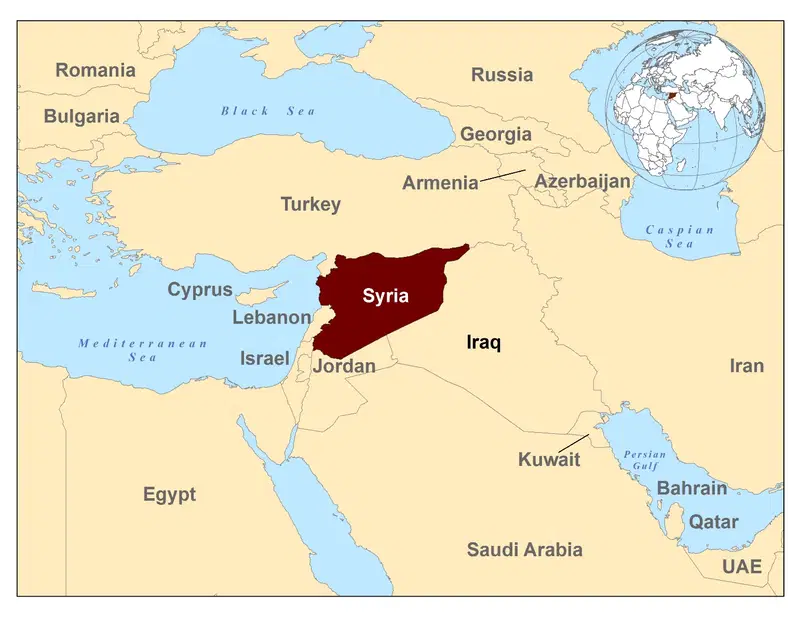
It is beyond all reasonable doubt that the Syrian war is more than just a horror on the scale of violence. In the modern era, it is harsh criticism of international law. One condition of the international legal order that took form on the debris of World War II and that guaranteed that genocide represented “never again” was relatively conditional, selective and dependent on the balance of power. A decade after its emergence, Syria showed this miserable reality to the world. What began in 2011 as a popular uprising for dignity and political reform quickly took on a nightmarish mien. The Syrian government met peaceful manifestations with brute force, turning civic activism into military struggle.Yet the real collapse was not on the streets of Syria but in the corridors of world diplomacy. The world was watching, discussing and deferring. And in that delay, the law gave way to impunity. International law is founded on some basic principles: protection of civilians, no chemical warfare and accountability for war crimes. In Syria, all these principles have been systematically violated. Barrel bombs obliterated neighborhoods and residential areas. Hospitals were transformed into battlegrounds. Civilians were surrounded, starved and driven from their’means of livelihood. Allegations of chemical attacks not only appalled the conscience of the world if only for a moment but also became further proof of global impotence.And then? No justice to be seen, just paralysis. The Security Council of the United Nations, which is charged with an obligation to preserve the peace and has the power itself to do so, came to a stage where everything went wrong. Veto power which was intended to ward off world conflict suddenly became a means for evading responsibility. Resolutions lagged. Investigations were watered down. Enforcement mechanisms disappeared. What emerged was not impartiality, but acquiescence. This is the hard truth: international law didn’t fail in Syria because it was uncertain; it failed for lack of will. Law without enforcement is not law but just a fine pious wish. And pious wishes don’t stop missiles.
As war in Syria raged, a deeper division was laid bare: selective humanitarianism. Swift intervention in cases where interests align, and non intervention where they do not. The once vaunted deterrence of the Responsibility to Protect Doctrine had emerged as a political negotiation. While debate raged over how to adhere the principles of this protection, in Syria they were violated one by one. The doctrinal gap widened into an unbridgeable gulf.
On the one hand, major powers turned Syria into a cockpit of influence. A national crisis was transformed into a proxy war by divergent interventions, military, strategic and ideological. Terrorism and sovereignty were invoked to defend or rationalize inaction rather than to protect civilians. Thus in this geopolitical arithmetic Syria, displacing Iraqi lives as a disposable variable, was defined as expendable.
It’s hard to grasp that Syria today has brought us to this pass. Hundreds of thousands lay dead. Millions have been uprooted. An entire generation is scarred. Cities are masses of ruins. But beyond the toll in human life, an even more lasting damage has been inflicted: belief in the international system itself has crumbled away. If the law cannot protect the weakest in the most extreme circumstances, what is its purpose?
Syria has stretched the limits: here is a lesson that norms can be violated with impunity, institutions bypassed no penalty attached, and power prevail over principle so easily. This is not only a Syrian crisis, but one for the entire system.
What lies ahead for the international community is an inconvenient truth: reform can no longer be swept under the carpet. The veto power should therefore be revived and subject to new scrutiny where massive crimes are involved. Independent culpability mechanisms must be given more prominence with effort made to prevent political interference. Universal jurisdiction needs to be expanded so that it applies fairly across the board. And most of all, let there be a restoration of the conviction that human rights are not negotiable.
But political will is not enough by itself to reform. Syria’s failure was not only a failure of law, it was a failure of human beings. It was a failure to act. to weigh priorities correctly. to give value to human lives over national interests. It was a dereliction of the very values that the international system professes to uphold.
The world often wonders why such events can occur at all. Syria provides a chilling answer: they happen when law is a theory but not practised, when institutions have no authority, and when neutrality is confused with silence.
Syria is not just a reminder but also proof. When international law fails, the happening of unspeakable atrocities turns into a enablement of them. The world cannot be seen as standing by and certainly not standing apart.
If “never again” is to have any meaning, it should start with Syria. Not only as memory of what happened, but as the voice accountability for those responsible.
Fransiscus Nanga Roka, Eka Marini
Faculty of Law University 17 August 1945 Surabaya Indonesia
























You must be logged in to post a comment Login