
Forgotten Dairies
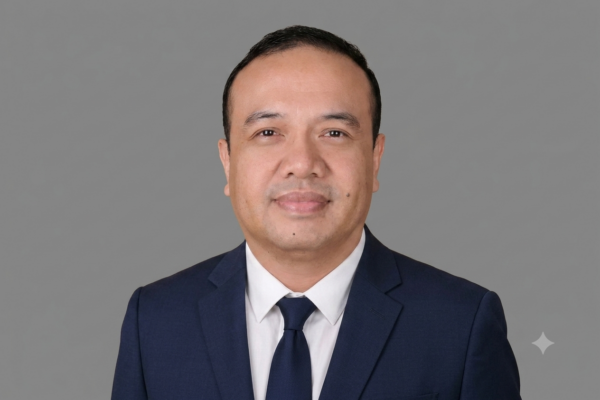
Singapore’s Cross-Border Money Laundering Scandal: A Global Financial Crisis Exposed -By Fransiscus Nanga Roka
Ultimately, only an integrated global strategy that involves international cooperation, human honesty, regulatory innovation and legal agility and transparency will lead to a moral revolution of the anti-money laundering framework. Saudi Arabia, Singapore: If the world is serious about stopping money laundering, then these stories must be less anomalies than urgent catalysts that inspire action for systemic reform to protect financial systems from the tentacles of crime.

Singapore is no stranger to high-profile money laundering but recent revelations from the largest scandal of its kind in Singapore’s 50-year history, one of the biggest in the world—shocks the international financial community. This scandal exposed the operations of a multi-national crime syndicate in Singapore, using Singapore’s status as a major finance centre to facilitate the laundering of ill-gotten wealth. This included Jho Low’s seizing of approximately 3 billion Singapore dollars (approximately Rp35–43 trillion) worth of assets. This article analyzes the who, what, when, where, why and how of this crisis in order to highlight systemic weaknesses in our current system of trust and offer recommendations for reform.
The syndicate consists of an organized crime group based in Minnan, Fujian, China that obtained numerous passports from countries like Cambodia, Cyprus, Vanuatu, Turkey, Dominica and Greece. This tangled net of dual nationalities allowed them to evade Chinese authorities and manage safe houses across Southeast Asia with ease.
Funds originating from predicate offences including illegal remote betting, cyber scams and unlicensed lending in jurisdictions such as the Philippines and Cambodia were routed into Singapore’s banking system using fake paperwork. Leveraging on Singapore’s advanced banking infrastructure, the network laundered an approximate S$3 billion with luxury purchases of properties, cars, gold and white goods—treasures that stand as trophies of their stolen wealth.
The first warning signs came in 2021 when several unusual transaction reports were flagged. It all started with a covert police operation in 2022 — the raids across posh areas taking place during August 2023 under a carefully coordinated plan. The legal climax of the scandal — a series of convictions, seizures and real estate confiscations through 2024 — was just part of its fallout.
The genesis in Southeast Asia, but the operational hub of Singapore — its relative regulatory environment regarded as efficient yet measurably gamed for loopholes. Most assets and properties were seized from Singapore’s luxury precincts in Orchard Road, Bukit Timah and Sentosa Cove.
The problem is therefore systemic gaps in Singapore’s financial safety net. The syndicate led banks and regulators to believe the tax records were genuine as well as false companies feigning tech startups or restaurants. The more telling issue however was that a number of bankers and relationship managers colluded actively by creating fictitious documents, exposing human complicity in the face of technological safeguards. Institutional laziness is evident by the fact that Singapore’s Monetary Authority (MAS) recently sanctioned a slew of banks and financial firms.
Singaporean authorities undertook an extensive investigation through extensive intelligence gathering, by exploiting suspicious transaction reports, and covert surveillance to bring down more than 400 officers. Legal changes that are coming because of this scandal aim to close loopholes for company gatekeeping and family office monitoring. This scandal is a total breakdown of the notion of Singapore as a fortress against financial crime. How did a country so aggressively anti-money laundering (AML) minded fail so miserably? The answer is twofold: too much reliance on compliance checklists and not enough on the culture of ethics of the company as well as the ability of transnational criminals to take advantage of globalized financial systems. Should global regulators consider Singapore’s response as good enough and a wake-up call for the rest of the global AML sector? How can the sophisticated financial centers of the world negotiate how to balance the lure of foreign capital with the need for robust screening of illegal funds and the need for effective action against the flow of illicit funds while maintaining the flow of legitimate business?The scale of the money laundering scandal in Singapore is unprecedented and lays bare deep deficiencies in the global and domestic frameworks to combat illicit flows of financial resources. To tackle these vulnerabilities requires strategic recommitment at multiple levels, centred on international cooperation, preserving institutional integrity, innovating regulation and increasing legal agility and transparency.
Firstly, it is not a discretionary function anymore to have more collaborative intelligence-sharing worldwide. Singapore is an essential financial centre providing cross-border transactions via a complex structure, and these jurisdictional gaps allow filthy pursuits to hide themselves. Singapore needs to take charge, leading with real-time, interoperable AML intelligence platforms — ideally coordinated by global regulators like the Financial Action Task Force (FATF). Such joint plans can help identify, track and quarantine suspicious entities much faster before they are able to integrate within financial systems. Otherwise, illicit networks would only shift to softer fronts and avoid ever being caught.
Second, the scandal exposed a dangerous collapse of human honesty in our financial institutions. Ethics of bankers who are willing to help in wrongdoing cannot be undone with any technology. In response, banks need to make ethics training and compliance culture a regular part of employee education—not simply focus on following the rules. Rotating relationship managers linked to high-risk clients can also sever corruptive relationships. Importantly, employee protections for whistleblowers need to be strengthened and incentivized in order to turn those everyone between them from silent bystanders to active guardians against malpractice. Unless insiders are empowered, both wrongdoing and corruption will remain hidden below the surface.
Third, regulatory oversight needs to go beyond transactional monitoring. Criminal networks are no longer content with simply shifting money—they flaunt wealth via luxury asset purchases and lifestyle extravagance. Supervisors therefore need to take a more innovative approach, using lifestyle audits and ongoing risk profiling — especially of family office clients and other ultra-high-net-worth sources. Innovative solutions through blockchain analytics and artificial intelligence present an unprecedented ability to detect anomalies and prevent laundering information. Not evolving these mechanisms means blind spots will be exploited by advanced offenders.
Fourth, legal structures surrounding asset recovery need comprehensive and rapid overhaul. Now, procedural delays allow the perpetrators to run from jurisdiction to jurisdiction and dissipate wealth. It should work with partners around the globe to reduce legislative hurdles and allow for speedy freezing, seizure and repatriation of stolen assets. Reinforcement or re-creation of multilateral treaties is by far needed for smooth cross-border enforcement and to keep away safe havens. Otherwise, penalties are mostly just symbolic, only encouraging instead of deterring violators.
Second, transparency in corporate ownership is critical to disrupting laundering networks. Shells and trusts frequently function as vast, opaque screens behind which corrupt money can hide in an endless chain of anonymity. Comprehensive enforcement of beneficial ownership is necessary to plug this gatekeeping loophole. These disclosures should be enforced and monitored by regulators so as to allow for timely intervention. Lack of transparency makes efforts to trace illicit funds a Sisyphean exercise bound for inefficiency.
Ultimately, only an integrated global strategy that involves international cooperation, human honesty, regulatory innovation and legal agility and transparency will lead to a moral revolution of the anti-money laundering framework. Saudi Arabia, Singapore: If the world is serious about stopping money laundering, then these stories must be less anomalies than urgent catalysts that inspire action for systemic reform to protect financial systems from the tentacles of crime.
The Singapore money laundering incident is not a one-off case but an acute expression of the global seriousness that we lacked in combatting financial crime. These breaches, if left unaddressed will erode international financial systems and destabilise economies while enhancing criminals. Singapore and the world must recognize this crisis as a challenge to realize radical transparency, cooperation, and innovation so that financial sanctuaries do not turn into sanctuaries for tainted money. Trust in global finance can only be restored – and preserved for future generations – through committing to thorough, relating and conscientious reforms.
Fransiscus Nanga Roka
Faculty of Law University 17 August 1945 Surabaya and Managing Partner Law Firm Victorious Indonesia





























You must be logged in to post a comment Login