
Forgotten Dairies
‘Ojú Tí Owó’: Osun and Nigeria’s Changing Electorate -By Patrick Iwelunmor
For 2027, therefore, politicians should not mistake the money they give the people for the votes they will receive from them. The politician may have the money to buy the moment, but the people still have the power to choose their future. And if Nigeria’s changing electorate continues along this path, “Ojú ti owó” may become more than an Osun experience. It may become a national electoral mantra.

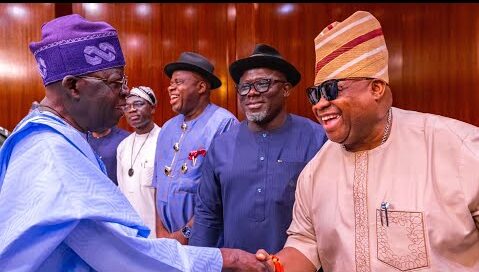
There is a Yoruba expression that captures with remarkable precision what may be happening to the Nigerian electorate: “Ojú ti owó” — money has been shamed. It describes the humiliation of money when, despite its enormous influence, it fails to accomplish what it was deployed to achieve. In the context of Nigeria’s electoral politics, it may well be the phrase that defines an important development in our democracy: the gradual weakening of the power of money to determine how people vote.
For years, vote buying has been treated as an almost indispensable component of Nigerian elections. Politicians have perfected the art of putting cash in voters’ hands, sometimes openly and sometimes through elaborate networks of agents and intermediaries. The assumption has been simple: poverty makes the electorate vulnerable, and whoever pays the most is likely to receive the most votes. But perhaps that assumption is beginning to crumble in the face of economic hardship and widespread disillusionment.
The experience in the just-concluded Osun State governorship election, in which Governor Ademola Adeleke was re-elected for a second term, offers an interesting lens through which to examine this emerging reality. The lesson is not necessarily that voters have suddenly become immune to financial inducements. In a difficult economy where many families struggle to put food on the table, it would be unrealistic and even insensitive to pretend that money has lost its attraction. The more significant point is that accepting money may no longer mean surrendering one’s vote. This distinction is crucial.
A voter can accept money from a politician and still vote according to their conscience. The politician may believe that the money has purchased loyalty, only to discover that the ballot paper has its own language. Outside the polling booth, the politician may exercise considerable power. Inside it, the voter becomes sovereign. This is where “Ojú ti owó” becomes more than a colourful Yoruba expression. It becomes a metaphor for the limitations of vote buying. Money can influence behaviour, but it cannot always command political choice. The politician may buy the moment, but the voter may still retain the future.
But there is another lesson from Osun that Nigerians must not overlook. Voters must not only cast their ballots; they must also be prepared to protect them. The vigilance displayed by many Osun voters during the election, including their determination to monitor the electoral process and guard against attempts to compromise the integrity of their votes, deserves commendation. Nigerians in other states should emulate this civic consciousness. An election does not end when a voter drops a ballot into the box. The responsibility of the electorate extends to ensuring that the ballot is properly accounted for and that the mandate freely expressed by the people is not subverted. The commendations by civil society groups for the resilience and vigilance of Osun voters underline the importance of this emerging culture of electoral ownership.
For too long, many Nigerian politicians have approached elections as commercial transactions. They distribute rice, cash, transport money and other inducements and then expect the electorate to repay the favour with votes. Yet the fundamental problem with this arrangement is that the money offered during an election is often insignificant when compared with what the voter loses when a bad government occupies power for four or eight years. What is a few thousand naira beside the cost of poor healthcare? What is a bag of rice beside the price of unemployment? What is transport money beside the consequences of failing schools, insecurity, poor roads, unreliable electricity and a struggling economy? The voter is beginning to understand this arithmetic.
Perhaps the most significant change taking place in Nigerian politics is not that poverty has disappeared. It has not. Neither is it that politicians have suddenly abandoned vote buying. They have not. The change may be that the Nigerian voter is becoming increasingly conscious that an electoral decision has consequences that extend far beyond election day. The vote is not merely about who occupies an office. It is about who controls public resources, who determines policy, who influences the economy and who ultimately shapes the environment in which our children will live. The Nigerian voter is also increasingly exposed to information and more capable of comparing promises with performance. Social media, citizen journalism and the growing appetite for political accountability have made it more difficult for politicians to completely control the narrative. The old electoral calculation — that money put in a voter’s hand automatically translates into a vote at the polling booth — may therefore be becoming increasingly unreliable.
It is also important to acknowledge the role that influential Nigerians can play in this changing political environment. Davido, notwithstanding his relationship with the incumbent governor, deserves commendation for using his enormous social influence to speak up for democratic values and engage with the electoral process in Osun. His intervention is a reminder that celebrity influence need not be confined to entertainment, commercial endorsements and personal branding. It can also be deployed in the service of democracy and national development. Other Nigerian celebrities should learn from this example. Influence is a form of social capital, and those who possess it should consider how it can be converted into something more enduring than applause: civic consciousness, accountability and development.
This does not mean that vote buying will disappear before 2027. Far from it. Economic hardship remains one of its strongest enablers. But the more Nigerians understand the difference between collecting an inducement and surrendering their vote, the less reliable vote buying becomes as an electoral strategy. There is also a moral dimension to this awakening. Selling one’s vote is not merely an exchange of money for a ballot. It is an exchange that can mortgage the future. The politician may recover his investment through access to public resources, inflated contracts and other privileges, while the voter is left to endure the consequences of the government he helped create. The Nigerian electorate must therefore begin to see the vote for what it truly is: perhaps the most powerful instrument of citizenship available to the ordinary person. The responsibility is not simply to vote but to vote wisely, protect the vote and hold elected leaders accountable after the election.
Osun may have given us a phrase, but Nigeria may be witnessing a phenomenon. “Ojú ti owó” could become the language of an electorate that has finally realised that taking a politician’s money does not require taking his political instruction. The politicians should take note. The electorate is changing. The Nigerian voter may still be poor, but poverty does not necessarily mean political stupidity. The voter may accept your money and still reject your candidate. And when that happens, the money has indeed been shamed.
The warning to Nigerian politicians ahead of 2027 should therefore be unmistakable: it will not be business as usual. The days when political inducements could be confidently equated with guaranteed votes may be numbered. Politicians who continue to regard the electorate as a marketplace where loyalty can simply be purchased may discover that the old electoral mathematics no longer works. Nigerians are increasingly conscious of the relationship between their choices at the polling booth and the quality of life that follows. More importantly, they are beginning to understand that the consequences of those choices extend beyond their own lives to the future of their children and generations yet unborn.
For 2027, therefore, politicians should not mistake the money they give the people for the votes they will receive from them. The politician may have the money to buy the moment, but the people still have the power to choose their future. And if Nigeria’s changing electorate continues along this path, “Ojú ti owó” may become more than an Osun experience. It may become a national electoral mantra.




















You must be logged in to post a comment Login