
Forgotten Dairies
As America Pursues Justice For Tupac Shakur, Has Nigeria Killed Its Heroes And Buried The Case Files Too? -By Isaac Asabor
In fact, the state owes Bola Ige justice. It owes Dele Giwa justice. It owes Kudirat Abiola, Marshall Harry, and Funsho Williams justice, and it owes the same to every lesser-known victim of political violence whose name never made international headlines. Names fade from newspapers. The state’s responsibility should not fade with them.

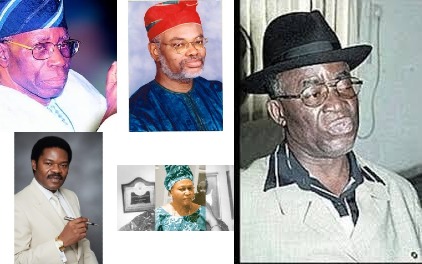
Some countries let murder become history without ever letting it become justice. Nigeria is one of them. Some of the most consequential political assassinations of the last four decades have quietly slipped out of the national conversation. Headlines faded. Investigations stalled. A few suspects were arrested but never convicted; others vanished into the maze of the justice system. The victims are now names Nigerians remember mainly on the anniversaries of their deaths. But murder does not get less serious because the calendar keeps turning. That is why a courtroom in Las Vegas should make Nigeria uncomfortable.
Nearly 30 years after Tupac Shakur was gunned down, Duane “Keffe D” Davis is on trial for allegedly helping orchestrate the killing. He did not pull the trigger, prosecutors say, but he helped set it up. Davis has pleaded not guilty; his lawyers are contesting the evidence.
What matters here is not Tupac’s fame or the decades of conspiracy theories. It is that a justice system can still remember a crime, and still act on it, thirty years later.
If America can still pursue justice for Tupac, why can Nigeria not pursue it for Bola Ige, Dele Giwa, Funsho Williams, and the rest?
Nigeria does not need to copy the American system; it has its own flaws and unsolved cases. The point is simpler: time should never become a hiding place for murderers.
Chief Bola Ige’s assassination remains one of the darkest moments in Nigeria’s democratic history. On December 23, 2001, Nigeria’s Attorney General and Minister of Justice, its chief law officer, was shot dead inside his Ibadan residence. Think about that: the man responsible for administering justice became a victim the system could not answer for. Who ordered it? Who carried it out? Who paid for it? Who covered it up? Nearly a quarter-century later, there is no honest answer.
Fifteen years earlier, on October 19, 1986, a parcel bomb killed Dele Giwa, the founding editor-in-chief of Newswatch magazine, in his own Lagos home. Giwa was one of the boldest journalists Nigeria has produced, a man who made a habit of interrogating power. His murder was a warning shot to every reporter who dared do the same. Almost 40 years on, the essential questions, who built the bomb, who sent it, who ordered it, remain unanswered.
In 1996, Kudirat Abiola, pro-democracy activist and wife of M.K.O. Abiola, the presumed winner of Nigeria’s annulled 1993 election, was gunned down in Lagos during one of the country’s most repressive periods.
She had become a leading voice for restoring the June 12 mandate. Her death was political violence wearing the mask of crime, and it too joined Nigeria’s long list of cases without closure.
In 2003, Marshall Harry, National Vice Chairman of the All Nigeria Peoples Party, ANPP, was murdered in Abuja weeks before a general election. In 2006, Funsho Williams, a leading PDP governorship aspirant in Lagos State, was killed in his own home. Both cases produced outrage, arrests, even prosecutions in one instance, but no conviction that convincingly settled the public’s questions. The pattern is numbingly familiar: outrage, investigation, silence, forgetting.
In fact, how impunity actually takes root has become what Nigerians should worry about most. This is as impunity rarely announces itself. It grows quietly; the moment criminals realize the state lacks the will, capacity, or independence to see a case through to the end. Once that belief takes hold, the law loses its power to deter anyone. After all, the famous biblical concept of a deferred sentence or delayed punishment is clearly expressed in Ecclesiastes 8:11, which states: “Because sentence against an evil work is not executed speedily, therefore the heart of the sons of men is fully set in them to do evil.”
Imagine the familiar scenario: a prominent Nigerian is killed. Outrage erupts. The police promise answers, while politicians issue statements condemning the killing. Then, as the noise gradually dies down, the case file gathers dust, and the murder is consigned to the growing graveyard of unresolved political killings.
Against the backdrop of the foregoing views, it is germane to remind members of the Nigeria Police and the Judiciary that a cold case is not a dead case. After all, the Tupac investigation was not solved by luck. It was revived because Davis made public statements, including in his own memoir, that gave investigators new leads. That is what institutional memory looks like: new information, better forensics, old witnesses re-approached, old evidence reassessed.
Time does not automatically erase the state’s duty to pursue justice. Nigeria needs to build that same culture. The files on Bola Ige, Dele Giwa, Kudirat Abiola, Marshall Harry, and Funsho Williams should not be treated as historical footnotes. Wherever new leads exist, pursue them. Wherever old evidence can be re-examined with modern forensics, examine it. Wherever witnesses are still alive, talk to them. And wherever powerful people may be involved, follow the evidence, without fear or favor. This is not about vengeance. It is about the integrity of the state.
A government that cannot protect its citizens has failed once. A government that then fails to investigate their murders has failed twice. Political assassination does not just kill a person; it intimidates a society. It silences journalists, frightens opposition politicians, and tells ordinary citizens that power can be seized or defended through violence. That message is the opposite of democracy.
Elections alone do not make a democracy. Institutions that protect citizens and enforce accountability do. Every unresolved political murder chips away at that credibility.
Justice is not an abstraction for the families left behind; it is personal. Imagine decades of not knowing who ordered your father’s, mother’s, or spouse’s death. Imagine watching suspects walk free while successive governments offer nothing but anniversary statements. No condolence message substitutes for justice.
At this juncture, it is expedient to urge the police authority and the judiciary to reopen the files of Nigerians that were allegedly assassinated but are yet to get justice many years after their killings. The files should be opened for real this time.
Nigeria needs a serious, independent review of its unresolved political killings, not another committee whose report gathers dust, not another headline-grabbing announcement that fizzles into silence.
What is required is sustained, professional, politically insulated investigation: modern forensic tools where evidence survives, fresh eyes on old files, prosecutors weighing new evidence for new charges. And Nigerians must see that this is about truth, not political score-settling. That distinction is everything, reopening old cases should never become a weapon against rivals.
At this juncture, it is expedient to peep into the real lesson from Tupac. Almost 30 years on, America is still working to establish the truth behind Tupac’s death. The accused still gets the presumption of innocence; the prosecution still has to prove its case. But the fact that the case has reached trial at all, after so long, says something important about institutional persistence.
In fact, the same judicial feat can also be attained in Nigeria as it has the laws, the institutions, and the manpower to do the same. What it has lacked is the will.
In fact, the state owes Bola Ige justice. It owes Dele Giwa justice. It owes Kudirat Abiola, Marshall Harry, and Funsho Williams justice, and it owes the same to every lesser-known victim of political violence whose name never made international headlines. Names fade from newspapers. The state’s responsibility should not fade with them.
In fact, if America can still pursue justice for Tupac nearly 30 years later, Nigeria owes its own people an explanation for why their murdered heroes remain permanent question marks. Justice should not have an expiry date.
























You must be logged in to post a comment Login