
Forgotten Dairies
The Price of Betrayal: Inside Ejiofor, Okonkwo, and Christian’s Reckoning with Igbo Marginalization -By Daniel Nduka Okonkwo
The security dimension of this crisis cannot be separated from the political and economic ones. Heavy militarization of the South East, the arrest of protesters, and recurring clashes tied to IPOB activity have combined to disrupt education, commerce, and ordinary civic life across the zone. Cultural sidelining compounds the injury, with Igbo voices and traditions often muted in national discourse in ways that deepen identity struggles among young people already searching for a stake in the country’s future.

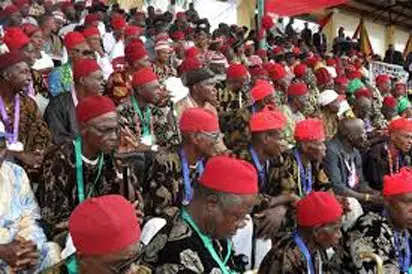
The marginalization of Ndigbo is not a relic of history. It is a living crisis that continues to shape political choices, economic outcomes, and the mood of a generation of Igbo youths who feel increasingly shut out of the Nigerian project. Since the return to democracy in 1999, no Nigerian of Igbo extraction has occupied the presidency or vice presidency, a fact that has deepened a longstanding sense of exclusion from the highest levels of national leadership. This exclusion is compounded by a structural imbalance that predates the current political era. The South East remains the only geopolitical zone in the country with just five states, compared with six and seven in every other zone, a disparity that has real consequences for federal revenue allocation, representation in the National Assembly, and the region’s overall political weight.
Critics of the Federal Government point to a slower pace of major infrastructure investment in the South East, citing the absence of a fully functional international airport network, modern rail connectivity, and federal seaport development on the scale seen in other regions. These grievances are layered on top of unresolved wounds from the Civil War, including the controversial £20 bank settlement policy and longstanding disputes over abandoned properties, all of which continue to feed a narrative of systemic neglect that many Igbo people carry with them today.
At the same time, a fair accounting of the situation requires acknowledging the other side of the ledger. Igbo people remain one of Nigeria’s most formidable commercial forces, with thriving businesses, real estate holdings, and investments spread across Lagos, Abuja, Kano, and virtually every major commercial centre in the country. Proponents of this view argue that this freedom of enterprise and movement is difficult to reconcile with claims of absolute economic suppression. There is also a growing body of opinion, shared by commentators and analysts alike, that some of what is described as marginalization is, in fact, the product of strategic miscalculation and a lack of unified political alignment among the region’s own leaders, rather than a deliberate policy of exclusion handed down from Abuja. Many activists and commentators have gone further, accusing sections of the Igbo political elite of prioritizing personal wealth, patronage networks, and party loyalty over the sustained development and defence of their own constituents. Even when individuals from the South East rise to prominent ministerial or legislative office, critics note that they often fail to channel that access into durable infrastructure or economic empowerment back home. Disunity, personal rivalry, and short-term political calculation among Igbo leaders are frequently cited as underlying reasons the region continues to punch below its weight in national coalition-building.
It was against this challenge that I visited the Abuja office of Barrister Ifeanyi Ejiofor, the human rights lawyer who represents members of the Igbo community associated with IPOB, for a conversation alongside Mr Tony Christian, publisher of Daily Intel Newspaper and a human rights advocate and activist for good governance in his own right. The discussion centred on the state of the Igbo nation and the forces working, quietly and otherwise, to keep the South East destabilized. A recurring concern raised during that meeting was the allegation that certain individuals within the region have been financially compromised and are being used to stir unrest, in some cases deliberately mobilizing youths as instruments of that agenda. This is a serious allegation, and one that deserves rigorous, independent verification before any names are attached to it in print. What can be said with confidence is that the pattern described, elites benefiting from crisis while youths bear the physical and economic cost of that crisis, is consistent with concerns raised by multiple stakeholders across the South East in recent years.
Barrister Ejiofor’s own work, defending Igbo youths arrested during protests and challenging what he characterizes as state repression through the courts, represents one strand of the broader Igbo response to marginalization. His record on this front is substantial. He and his legal team have secured the discharge, acquittal, and release of more than two hundred detained members of the Indigenous People of Biafra across courts in Abuja, Ebonyi, and Abia States, a number that continues to grow as more cases are resolved. It sits alongside grassroots efforts by advocates who favour dialogue, education, and entrepreneurship as tools of liberation rather than confrontation. Together, these approaches, legal warfare on the one hand and grassroots mobilization on the other, illustrate a movement that is far from monolithic but united by a shared demand that Nigeria reckon honestly with the South East’s place in the federation.
The security dimension of this crisis cannot be separated from the political and economic ones. Heavy militarization of the South East, the arrest of protesters, and recurring clashes tied to IPOB activity have combined to disrupt education, commerce, and ordinary civic life across the zone. Cultural sidelining compounds the injury, with Igbo voices and traditions often muted in national discourse in ways that deepen identity struggles among young people already searching for a stake in the country’s future.
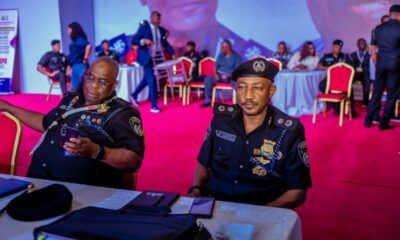
A striking symbol of this marginalization has long been the posting of police commissioners across the country. Yoruba-speaking officers are often sent to Lagos, Hausa-speaking officers to Kano, but South East states such as Enugu, Anambra, Abia, Imo, and Ebonyi frequently receive non-Igbo commissioners. Officials justify this practice as competence-based neutrality, arguing that, in a region with separatist tensions, impartiality is essential to effective policing. During my investigative visit to the police headquarters, a senior officer explained that commissioners are not posted based on tribal sentiment but strictly on their ability to perform their duties professionally and uphold the standards of policing. This official stance emphasizes merit and operational effectiveness, yet the symbolism of representation cannot be ignored, and many locals continue to read the pattern as deliberate exclusion rather than administrative neutrality. The recent appointment of an Igbo-speaking commissioner to Anambra marks a welcome development, suggesting that cultural identity is beginning to be acknowledged alongside professional merit. For a region long burdened by political exclusion, economic neglect, and cultural sidelining, such gestures matter deeply, even as they remain the exception rather than the rule.
If there is a way forward, it likely runs through several parallel tracks. Genuine federal restructuring that decentralizes power and resources to the regions would address some of the structural imbalances at the root of these grievances. Deliberate Federal Government investment in industry, technology, and education within the South East would give youths a reason to build at home rather than migrate. Elevating Igbo voices within national councils, the arts, and policymaking would begin to repair the cultural sidelining that many in the region describe. And inclusive dialogue platforms, where grievances can be aired and addressed without resort to repression on one side or violence on the other, remain essential if the cycle of unrest is to be broken.
What is clear from these conversations, in Abuja and elsewhere, is that the marginalization of Ndigbo is not simply a historical grievance to be revisited on anniversaries. It is an active, evolving crisis with real financial and political actors shaping its course, some acting in good faith and others, if the allegations raised in that meeting hold up to scrutiny, acting to profit from instability at the expense of the very youths they claim to represent. This is not only an Igbo story. It is a Nigerian story, and how the nation chooses to respond will say a great deal about whether it is prepared to build genuine inclusion or continue managing division.
Daniel Nduka Okonkwo is an investigative journalist, human rights advocate, and policy analyst based in Abuja, Nigeria. He is the publisher of Profiles International Human Rights Advocate, a platform focused on accountability journalism, governance reporting, and the documentation of human rights issues across Africa. His work examines the intersection of political power, institutional accountability, systemic failure, and the human impact of corruption, with particular focus on Nigeria and the wider African continent.
Okonkwo’s reporting and analysis have been published in Sahara Reporters, African Defence Forum, Daily Trust, Vanguard, Daily Intel, Opinion Nigeria, African Angle, Local Newsbreak, and other international media outlets. His work is driven by a commitment to transparency, democratic governance, and justice. He also collaborates with Daniels Entertainment on human rights initiatives, extending his advocacy beyond traditional journalism into broader public engagement.
He is based in Abuja, Nigeria, and can be reached at dan.okonkwo.73@gmail.com.



















You must be logged in to post a comment Login