
Forgotten Dairies
Institutional Racism in Uniform: How States Normalize Discrimination Through Law Enforcement -By Fransiscus Nanga Roka
The law enforcement machinery of many countries can hardly be said to be protecting human rights and ensuring justice. Quite the opposite, it is a criminal! As is witnessed by practices such as racial profiling or torture in detention, this is not some extreme position from which current law administration has wandered off too far yet still without cause. Rather, it represents the culmination and acceptance into normal life–and ultimately in accordance with all its institutions of discrimination.

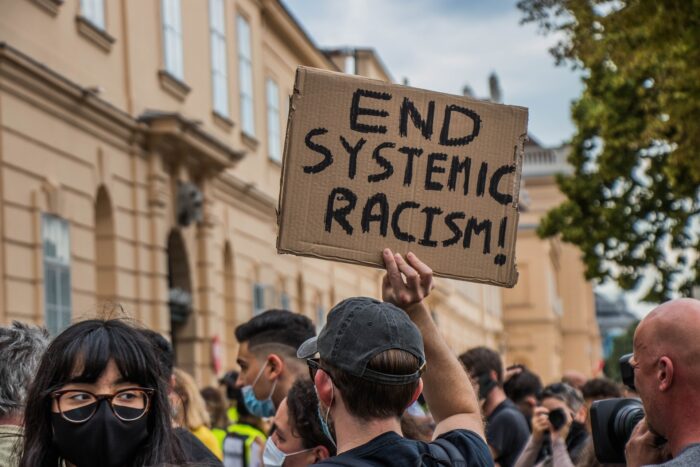
At the heart of today’s administration is a harmful myth that justice enforces right. That is false. All over the world, policing has emerged as one of the state’s most potent instruments with which to normalize, reproduce and justify racial discrimination often under canopy of legality. It is not about individual prejudice, it is about structural racism.
In law enforcement, racial discrimination is institutionalized not through openly racist laws, but rather in the phraseology used; the discretionary powers vested in officers to choose whom they wish to question or arrest; or policies which are scarcely written down and yet nearly always enforced on those racialized people who tend to get caught by them. Bias becomes policy. Discrimination is not an exception in this system, it is the rule.
Consider how policing works on the ground. Some communities are overpoliced and oversurveilled not because they commit more crime but rather as they are perceived to be inherently suspect. Stops, searches arrests and prosecutions follow statistical patterns which are irrefutably real yet officially are denied politically. Large segments of the population are treated not as citizens but as potential threats.
And when violence happens, there is little or only occasional responsibility after suchEexcessive use of violence, oftendeadly justified on grounds of “US reasonable suspicion” or what “proportionate” means but left vague enough that no one could possibly decide in advance how much force was appropriate for one situation over another rather than checking policemen misused their power these forms of legal framework, far from controlling power, often serve to protect it, making the process one in which interrogations are all carried in-house. The prosecutor will be in no hurry, the judiciary lets slide obligations of conscience, and then it closes ranks with vigor.
Impunity is not the individual fault of people within system, impunity is how system defends itself and its privileges.
Here is the most sinister aspect of institutional racism: not in open discrimination, but occurrence which is habitual but unseen. The law need not say “discriminate.” It only needs to leave those in power free to act without responsibility. It is there that prejudice gets rooted becomes practice and then policy.
The familiar response from states under fire is reform: a new guideline here, new training there, and a new ombudsman over yonder. However these measures usually allow the heart of the problem to remain untouched. If the source of discrimination is left unchanged, then no amount of reform will solve the problem at hand. Along with the racism that America’s law enforcement was founded upon, it is a stubborn weed that cannot be eradicated even when we try to cut off every leaf. Women have been called a minority and assigned the stigma of criminality in marked contrast to men. Because in a large number of countries, the job of law enforcement is not to prevent discrimination but rather to actively maintain and even reorganize it. Disparities between, for instance, blacks and whites in stops, detainment rates, sentencing decisions, use of force and so on are not on the margins–they are part of the structure. Yet these inequalities are justified through stories of criminality, culture, and other excuses or it is left for the recipient communities themselves to bear the burden. In this context. There cannot be equality under the law. According to international human rights law, states have the clear duty to establish identical rights for all and to prevent all forms of discrimination. Nevertheless, these duties are regularly invalidated by the institutions themselves that are supposed to enforce them. Law enforcement transforms from a violator of human rights and also can hide as the watchdog. This untenable situation must be resolved. When communities begin to withdraw their trust from law enforcement, it is not because they don’t understand the system. It’s that they understand too well. Patterns appear that are denied by official blinders and discrimination is uppermost in their minds. But instead of punishing the institutions that cause harm, the communities are left with the burden of suffering. The result is a legalized system of consecrated inequality. The law enforcement machinery of many countries can hardly be said to be protecting human rights and ensuring justice. Quite the opposite, it is a criminal! As is witnessed by practices such as racial profiling or torture in detention, this is not some extreme position from which current law administration has wandered off too far yet still without cause. Rather, it represents the culmination and acceptance into normal life–and ultimately in accordance with all its institutions of discrimination.
The story is far from the end of a pretty face. Instead, a strong institutional guarantee this is what we need. Properly funded bodies so that plaintiffs can gain fair compensation at all levels of society and those responsible are held accountable personally or through their company for whatever wrong they do not only to those victimized by it but also to others most similarly treated. The same must apply to police brutality: trials held in independent courts, not internal hearings; absolutely accurate reporting of data on ethnic disparities; independent legal regulation, but never further expansion. And penalties for infringement of all kinds, criminal or not criminal as well institutional should be strict. Underlying these measures, however, is the need for an enormous attitude change on the part of the state itself. It must regard law enforcement not as a tool of power but rather, like all work that involves serving humankind, something guided by human rights laws. And until we do that -constitute the body with representation and funding for civilian monitoring of all police power established by law. Then uniforms will continue to carry more than authority, they also bear the quiet stamp of discrimination. If discrimination wears the uniform, it is, however, no longer invisible.Its very influence becomes ingrained in state institutions.
Fransiscus Nanga Roka
Faculty of Law University 17 August 1945 Surabaya Indonesia
























You must be logged in to post a comment Login