Africa
Rivers: The Day After -By Pius Mordi
The role of Akpabio and his his Senate played over the Rivers crisis has sealed the perception of the current government as having fully captured the state. The main issue here is not the decision Akpabio railroaded the senate into taking. It is the way and manner it was done. If the senators had been given the opportunity to ventilate their views and the constitutional threshold was eventually met in approving Tinubu’s declaration, there would not have any raised eyebrows. Unabashedly and with barefaced impunity, the processed was rigged to shut out opposing voices.

In 1983, the ABC, an American broadcast company, envisioned exploring the effects of nuclear war on the United States. The product was a television movie called The Day After. The film postulates a fictional war between NATO and the Warsaw Pact over Germany that rapidly escalates into a full-scale nuclear exchange between the United States and the then Soviet Union. Its gory and graphic nature was such that the bellicose and combative Ronald Reagan, then president of the United States, was inclined to tone down the nuclear arms race he drove against the Soviet Union, in favour of engaging them to curb nuclear arms proliferation.
While ABC’s The Day After triggered a sobering approach to international ideological politics, the day after in Nigeria came with how the National Assembly handled the declaration of emergency rule in Rivers State ordered by President Bola Tinubu.
The framers of the 1999 constitution knew such declaration is not a cavalier exercise. It needed to meet the basic threshold to be determined by the representatives of the people.
On the Godswill Akpabio-led National Assembly fell the responsibility of ensuring the responsibility for meeting the conditions for declaration were met. After all, Nigeria had walked that path before.
Olusegun Obasanjo, despite his academic denial, wanted a third term as president against the provision of the constitution. It required two thirds of the senators for the bid to succeed. Ken Nnamani, Senate President at the time, knew there was no short cut to that constitutional requirement and made every member to “answer his father’s name” as he put it then.
At the end of the day, every senator answered his father’s name and the bill to amend the constitution to extend Obasanjo’s tenure was roundly defeated
Just like during the failed third term bid, there was a lot of divergent views over the emergency declaration.
But unlike Nnamani who not only required every federal lawmaker to pointedly declare his stance and effectively calm the polity, Akpabio showed his disdain for his oath of office. To him, his loyalty is not to the people and the constitution, but to President Bola Tinubu who facilitated his emergence as a senator and ultimately as Senate President. If Akpabio thought he had played a smart game to outwit his colleagues who may have voted against endorsing Tinubu’s declaration on Rivers State, he has taken Nigeria almost to the abyss of Government-people relations. But the implications are far wider and hurtful.
Before now, the confidence the people had in government at different levels was at lowest ebb. Akpabio’s message was that government could do whatever pleases it irrespective of what the people desired and what the constitution says.
And there lies the danger in the entire saga. Thomas Jefferson, the third American president, who was credited with drafting the declaration of independence warned about the dire consequences of the people losing faith in the government. “When the people fear the government there is tyranny, but when the government fears the people there is liberty”, Jefferson had warned. Nigerians are now more afraid of the government and not the other way round.
This was aptly demonstrated in the choice of words of Aso Rock minders in dismissing criticisms of the emergency declaration. That is the tragedy of the message of the day after.
In opting to adopt voice vote in conducting the session when the constitution required two-thirds of all the senators to vote in favour of the declaration, Akpabio demonstrated that he is prepared to rig the system to please the executive branch.
I am not sure that the former Akwa Ibom state governor appreciates the fact that the branch of government he heads is a co-equal and should check the utilisation of presidential powers to prevent its abuse.
The role of Akpabio and his his Senate played over the Rivers crisis has sealed the perception of the current government as having fully captured the state. The main issue here is not the decision Akpabio railroaded the senate into taking. It is the way and manner it was done. If the senators had been given the opportunity to ventilate their views and the constitutional threshold was eventually met in approving Tinubu’s declaration, there would not have any raised eyebrows. Unabashedly and with barefaced impunity, the processed was rigged to shut out opposing voices.
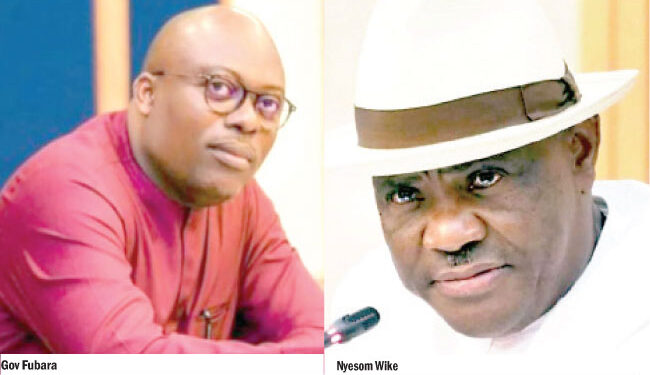
Before now, the judiciary had lost all pretence of independence under the present leadership of that arm of government. The series of judiciary pronouncements from the judiciary in political suits involving Nyesom Wike, the major protagonist in the Rivers crisis, had already been perceived as evidence of a collaborative strategy between Aso Rock and the man that arranged the decisive Rivers votes for Tinubu in the 2023 presidential election to employ all tactics to protect a new godfather.
The expectation that a measure of stability and respect for the rule of law will be pushed by the National Assembly is not only forlorn but has deepened the lack of trust in government by the people. Beyond the musings in the social media, discussions on all serious platforms point to absolute lack of faith in the machinery of the three arms of government. That is the reality of the day after for Nigeria.