Africa
Sad, As Anambra Decides Amid Widespread Vote Buying And Voter Inducement -By Isaac Asabor
The people of Anambra, and indeed Nigeria, must rise above this. The power to redeem the nation still lies in the vote, but only if that vote remains sacred, unsold, and cast in good conscience. Until then, democracy in Nigeria will continue to wear the face of deception, shiny on the surface, but rotten at the core.

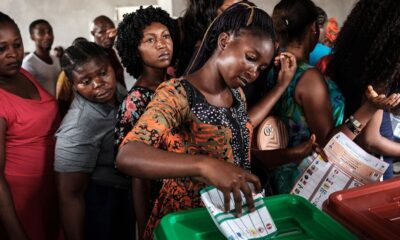
The 2025 Anambra governorship election, which should have been a triumph of democratic choice, has instead become a chilling reminder of how deeply vote buying has eaten into Nigeria’s political culture. Across polling units, from Nnewi South to Awka and beyond, credible reports of cash-for-vote transactions dominated the day, turning what should be a civic celebration into a market of political trade-offs.
In scenes that played out across the state, party agents were said to have exchanged envelopes of cash for ballots, with voters allegedly selling their votes for amounts ranging between ₦3,000 and ₦30,000. What makes this tragedy even more painful is that it occurred openly, often under the watch of electoral officers and security agents who seemed unwilling, or unable, to intervene.
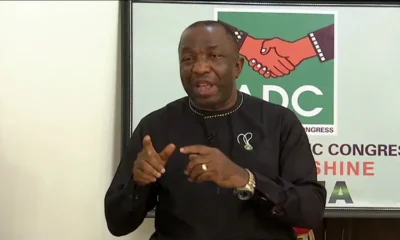
Nicholas Ukachukwu, the All Progressives Congress (APC) candidate, was among the first to raise the alarm. After casting his vote at Umudimala 1, Polling Unit 011 in Nnewi South, he accused the ruling All Progressives Grand Alliance (APGA) of engaging in large-scale vote buying across the state. While commending the Independent National Electoral Commission (INEC) for what he termed a credible process so far, he lamented that the integrity of the exercise was being compromised by the reckless monetisation of the vote. “If there’s no seller, there cannot be a buyer,” Ukachukwu said pointedly. “Some people have chosen to sell their conscience, which is even worse than those buying votes.”
His observation captures the rot perfectly. For every politician willing to pay for votes, there are desperate citizens ready to sell their ballots. It is a vicious exchange, one that cheapens the entire democratic process and makes governance a reward for the highest bidder.
AAC candidate Chioma Ifemeludike went further, describing the situation as “appalling.” In a video posted on her Instagram page, she painted a disturbing picture of the day’s events: “There’s no election. There are practical transactions going on. They write your name, and then you proceed to another section where people meet. You can almost touch the hardship in the faces of those selling their votes.”
Her outrage was palpable. She recounted seeing elderly women and men, people old enough to be grandmothers and grandfathers, selling their votes for as little as ₦3,000 to ₦5,000. “This is wicked,” she said. “This is unacceptable.” Her anger was not misplaced. In a country where millions struggle to afford daily meals, the temptation to trade conscience for cash becomes almost irresistible. But that act, repeated in polling units across Nigeria, is precisely what keeps the nation chained to corrupt leadership and failed governance.
Governor Chukwuma Soludo, the incumbent seeking re-election under the APGA banner, also admitted to instances of vote buying, acknowledging that voters in parts of Nnewi South were being paid as much as ₦15,000. His admission underscored the scale of the malpractice. Former Governor Peter Obi, who also observed the process, expressed dismay at the brazen exchange of cash for votes. “Unfortunately,” Obi said, “those who are the victims of bad governance seem to be the ones fuelling it.” His statement reflects the painful irony of Nigeria’s electoral dilemma: those most hurt by corruption are often the very ones who enable it through short-term desperation.
Labour Party candidate George Moghalu captured it best when he declared, “Poverty was weaponized for massive vote buying. If you monetize your process and weaponize poverty, what is free about the election?” That single question goes to the heart of Nigeria’s democratic crisis. Elections may appear peaceful, ballots may be counted, and results may be uploaded to INEC’s Result Viewing Portal, but when votes are sold for cash, democracy itself is hollowed out.
The consequences of this practice are devastating. Vote buying not only undermines the legitimacy of elections but also corrodes governance from within. Leaders who purchase mandates see political office not as a trust but as an investment to be recouped. This breeds corruption, incompetence, and a total disregard for accountability. Citizens who sell their votes lose the moral authority to demand good governance. They effectively sign away their right to complain about poor roads, unemployment, insecurity, or failing hospitals because, in truth, they helped auction off their future for a handful of naira notes.
The tragedy is not just political; it is societal. Vote buying perpetuates poverty, erodes civic values, and normalizes corruption at every level. It teaches young people that progress is bought, not earned, and that conscience has no value in a system where money speaks louder than principle. Over time, it breeds cynicism, a dangerous belief that honest leadership is impossible in Nigeria.
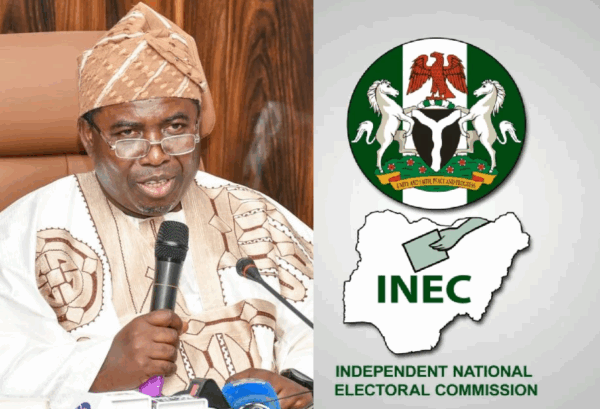
INEC must bear part of the responsibility. While the commission often prides itself on logistical improvements, early openings, functioning BVAS machines, and orderly queues, it has not demonstrated sufficient will to curb vote trading. Its responsibility goes beyond organizing elections; it must also ensure that the process remains credible and untainted by manipulation. The presence of security agencies should mean protection for the voter, not a blind eye to corruption happening in broad daylight.
But the problem is bigger than INEC. It is a national disease rooted in poverty, ignorance, and moral decay. Curbing it requires more than arrests or token condemnations. Nigeria needs a systematic campaign of civic education, teaching citizens, especially the poor, that their votes are their voices. Selling them silences that voice for four years or more. There must also be stringent legal consequences for both buyers and sellers of votes, not the usual slap-on-the-wrist approach that emboldens offenders.
Beyond laws and education, however, leadership must set an example. Politicians who claim to represent change cannot continue playing the same dirty game of inducement and bribery. The electorate cannot be expected to rise above corruption if their leaders wallow in it. It takes political will, moral courage, and public accountability to dismantle a system that has long thrived on exploitation and deceit.
The 2025 Anambra election should have been a moment for the people to shape their destiny through the ballot. Instead, it became another marketplace where democracy was sold to the highest bidder. The consequences will linger long after the last result is declared. Every vote sold today is a voice lost tomorrow, every conscience bought is another nail in the coffin of Nigeria’s democracy.
Until Nigerians collectively reject this practice, until they learn that true change cannot be bought with naira notes, the cycle of corruption, poverty, and misrule will continue. The tragedy of Anambra’s election is not that vote buying happened; it is that it has become so normalized that many now see it as part of the process.
The people of Anambra, and indeed Nigeria, must rise above this. The power to redeem the nation still lies in the vote, but only if that vote remains sacred, unsold, and cast in good conscience. Until then, democracy in Nigeria will continue to wear the face of deception, shiny on the surface, but rotten at the core.