
Africa
Nigeria’s Deepening Insecurity Crisis and the Struggle for National Stability -By Gloria Akilahyel
Nigeria finds itself at a crossroads: the stakes of the insecurity crisis are high and growing. Unless bold, coordinated actions are taken, the persistent violence will continue to undermine the country’s prospects. But if the government, communities, civil society, and international partners can align behind a strategy of prevention, enforcement, and socio-economic uplift, there remains a chance for the country to reverse the trend and chart a safer, more stable future.

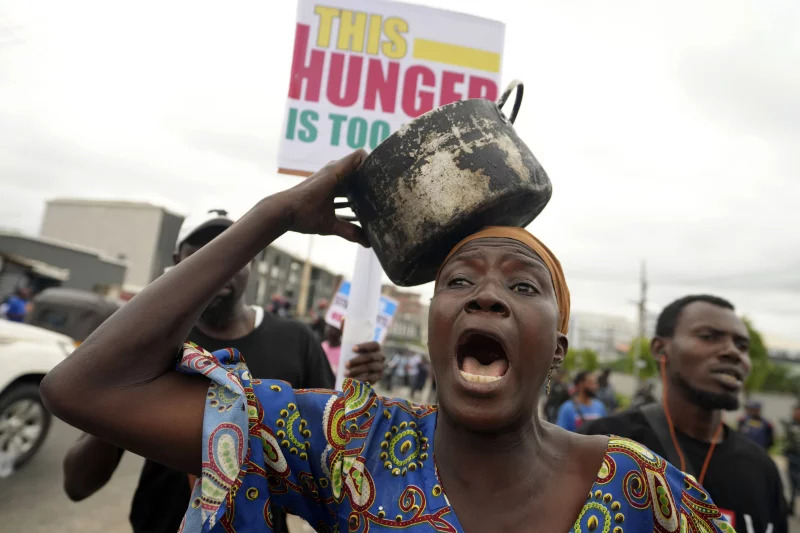
The landscape of insecurity in Nigeria has reached a critical juncture. Across multiple regions, from the North-East crevices of Borno State to the forested fringes of the North-West, the menace of armed groups, bandits, kidnappers, and insurgents has become a near-constant preoccupation for many citizens. According to recent analysis, the country’s major problem today is insecurity: “terrorists, bandits, cattle rustlers, commercial kidnappers … attacking our schools and abducting students in their hundreds.” The intensity and frequency of these attacks have eroded public confidence in the government’s ability to protect lives and property, creating a sense of helplessness among citizens.
This insecurity is not confined to one type of actor or one region. The conflict narrative often highlights groups such as Boko Haram or Islamic State – West Africa Province (ISWAP) in the North-East, but at the same time there are herder-farmer clashes in the Middle Belt, bandit raids in the North-West, kidnappings in the South, and communal violence elsewhere. In this respect, the government’s challenge is multi-faceted: terrorism, organized crime, communal conflict, and state weakness all feed into the same vicious cycle. The diversity of these threats makes it difficult to formulate a single security response that can effectively address the crisis nationwide.
Complicating matters further is the international dimension of the problem. Recently, the United States under the leadership of Donald Trump designated Nigeria as a “country of particular concern” over religious violence and threatened possible military intervention if attacks on Christians continue. This external pressure has stirred public debate in Nigeria about sovereignty, the nature of the violence, and whether the security response is being properly handled. It has also reignited conversations about foreign influence, human rights, and the need for Nigeria to assert control over its internal affairs while maintaining global credibility.
The reaction from the Nigerian military leadership has been to promise a renewed push. The newly appointed Chief of Army Staff, Waidi Shaibu, pledged that “failure was not an option” in the fight against terrorist groups when speaking in Maiduguri. At the same time, the government insists that the characterization of the violence as exclusively religious is simplistic and ignores the many victims among Muslims and other communities. This shows an effort to reframe the narrative and emphasize the shared suffering of all Nigerians, irrespective of faith or ethnicity.
But despite these pronouncements, many Nigerians feel the pace of change is slow and the impact remains uneven. The security situation has paralyzed farming communities, disrupted markets, displaced residents, and raised the cost of doing business. Areas once considered safe are now reporting kidnappings and attacks, signaling a growing sense of vulnerability across the country. The cost is not just human, but also economic and social: schools cannot always operate, transport corridors get cut, confidence drains, and investors hesitate. The ripple effect is a shrinking economy and rising poverty levels.
One reason the crisis persists is that security responses often react rather than anticipate. Analysts point to gaps in intelligence, coordination, logistics, welfare of troops, and community trust. Without local engagement and trust, efforts to pacify restive areas fall short. The government has launched several policies — for example, the National Livestock Transformation Plan to address herder-farmer tensions — but implementation has been weak, delayed, under-funded, or uneven across states. This leaves many vulnerable communities still feeling exposed and under-protected.
Another dimension is the economic fallout of insecurity. Regions afflicted by violence often see a shrinking of livelihoods, especially agriculture, trade, and mobility. Farmers abandon fields if they fear raids; transporters avoid high-risk routes; businesses incur higher security costs or shut down entirely. The ripple effect touches national growth, food security, and the fiscal health of states. This economic fragility in turn exacerbates social discontent and undermines the legitimacy of the state. The result is a cycle of poverty and instability that perpetuates insecurity.
Furthermore, the social fabric of Nigeria is under strain. The sense of unsafety, the trauma of violence, and the frustration with slow or inadequate official responses erode trust between citizens and institutions. When communities perceive that they cannot rely on the state for protection, alternative power structures or local self-defense groups often emerge — sometimes with their own risks. The longer this dynamic persists, the more difficult it becomes to restore stable rule of law and inclusive governance. The social cohesion that once united diverse ethnic and religious groups is slowly weakening under the weight of fear and suspicion.
At the same time, there is a political dimension: how leaders respond, how resources are allocated, how reforms are designed and communicated. The complexity of Nigeria’s federal system, the multiplicity of actors — state governments, federal agencies, security services, and local communities — and the ethnic-religious diversity all mean that a one-size solution won’t work. What is needed is tailored, locally-owned, multi-sectoral responses with clear accountability and sustainable funding. Political will and transparency are key to restoring confidence and preventing the crisis from spiraling further.
Looking ahead, the challenge for Nigeria is enormous but not insurmountable. The drivers of violence must be tackled alongside the symptoms. That means strengthening institutions, ensuring security forces are equipped and supported, improving intelligence and logistics, and — critically — engaging communities in prevention and resilience. It also means addressing underlying socio-economic factors: poverty, youth unemployment, exclusion, and weak infrastructure. Long-term peace and security will depend not just on the end of attacks, but on the building of a stable society where people feel safe, valued, and connected.
Nigeria finds itself at a crossroads: the stakes of the insecurity crisis are high and growing. Unless bold, coordinated actions are taken, the persistent violence will continue to undermine the country’s prospects. But if the government, communities, civil society, and international partners can align behind a strategy of prevention, enforcement, and socio-economic uplift, there remains a chance for the country to reverse the trend and chart a safer, more stable future.
Gloria Akilahyel Student of mass communication Kashim Ibrahim University, Maiduguri

Continue Reading























You must be logged in to post a comment Login