Economy
Selling Illusions: Why Nigeria’s Budgets Fail the People -By Rose John
Ultimately, Nigeria’s economic crisis cannot be blamed on external shocks or global conditions alone. While international factors play a role, the deeper problem lies in a broken governance system that thrives on opacity, impunity, and short-term thinking. Until leaders abandon dishonest budgeting, dismantle rent-seeking structures, strengthen institutions, and place accountability above political convenience, economic plans will remain empty rituals.

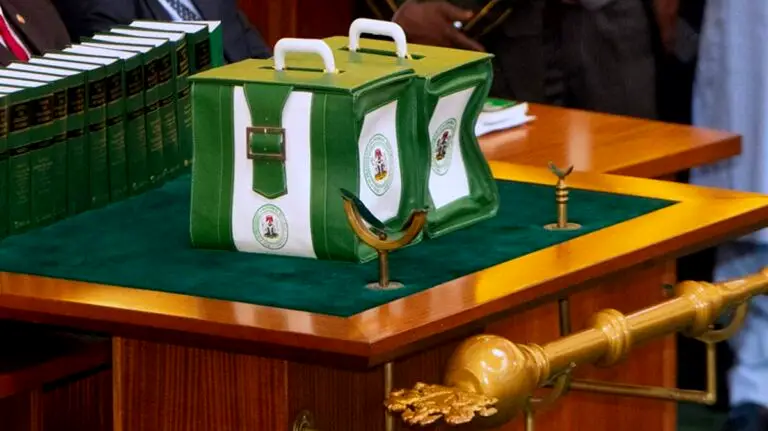
Nigeria’s persistent economic hardship is not accidental rather, it is the predictable outcome of a government system built on deception, avoidance, and misplaced priorities. Year after year, national budgets are presented with fanfare as symbols of hope and recovery, yet the reality for millions of Nigerians remains unchanged. Inflation continues to erode incomes, unemployment worsens, and purchasing power steadily declines. From the outset, these budgets are crafted more as public-relations documents than as honest economic plans. Figures are inflated, risks are ignored, and familiar promises are recycled despite repeated failure. What should serve as a serious fiscal blueprint instead becomes an annual ritual of selling hope to a population already burdened by hardship.
A central weakness of Nigeria’s economic planning lies in its stubborn dependence on oil revenue. For decades, successive governments have preached economic diversification, yet budgets continue to collapse the moment oil prices fall or production drops. This contradiction is not rooted in ignorance but in convenience. Oil rents provide easy money that discourages innovation, industrialization, and long-term planning. Rather than build a productive economy based on agriculture, manufacturing, and technology, leaders cling to a volatile resource whose benefits are narrowly distributed. As long as oil remains the backbone of fiscal planning, every budget will remain a gamble, and every global energy shock will push millions further into poverty.
Compounding this failure is a governing structure riddled with weak institutions and deliberate inefficiency. Policies are announced loudly and abandoned quietly. Grand development plans are unveiled with impressive slogans but rarely survive beyond the media headlines. Capital projects meant to improve lives are either stalled, poorly executed, or outright looted. Roads remain impassable, public hospitals are under-equipped, and schools deteriorate, while budgets continue to allocate vast sums to recurrent expenditure in order to sustain political elites. The system rewards loyalty over competence and treats public funds as entitlements rather than responsibilities.
Even more troubling is the normalization of debt as a substitute for reform. Instead of confronting corruption, blocking revenue leakages, and reducing wasteful spending, authorities increasingly rely on borrowing to maintain an unsustainable system. Loans are used not to create jobs or expand productive capacity but to pay salaries, fund an oversized bureaucracy, and service older debts. As debt servicing consumes a growing share of national revenue, fewer resources are available for healthcare, education, and infrastructure. In effect, Nigeria is borrowing not for development, but for survival a dangerous path that mortgages the future of generations yet unborn.
Ordinary citizens ultimately pay the price for this reckless fiscal behavior through higher taxes, rising prices, and shrinking social support. Small businesses struggle under heavy taxation and unstable policies, while young people face limited opportunities in an economy that produces more graduates than jobs. Social welfare programs remain weak or poorly implemented, leaving the most vulnerable exposed to hunger and insecurity. The promise of pro-poor budgeting thus remains largely rhetorical, disconnected from the lived realities of Nigerians.
Worse still, the economic planning process excludes the very people it claims to serve. Budgets are written by political insiders and technocrats who speak in abstract macroeconomic terms while ordinary Nigerians struggle to survive. Public participation is minimal, and budget debates rarely reflect the voices of farmers, traders, workers, or students. The realities of hunger, unemployment, and insecurity are ignored in favor of spreadsheets that mask suffering. This disconnect reflects a government that governs above the people, not for them.
Ultimately, Nigeria’s economic crisis cannot be blamed on external shocks or global conditions alone. While international factors play a role, the deeper problem lies in a broken governance system that thrives on opacity, impunity, and short-term thinking. Until leaders abandon dishonest budgeting, dismantle rent-seeking structures, strengthen institutions, and place accountability above political convenience, economic plans will remain empty rituals.
In a system where failure carries no consequences and mediocrity is rewarded, hope will continue to be budgeted but never delivered. True economic recovery will only begin when Nigeria’s budgets stop selling illusions and start serving the people.