Africa
Should Water Be Privatised? -By Kator Ifyalem
A fundamental tension here is the legal and moral status of water. The United Nations has recognised access to safe drinking water and sanitation as a human right, which creates a baseline obligation for governments, that water must be available, safe, acceptable, physically accessible and affordable for everyone. This right does not automatically forbid private involvement, but it does change the stakes. Any model that leaves people without access because of price or exclusion will clash with that obligation.

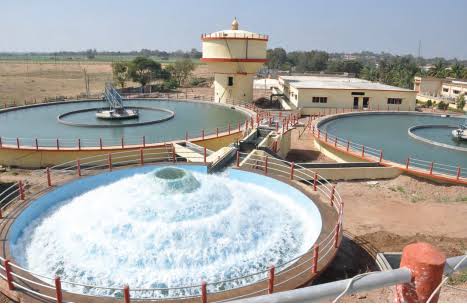
Should water be privatised? It is not a question with a yes/no switch you can flip, it is a complicated, emotional, political and technical debate rolled into one. Across Africa the conversation about private sector involvement in water services is getting louder because governments face stubborn funding gaps, aging pipes, growing cities and climate shocks. At the same time, people remember painful stories of big bills, broken promises and communities shut out of the decision-making. The sensible way to think about this is not “privatise or perish” but “what mix of actors and rules will reliably deliver safe, affordable water to everyone?”, and what that mix means for water as a human right.
The scale of the challenge is why the private sector keeps getting invited to the table. Globally, gains were made between 2015 and 2024, nearly a billion people gained access to safely managed drinking water services, yet 2.1 billion people still lack safely managed drinking water and large gaps remain within and between countries in Africa, especially in fragile and rural areas. Those numbers show both progress and a huge shortfall that requires money, skills and new delivery models. The data on coverage and the stubbornness of gaps are why governments, financiers and development agencies talk about public–private partnerships (PPPs) and other private participation as potential ways to close the financing and capability gap.
Why bring private companies in? The short answer: financing, technical capacity, and (sometimes) management discipline. Large private firms and international investors have the capacity to mobilise capital and technical teams more quickly than cash strapped utilities; they offer performance-based contracts and innovation in metering, billing and leakage control. International forums and PPP marketplaces have actively promoted this as part of the solution set for African water systems, encouraging regulated private involvement where public budgets and skills are insufficient. But the push for private money comes with strings, profit expectations, contract complexity, and the political risk that deals are made without broad public scrutiny. Those trade-offs explain the polarized public debate you see in many African cities.
Looking at the evidence, the picture is mixed and highly contextual. Some long-term concession and lease models in West Africa, most famously Senegal’s arrangement with private operators, are often held up as success stories because they improved billing, expanded connections and stabilized service quality in many urban areas. These cases suggest that, with well designed contracts, strong regulation and political commitment, private operators may deliver measurable improvements. Yet even in those “success” stories, gains were uneven, rural areas and low-income neighbourhoods often lagged behind, subsidies and tariff design were critical, and government oversight had to be meaningful to keep outcomes pro-poor. In essence, private operators can help, but only when the public sector retains clear responsibilities and the regulator actually enforces the rules.
On the flip side, there are numerous examples and warnings about what happens when privatisation is rushed, poorly regulated, or pursued as a panacea. In highly publicized crises elsewhere on the continent, service failures have often been traced to mismanagement, corruption, or lack of investment, problems that private companies alone do not magically fix. Civil society resistance is also real and growing. In places like Lagos and other African cities, activists and community groups have objected to opaque PPP deals, arguing that these arrangements risk prioritising investor returns over affordability, transparency and local consultation. Re-municipalisation (bringing services back under public control) and grassroots campaigns opposing privatisation have occurred because people fear the social costs when safeguards are weak. Those tensions show that the presence of private actors sometimes sharpen, not solve, governance problems if accountability mechanisms are not strengthened enough.
A fundamental tension here is the legal and moral status of water. The United Nations has recognised access to safe drinking water and sanitation as a human right, which creates a baseline obligation for governments, that water must be available, safe, acceptable, physically accessible and affordable for everyone. This right does not automatically forbid private involvement, but it does change the stakes. Any model that leaves people without access because of price or exclusion will clash with that obligation. That means that whether water systems are public, private, or mixed, the state remains legally responsible for ensuring the human rights criteria are met, and practical mechanisms (tariff protections, subsidies, lifeline supplies, and enforceable service standards) must be in place. The human rights framing elevates equity and accountability above balance sheet economics.
So, what does good practice look like in 2025? First, transparent, enforceable contracts, with independent regulators that monitor performance and can adjust tariffs or penalties when operators fail. Second, explicit social protections, cross-subsidies, targeted subsidies, or guaranteed lifeline volumes so that the poorest households keep essential access regardless of who runs the pipes. Third, blended finance and public investment remain critical. Private capital is not a free lunch and often needs co-investment, guarantees or concessional finance to make projects affordable and aligned with social goals. Fourth, community led and small-scale utilities should be supported as real alternatives for peri urban and rural areas where large scale concessions are impractical. Finally, participation matters. Communities should be in the room when contracts are negotiated, and civil society watchdogs should have access to contract terms, performance data and grievance mechanisms. These design choices may turn private involvement from a political lightning rod into one tool among many.
Policymakers should also be honest about limits and trade-offs. Private participation often works best where networks are largely in place, where revenue collection is plausible, and where regulators are capable. Where pipes are crumbling, theft is pervasive, or governance is weak, the immediate priority may be public investment, improved utility management, anti-corruption reforms and community engagement, not handing the keys to the highest bidder. That is not ideological nitpicking, it is pragmatic. Failure to match the model to local realities is what has sunk many earlier privatisation experiments.
For citizens, the takeaway is simple but powerful: water must remain a public priority, and every arrangement must be judged by whether it expands safe, affordable access, not by whether it creates headline grabbing private deals. Where private firms are involved, contracts should be transparent, regulators independent, and compensating mechanisms in place for low-income households. Where the public sector leads, it must be accountable and well funded. In practice, most African countries will end up with hybrids, regulated private concessions in some cities, publicly run utilities in others, and community managed systems in rural areas. Success will depend less on the label “private” or “public” and more on the governance model behind the system.
In the end, the most important question is not “should we privatise?” but “will this choice bring clean, affordable water to everyone, and will it protect water as a human right?” If the answer is yes, with robust safeguards and real accountability, then private involvement may be part of the solution. If the answer is no, if the deal risks cutting people off, raising unaffordable bills, or sidelining democratic control, then it should be rejected. The future of water in Africa should be pragmatic, rights-based and locally driven. A mix of finance and models, governed by laws and watchdogs, with people at the centre. That is how water stops being a battleground and becomes the everyday, life-sustaining service it ought to be.