
National Issues
Silence: The Chaos In Angwan Rukuba -By Idris Mohammed
In the Riyom Attacks, the narrative again leaned heavily on identity-based explanations, while accountability for perpetrators remained limited. These examples highlight a recurring problem: when government communication is weak, public understanding becomes shaped by incomplete or misleading information.The role of influencers in the Angwan Rukuba incident further complicates the situation. Social media platforms allow individuals with large followings to shape public perception in real time.

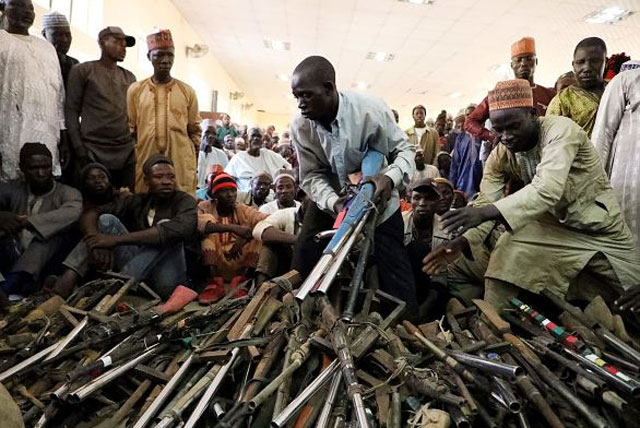
In the tense hours following the Palm Sunday killings in Angwan Rukuba, a community in Jos, fear spread faster than verified information. Dozens of people were reportedly killed by unknown attackers. What should have been a moment for coordinated response and clarity quickly turned into confusion, speculation, and rising anger. As details remained scarce, narratives filled the gap, many of them dangerously simplistic.This pattern has become familiar in Plateau State. For years, government response to violent incidents has been marked by delayed communication, limited transparency, and weak accountability. In Anguwan Rukuba, the absence of immediate, credible information created a vacuum that was quickly occupied by influencers and partisan voices. Rather than asking critical questions about who carried out the attack and why, many narratives reduced the tragedy to a binary religious conflict between Muslims and Christians.
That reduction does more harm than good. It distorts reality and makes it harder to identify the actual perpetrators behind such violence. Plateau has a long and complex history of conflict involving armed groups, criminal networks, and local militias. These actors often exploit existing tensions, but they are not always driven purely by religion. By framing every incident as a religious war, attention is diverted from the structural and security failures that enable these attacks to persist. Nigeria has seen similar consequences in the past. After the Dogo Nahawa Massacre, early accounts framed the killings largely as sectarian retaliation. However, deeper investigations later pointed to organized militia involvement and significant lapses in security response.
In the Riyom Attacks, the narrative again leaned heavily on identity-based explanations, while accountability for perpetrators remained limited. These examples highlight a recurring problem: when government communication is weak, public understanding becomes shaped by incomplete or misleading information.The role of influencers in the Angwan Rukuba incident further complicates the situation. Social media platforms allow individuals with large followings to shape public perception in real time. In this case, some of these voices amplified unverified claims, framing the violence in ways that heightened religious tension. These narratives do not stay within Plateau. They spread across the country, reaching audiences who may have little knowledge of the local context but are deeply affected by emotionally charged messaging.
In a country as diverse as Nigeria, such narratives can have far-reaching consequences. Communities that have lived together for decades begin to view each other with suspicion. Trust erodes, and social cohesion weakens. This environment makes it even more difficult for authorities to manage crises effectively, as public confidence in official statements continues to decline.
The deeper issue here is not only the presence of misinformation but the conditions that allow it to thrive. When government institutions fail to provide timely and transparent updates, they lose control of the narrative. Silence, in moments of crisis, is not neutral. It creates space for speculation, fear, and manipulation. Over time, citizens begin to rely less on official sources and more on informal networks, where accuracy is not guaranteed. In Plateau, this dynamic has contributed to a cycle of violence and mistrust. Each new incident reinforces existing divisions, making it harder to build consensus or pursue meaningful solutions. Even when the government eventually responds, its message is often met with skepticism. People have learned to question whether the full story is being told.
Angwan Rukuba is a stark reminder that accountability is not limited to arrests or prosecutions. It also involves communication. Authorities must be willing to share verified information quickly, acknowledge uncertainties, and provide consistent updates as investigations unfold. Without this, public discourse will continue to be shaped by those who may prioritize influence over accuracy. Breaking this cycle requires a shift in approach. Crisis communication must be treated as an essential part of security strategy, not an afterthought. Clear and timely information can reduce panic, counter misinformation, and help maintain public trust. At the same time, there must be visible efforts to identify and prosecute those responsible for such attacks. Without consequences, the cycle of violence is likely to continue. The tragedy in Anguwan Rukuba should not be reduced to a religious talking point. It demands serious investigation and honest engagement with the underlying issues. Anything less risks deepening the divisions that have already cost too many lives.
Idris Mohammed writes from the College of Communications and Information Science, University of Alabama, United States.

























You must be logged in to post a comment Login