
Opinion
Fatherhood, Aging, and the Fragile Future of Care in Nigeria -By Prince Charles Dickson Ph.D
May your wisdom continue to ripple across generations like rainwater finding thirsty roots beneath dry earth. May your years remain fruitful. May your legacy outlive monuments. May your children and community rise around you like branches honoring the root from which they came.

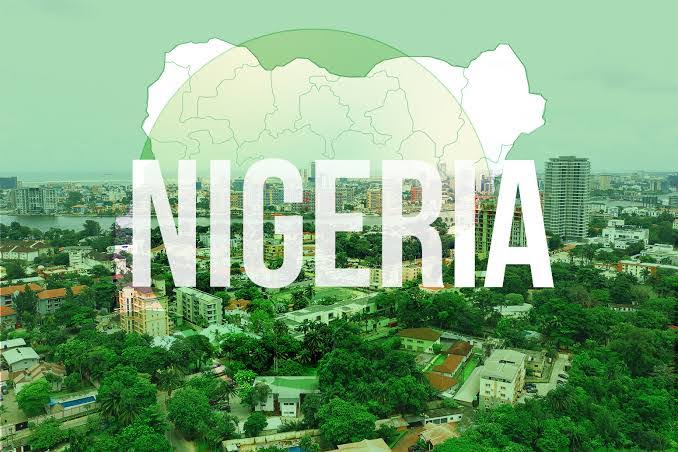
There is a quiet tragedy unfolding in Nigeria, and it rarely trends.
It does not explode like fuel prices. It does not march through streets like elections. It does not scream like insecurity. It whispers.
It whispers in abandoned village compounds where old fathers sit under mango trees waiting for children who now live in Lagos, Abuja, London, or Canada. It whispers through unanswered phone calls. Through remittances sent instead of visits made. Through aging mothers clutching blood pressure drugs while pretending they are “fine.” Through old men who once carried entire families on their backs but now struggle to climb a staircase without help.
And somewhere in this national silence stands the figure of the Nigerian father. Often misunderstood. Frequently emotionally distant. Sometimes flawed. Yet overwhelmingly sacrificial. A generation of men raised not to speak tenderness fluently, but to express love through labor, provision, discipline, and endurance.
This is why celebrating men like Olorogun London Omokiniovo-Okuwhere matters deeply. Because in celebrating one man’s birthday, we are forced to confront a larger question: What happens to the generation of fathers who built Nigeria quietly while history looked elsewhere?
Olorogun London is not simply another elder marking another birthday. He represents a fading archetype in Nigerian society: the father as institution. The man who understood that raising children was not merely feeding mouths but shaping minds. Not just paying school fees but building moral architecture.
His son, Mirhiga, once shared a memory that reveals the soul of the man more than any title ever could. As a child, he was handed newspapers and magazines like The Observer and Tell Magazine. His father would ask him questions, not to impose answers but to provoke thought.
“What do you think?”
That question is civilization in seed form.
Because the greatest fathers do not create dependents. They create thinkers.
Nigeria today suffers partly because too many homes produced obedience without reflection, ambition without ethics, and success without conscience. We taught children how to pass exams, but not how to interrogate power. We raised professionals without raising citizens.
But fathers like Olorogun London belonged to a generation that still understood something sacred: that intellectual curiosity is a form of inheritance. That character matters. That integrity is wealth no inflation can erode.
And yet, here lies the paradox.
The same Nigerian society that expects men to become roofs over families often forgets that roofs eventually crack under weather. We raise men to provide endlessly, then abandon them emotionally when their strength declines. We celebrate fathers while they are productive, then quietly sideline them when they become dependent.
Many Nigerian men are aging into loneliness.
The irony is brutal.
These were men who paid fees through military regimes, economic collapse, SAP policies, fuel scarcity, communal crises, and impossible inflation. Men who swallowed personal dreams so their children could become doctors, lawyers, engineers, academics, or migrants with foreign accents. Men who hid tears behind newspaper pages because society taught them vulnerability was weakness.
Today, many of those same men sit in silence while WhatsApp family groups replace actual caregiving.
Nigeria is entering a dangerous demographic future for which we are profoundly unprepared.
Traditionally, African society relied on extended family systems to care for aging parents. The village absorbed weakness collectively. Aging was not an individual burden but a communal responsibility. Grandparents remained integrated into the rhythm of life. Elders possessed authority, memory, and relevance.
But urbanization shattered much of that ecosystem.
Migration fragmented families.
Economic hardship exhausted caregivers.
Hyper-individualism crept into our cities dressed as modernity.
Now many middle-aged Nigerians face a terrifying sandwich existence: raising children while simultaneously supporting aging parents with collapsing healthcare systems, rising living costs, and almost nonexistent social protection structures.
The future is approaching fast.
Who will care for Nigeria’s elderly population in twenty years?
What happens when today’s energetic fathers become tomorrow’s fragile dependents?
What happens when pension systems fail, healthcare remains inaccessible, and family bonds become increasingly transactional?
The Nigerian family is quietly approaching a caregiving crisis.
And perhaps this is why the life of Olorogun London Omokiniovo-Okuwhere feels instructive beyond celebration. His life reminds us that fatherhood is not merely biological. It is civilizational work.
As Aphopho of Agbarha-Otor Kingdom, he embodies an older philosophy of leadership where titles were not ornaments but obligations. In many Nigerian cultures, elders were custodians of memory, mediators of conflict, protectors of values, and interpreters of communal wisdom. They understood that leadership was stewardship, not performance.
Modern Nigeria desperately needs that wisdom again.
We are raising a generation fluent in technology but increasingly disconnected from intergenerational responsibility. A society where many young people know global celebrities intimately but barely know the stories of their own fathers. A culture drifting dangerously close to celebrating consumption more than continuity.
Yet continuity is what sustains civilizations.
Roots matter.
A tree does not negotiate with its roots and survive.
This is why honoring fathers cannot be reduced to Father’s Day slogans or birthday photographs in matching aso-ebi. The deeper question is whether we are building systems, habits, and values that preserve dignity for aging parents.
Caregiving is not charity.
It is memory repaying sacrifice.
It is history refusing amnesia.
And the lesson for the younger generation is profound: the way you treat your aging parents is also the blueprint your children are studying for your own future.
Children are always watching. Quietly. Absorbing. Learning what love looks like under pressure.
If they see abandonment normalized, they may inherit abandonment as culture.
If they see honor modeled, they may preserve honor as legacy.
This is why fathers matter even when they are imperfect. Even when they struggle emotionally. Even when they fail in some ways. Because many Nigerian fathers carried burdens they were never taught how to articulate. They were trained to survive, not necessarily to heal.
Still, many planted trees whose shade they may never fully enjoy.
And so today, as we celebrate Olorogun London Omokiniovo-Okuwhere, we celebrate more than a birthday. We celebrate endurance. We celebrate rootedness. We celebrate the men who became invisible scaffolding for families, communities, and kingdoms.
To Mirhiga, your father’s life is a living archive. Guard it carefully.
To Nigerian sons and daughters everywhere: call your parents more often. Visit when you can. Ask questions while memory still breathes. Record their stories before silence steals them. One day, the voice you postpone hearing may become the voice you would give anything to hear once more.
And to Olorogun London Omokiniovo-Okuwhere, happy birthday.
May your wisdom continue to ripple across generations like rainwater finding thirsty roots beneath dry earth. May your years remain fruitful. May your legacy outlive monuments. May your children and community rise around you like branches honoring the root from which they came.
For men like you do not merely grow old.
They become ancestors while still alive. And with such men like Omokiniovo-Okuwhere—May Nigeria win

















You must be logged in to post a comment Login