Africa
Since Nobody Knows Tomorrow, How Humbling Would It Be For Fubara’s Traducers If He Wins A Second Term Under The APC? -By Isaac Asabor
And when tomorrow comes, as it always does, it answers every boast with reality. That is why every politician, no matter how powerful, should occasionally ask the question many refuse to confront: “What if tomorrow humbles me?” Because in this country, nobody, absolutely nobody, knows tomorrow.

Nigerian politics has a wicked sense of irony. It elevates men, wraps them in power and applause, and then, without warning, strips them bare. Today’s loudest enforcer becomes tomorrow’s forgotten name. Today’s political bully wakes up to find that power has quietly moved on. This is why one lesson remains eternal in public life: “Nobody knows Tomorrow”.
It is a lesson many political actors refuse to learn, especially those who mistake temporary advantage for permanent dominance. They speak with finality, predict defeat with confidence, and treat rivals as already buried. Yet history keeps humiliating such certainty.
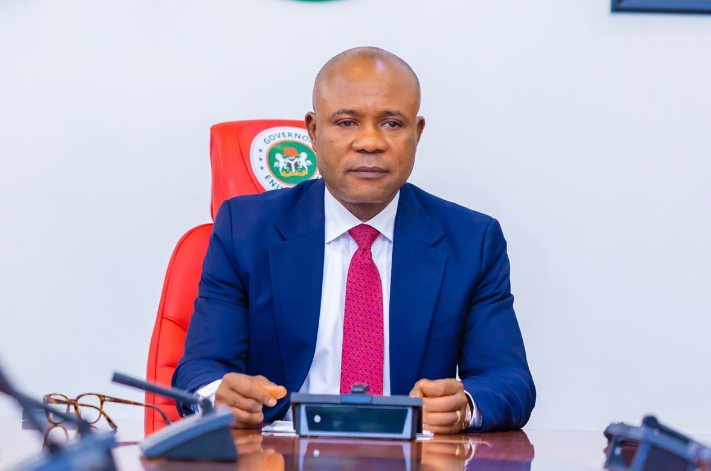
Against the backdrop of the foregoing view, it is worth considering a scenario that unsettles many political traducers in Rivers State and beyond: “What if Siminalayi Fubara survives the onslaught, outlasts the sabotage, and secures a second term as governor, this time under the APC?”
It is not a prediction. It is not wishful thinking. It is a reminder, backed by precedent, that Nigerian politics routinely rewards patience and punishes overconfidence.
From the moment Governor Fubara asserted independence, a coalition of interests emerged to politically suffocate him. Former allies became open enemies. Power blocs mobilized against him. Institutions were dragged into political combat. Narratives were weaponized. The assumption was simple: resistance would be crushed, defiance would be broken, and the governor would either submit or be extinguished.
Unfortunately, those fighting Governor Siminalayi Fubara would do well to remember a basic truth they seem determined to ignore: power is not seized by noise, numbers, or intrigue alone. In the moral universe they constantly invoke when it suits them, authority is ultimately dispensed by God. Political muscle may unsettle a man for a season, but it cannot overrule divine timing. History books, the bible and other documentations, are littered with figures who mistook temporary advantage for permanent control, only to discover too late that the ground beneath them had already shifted.
Scripture puts it bluntly and without sentimentality: “For promotion cometh neither from the east, nor from the west, nor from the south. But God is the judge: he putteth down one, and setteth up another” (Psalm 75:6–7, KJV). Those plotting Fubara’s fall should read the foregoing scripture slowly, and internalize it. The same hand that lifts can also lower, and the same God they claim to fear has a habit of frustrating the proud while elevating whom He wills. Ignoring that lesson is not just bad theology, it is bad politics.
But Nigerian politics has a stubborn habit of refusing to cooperate with scripts written by its noisiest actors. Those who doubt this need only revisit the recent history of Edo State.
Godwin Obaseki was once written off with absolute confidence. After his fallout with the APC establishment, his traducers declared his political obituary before the ink on his defection papers to the PDP was dry. They controlled party structures. They dominated local governments. They deployed resources, propaganda, and intimidation across the state. The consensus among his enemies was clear: Obaseki would not survive a second-term bid outside the APC. How wrong they were as Obaseki won the second term under PDP ticket. His victory was not a surprise to many as Obaseki always remind his traducers that “Man nor be God”.
Obaseki faced coordinated opposition across all local government areas in Edo State. He was resisted by former allies, party machinery, and entrenched interests that believed power was theirs by right. Yet, against that expectation, he won re-election under the PDP, defying predictions, humiliating his traducers, and rewriting the political calculus of the state.
What makes that precedent even more instructive is this: the war against Obaseki, fierce as it was, did not approach the intensity and breadth of the siege currently mounted against Fubara.
In Rivers State, the scale is larger. The pressure is heavier. The interests involved are deeper. The desperation is louder. The political machinery deployed against Fubara is more aggressive than anything Obaseki faced in Edo. Unfortunately for his traducers, “Man nor be God” as he would surely show for him in the nick of time. The reason for the foregoing assurance rooted in the power of God cannot be farfetched as history shows that the louder the certainty of defeat, the closer politics often is to a surprise, and God will never disappoint him.
In fact, the Obaseki episode exposed a hard truth Nigerian godfathers hate to confront: “political ownership is a myth”. Installing a candidate does not confer lifelong control. Power is not hereditary. Loyalty enforced through fear expires quickly once circumstances change.
When a politician survives an attempted political execution, the defeat suffered by his traducers is not merely electoral, it is moral. It strips them of the aura of inevitability. It exposes the limits of their reach. It reveals that influence without adaptability is brittle. This is the danger confronting those who assume Fubara’s downfall is inevitable.
Power without office is unstable. Influence without relevance evaporates. Structures without legitimacy collapse under pressure. By contrast, incumbency, when managed with patience and tactical restraint, remains one of the strongest currencies in Nigerian politics.
This is why the obsession with politically caging a sitting governor often backfires. Excessive force creates sympathy. Relentless hostility invites scrutiny. The more brutal the assault, the more the attacker’s insecurity is exposed.
Yet this argument is not made to glorify defiance or romanticize rebellion. It is a caution; one that applies to all political actors who believe tomorrow is already settled. “Nobody knows tomorrow” is not a slogan for the weak; it is a warning to the powerful.
It reminds ministers that appointments expire. It cautions party leaders who think structures are immovable. It warns godfathers that political sons eventually acquire their own ambitions and survival instincts. Above all, it teaches restraint, because in Nigerian politics, humiliation often arrives long after arrogance has spoken.
If Fubara were to secure a second term under the APC, it would not merely echo Obaseki’s triumph, it would amplify it. It would signal that absolute godfatherism is weakening in Nigeria’s politics. It would confirm that survival sometimes belongs not to the loudest, but to the most patient.
For the APC, such an outcome would represent strategic consolidation in a critical oil-producing state. For rival parties, it would be another reminder that internal wars destroy faster than external opposition ever could. But beyond parties and personalities lies the deeper lesson that Obaseki’s traducers learned too late.
In fact, politics is cyclical. Influence rotates. Today’s executioner may tomorrow be explaining his absence from relevance. That is why political actors must speak carefully, act moderately, and resist the temptation to declare victory before the battle is concluded. Nigerian politics does not punish arrogance immediately. It waits.
And when tomorrow comes, as it always does, it answers every boast with reality. That is why every politician, no matter how powerful, should occasionally ask the question many refuse to confront: “What if tomorrow humbles me?” Because in this country, nobody, absolutely nobody, knows tomorrow.