Africa
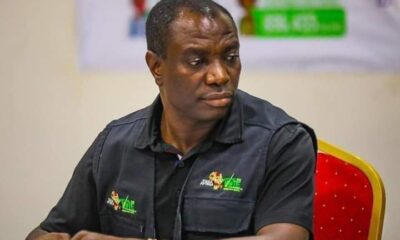
The Day Governor Radda Explained Transparency by Breaking It -By Aliyu Sulaiman Babasidi
What his clarification revealed was not inconsistency but evolution, the journey from promise to process. In explaining the limits of fiscal openness, he may have modeled a higher form of accountability, the courage to say, “it’s not that simple.” In a political culture addicted to applause lines, that may well be the most refreshing rhetoric of all.


Governor Dikko Umar Radda of Katsina State loves to speak from his heart. People who tend to do that often reveal more than they may intend, for those who care to listen. In Katsina, even his harshest critics secretly admit they enjoy hearing him speak. This is not unconnected to the fact that his addresses are mostly off the cuff, unrehearsed, and fresh out of the oven. They carry the smell of conviction, raw, unfiltered, and sometimes unpredictable.
So when members of the opposition and critics alike came out guns blazing, and rightly so, to accuse the Governor of failing to fulfill a “simple” campaign promise of running an open and fiscally transparent government, Radda reached for his steel shield, his rhetoric. With characteristic composure, he turned what could have been an embarrassing retreat into an exhibition of wit and persuasion. He reminded his audience that governance is not a straight line, and that reality has a way of complicating even the most sincere promises.
The governor explained that his administration inherited a complex debt structure, unpaid contractors, and layers of financial obligations that made instant fiscal disclosure impractical, not impossible. In essence, he was saying that transparency without context could easily become political theatre. Then, just when the heat was about to rise, he lowered the temperature with humility: “Jama’a ayiman afuwa, nima dan Adam ne” – “Please forgive me, I am only human.” That simple admission, coming at the end of a defensive speech, cheekily laid the matter to rest. It was the kind of line that disarms anger without asking for it. Radda, it seems, often acts as his own spin doctor.
This calmness under pressure is not new to those who have followed his political journey closely. Long before the government house beckoned, he had endured skepticism and political choking from formidable opponents within his own party. During the tense 2022 APC primaries, when asked if he truly believed he could challenge the established political heavyweights, he responded, calmly yet with conviction, that only God decides destinies, and whoever emerged victorious would do so by Allah’s will. Few in Katsina saw his victory coming, but those who did understood it was built on quiet confidence and faith-driven resolve.
Interestingly, Radda’s recent explanation does not exist in isolation. It mirrors the deeper logic of his Building Your Future policy document, which emphasizes sequence before spectacle, system before sentiment. The document’s BLOCKS framework, built around budgeting, learning, and institutional reform, envisions accountability as a process, not an event. In that light, the governor’s backtrack on instant fiscal disclosure seems less like evasion and more like ideological consistency. He was, perhaps unknowingly, living out his own script, the patient architecture of reform he promised long before the cameras started rolling.
That same document frames governance not as a theatre for applause, but as a system of coordinated learning and reform. Radda’s position may therefore be interpreted as an act of disciplined realism. By admitting the limits imposed by inherited debt, he has effectively expanded the meaning of transparency, from mere publication of figures to a more honest conversation about capacity, systems, and sustainability. There is irony here: in admitting he cannot yet do what he promised, he has, in fact, practiced the truest form of openness, honesty.
Beyond the politics of the moment, the governor’s rhetorical poise speaks to a broader issue within Northern Nigeria’s political culture, the undervaluation of speechcraft. While the South has produced fiery orators who turn policy into poetry, the North has often leaned on political songs and praise anthems as the dominant mode of persuasion. Words, especially speeches, are still treated as ceremonial accessories rather than instruments of governance. Radda’s spontaneous speeches challenge that pattern. He understands that rhetoric, when honest and grounded, can shape perception and restore trust in ways propaganda cannot.
It is reminiscent of the style of former Kano governor Rabiu Musa Kwankwaso circa 2011, whose plain-spoken yet passionate addresses helped rekindle a political identity around sincerity and service. Like Kwankwaso, Radda’s strength lies not in perfection but in authenticity. His ability to switch between assertive defense and humble admission is a rhetorical balance rarely seen in Nigerian politics today.
Leadership, after all, is the art of navigating contradictions, between ideal and reality, promise and pragmatism, vision and viability. Campaigns thrive on the language of what should be; governance is written in the grammar of what can be. In clarifying his position on fiscal transparency, Governor Radda did not merely defend himself; he reminded Katsinans that honesty sometimes comes in the form of concession.
What his clarification revealed was not inconsistency but evolution, the journey from promise to process. In explaining the limits of fiscal openness, he may have modeled a higher form of accountability, the courage to say, “it’s not that simple.” In a political culture addicted to applause lines, that may well be the most refreshing rhetoric of all.



![Gaza has been under heavy Israeli bombardment for weeks [File: Ohad Zwigenberg/AP]](https://www.africansangle.com/wp-content/uploads/2023/10/Gaza-has-been-under-heavy-Israeli-bombardment-for-weeks.jpg)