Africa
The Dilemma of Two Giants: Comparing the Resilience of Indonesia and Nigeria’s Labor Markets Amid the Shadows of Informal Sectors -By Mega Dewi Ambarwati
The real dilemma for these two giants is no longer about how to increase GDP growth figures alone, but how to move millions of people from vulnerable informal sectors to dignified formal sectors. Indonesia indeed excels in wage stability and an economy with a scale reaching USD 1.47 trillion, providing a stronger foundation to implement reforms.

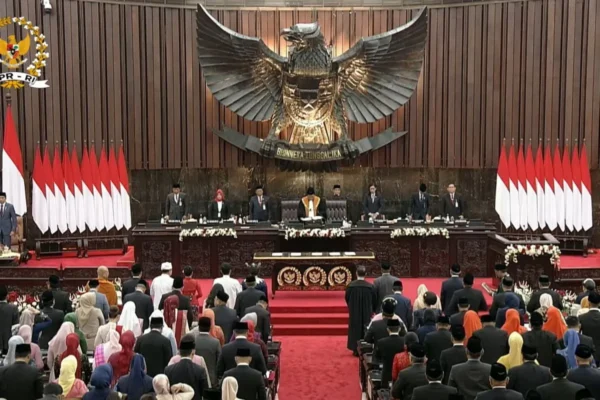
Indonesia and Nigeria are often seen as ‘mirrors’ of each other across two different continents. Both are regional giants—Indonesia as the anchor of Southeast Asia and Nigeria as the driving force of Africa—with massive populations and big ambitions to become global economic powers. However, entering 2026, behind the GDP growth figures and ambitious labor statistics, both countries are grappling with the same enemy: structural uncertainties in increasingly complex labor markets. On a macro level, Indonesia seems to be moving on a more stable path. With a total labor force now reaching 155.27 million people, Indonesia demonstrates impressive resilience post-economic transition. The open unemployment rate (TPT) was successfully reduced to the range of 4.7% to 5.1%, an achievement supported by industrial downstream policies and increased foreign investment. In addition, relatively progressive minimum wage policies—such as in Jakarta, reaching Rp 5.73 million—provide some breathing room for the working class amidst global inflation.
However, these statistical successes leave a troubling ‘fragility’ at the lower layers. Data shows that 57.7% of Indonesian workers are still trapped in the informal sector. They include online motorcycle taxi drivers, street vendors, and freelance workers in the gray areas, where social security is minimal, legal protection is often absent, and career progression is merely a myth. This vulnerability is exacerbated by the phenomenon of youth unemployment (Gen Z) which remains at 16.16%. This figure is a loud alarm that our education system is not fully aligned with the needs of Industry 4.0, which demands high specialization.
On the other hand, Nigeria faces a storm that is far stronger and existential in nature. As the largest economy in Africa with a population projected to soar to 242.58 million by 2026, Nigeria has tremendous young energy but is hindered by sharp economic disparities. Nigeria’s national minimum wage, which is only around 70,000 Naira (approximately Rp870,000), reflects a very deep welfare gap when compared to Indonesia. Although the non-oil sector has begun to show its strength by contributing 96% to real GDP, the unemployment threat predicted by the IMF, reaching 22.6%, casts a dark shadow over national stability.
The main problem in Nigeria is not merely the availability of jobs, but the quality of infrastructure that supports productivity. Without a reliable electricity supply and an efficient transportation system, company operating costs soar, which in turn suppresses wages and limits formal business expansion. As a result, dependence on the informal sector in Nigeria is far more extreme compared to Indonesia, with a proportion estimated to exceed 80% of the total workforce. The comparison between these two countries reveals a bitter truth that a large labor force is a double-edged sword. The demographic bonus, long touted as a ticket to a developed country, can easily turn into a demographic burden or even a social disaster. In Indonesia, the main threat is the middle-income trap, where economic growth stagnates because the quality of human resources cannot transform into the high-service and technology sectors. Meanwhile, in Nigeria, the risk faced is social instability due to a large wave of educated but unemployed youth who feel alienated from their own country’s economic growth. Entering 2026, new challenges arise in the form of automation and Artificial Intelligence (AI). Indonesia, with its rapidly growing digital economy, faces the risk of disruption to administrative and routine manufacturing jobs. Conversely, Nigeria may face ‘premature deindustrialization,’ where they have not yet had the chance to build a strong manufacturing base but already have to compete with global technology that replaces cheap human labor. This forces both countries to focus not only on the number of jobs but also on massive re-skilling and up-skilling of the workforce.
The real dilemma for these two giants is no longer about how to increase GDP growth figures alone, but how to move millions of people from vulnerable informal sectors to dignified formal sectors. Indonesia indeed excels in wage stability and an economy with a scale reaching USD 1.47 trillion, providing a stronger foundation to implement reforms. However, Nigeria possesses extraordinary resilience and entrepreneurial creativity amid limitations, a social asset that, if managed with the right policies, can trigger an unexpected economic boom.
Ultimately, comparing Indonesia and Nigeria is not merely a matter of matching statistical figures on paper. It is about how far a country can humanize its workforce and secure the future of its younger generation. Without structural reforms that touch the grassroots—ranging from improving the quality of education, easing business for SMEs, to strengthening social safety nets—both Indonesia and Nigeria will continue to be “giants with fragile feet.” They have a large workforce in terms of quantity, yet remain vulnerable in terms of welfare amid increasingly ruthless global economic competition. The key to their future success lies not in the natural resources contained within the earth, but in their ability to uplift the dignity of the workers who drive the economy above it.






![Gaza has been under heavy Israeli bombardment for weeks [File: Ohad Zwigenberg/AP]](https://www.africansangle.com/wp-content/uploads/2023/10/Gaza-has-been-under-heavy-Israeli-bombardment-for-weeks.jpg)