Economy
The Eternal Queue: Nigeria’s National Pastime And Predicament -By Prince Charles Dickson Ph.D
Until then, we will continue to queue, to shuffle, to sigh, and to laugh at the absurdity of it all. For in Nigeria, the queue is not just a line; it’s a way of life. And perhaps, just perhaps, it’s a story we tell ourselves, a shared narrative that binds us together, even as it tests the very limits of our patience, the question is how long do we have to stay in the queue waiting for the good of governance, the best of leadership at the very local level, when will the queues for better education, accessible healthcare be a right to every Nigerian—Only time will tell.

Fuel Station Palaver
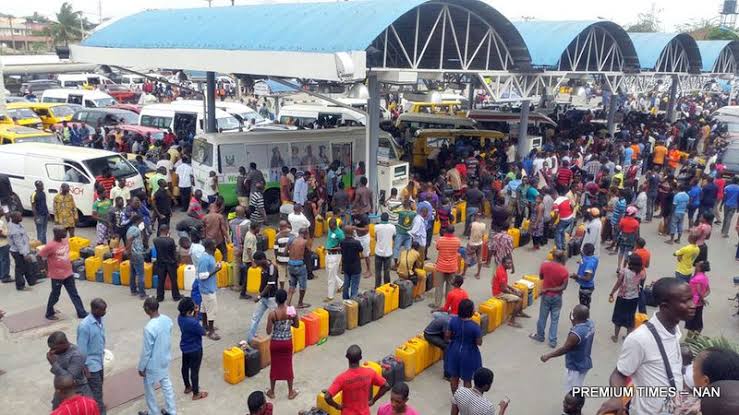
Setting: A scorching afternoon at a seemingly endless fuel queue in Lagos. Mama Ade and Papa Emeka are neighbors, stuck in their cars, inching forward.
Mama Ade: Papa Emeka! Na you be dis? Ah, dis fuel wahala go kill us one day! See queue, e be like snake wey swallow elephant!
Papa Emeka: Mama Ade! Wetin man go do? Motor don dey nearly drink air. Dem say fuel dey, but e be like say na for oyinbo land dem keep am. Laughs dryly Na only for Naija you go queue to buy wetin you get money for!
Mama Ade: True, true! Even for heaven sef, I sure say queue go dey for gate if dem share free gold. Na our national sport be dis, queuing Olympics! But eh, my back dey break o. Dis good governance wey dem promise, na queue dem mean? Queue for fuel, queue for light, queue for water… Na queue upon queue!
Papa Emeka: Sighs Na so we see am o. Dem say we dey resilient. But I dey think, na resilience or na we just learn to dey suffer and smile? Maybe one day, queue go queue for us, e go tire, e go commot for road. But until dat day, make we dey manage, dey pray, and dey sweat for dis line!
Bank Wahala
Setting: Inside a crowded bank hall in Abuja. Young Corper Tunde and Elder Musa are waiting in the snaking queue for the teller.
Tunde: Baba, good morning… or good afternoon sef. Dis bank queue dey fear me! E be like say to collect your own money for Naija, na pilgrimage.
Elder Musa: Fans himself with a newspaper My son, welcome to Nigeria! Na since we bin small pikin we dey queue. For school fees, for food, now for pension… Queue na our heritage! Chuckles sadly Dem say technology dey make life easy, but ATM queue sef dey longer pass NEPA queue before!
Tunde: But Baba, all dis plenty queue, e no tire us? Dem dey promise us change, better Naija… but na same queue we dey see. Good roads, hospitals wey dey work, light wey no dey blink like Christmas… Na queue we still dey for all of dem.
Elder Musa: My son, e get wetin eye see, mouth no fit talk. Maybe di queue na test from Baba God. To test our patience, our faith… or maybe to test if we go finally vex and use our leg break di queue! But for now, we dey here, dey queue, dey hope say one day, we go reach front, collect our right, and maybe, just maybe, see small change for di better Naija we dey dream of.
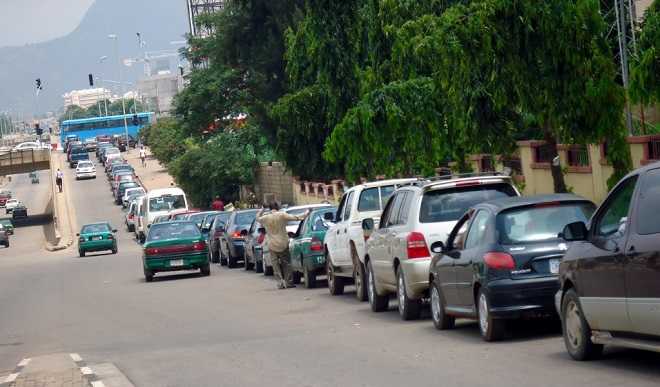
Fuel crisis queue
Ah, the queue. That ubiquitous, serpentine entity that slithers through the Nigerian landscape, a constant companion in our daily lives. From the hallowed halls of A-class events to the humble confines of Iya Basira’s Amala joint, the queue reigns supreme. It’s a national pastime, a social ritual, and, let’s be honest, a profound national predicament.
Consider the A-class event, a spectacle of champagne flutes and canapés. One might expect a certain level of decorum, perhaps even a touch of regal efficiency. But no. The buffet line, that sacred trough of culinary delights, becomes a battleground. Dignitaries, celebrities, and the crème de la crème of society, all reduced to shuffling mortals, plates in hand, eyes fixed on the jollof rice like pilgrims at a holy site. It’s a humbling experience, a reminder that in the face of free food, we are all equal.
Then there’s the fuel scarcity, a recurring national drama that plays out with the predictability of a Nollywood plot. The headlines scream, “Fuel Scarcity Looms!” and, like Pavlovian dogs, we react. We abandon our homes, our offices, our very sanity, to join the snaking lines at petrol stations. Cars stretch for miles, forming impromptu parking lots, and tempers fray like overstretched elastic bands. It’s a national exercise in patience, or perhaps, a national exercise in masochism.
The banks, those bastions of financial probity, are no different. The ATM, a marvel of modern technology, becomes a monument to our collective frustration. We stand, we shuffle, we sigh, watching as the minutes tick by, each transaction a Herculean effort. And heaven forbid you need to see a teller; that’s a queue within a queue, a bureaucratic labyrinth designed to test the limits of human endurance.
Iya Basira’s Amala joint, a culinary institution, is a microcosm of the national experience. The queue here is a testament to the irresistible allure of her pounded yam and egusi. It’s a vibrant, noisy, and slightly chaotic affair, where conversations flow as freely as the palm wine. But even here, in this haven of culinary bliss, the queue is an ever-present reality.
And let’s not forget the senior citizens, those who have toiled and contributed to the nation, now forced to endure the indignity of queuing for their pensions. It’s a national disgrace, a testament to the bureaucratic ineptitude that plagues our institutions. Surely, a thunder 5.0, delivered with the righteous fury of a vengeful deity, is the only fitting punishment for such callous disregard.
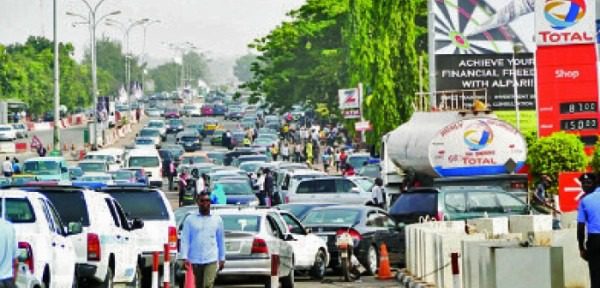
Fuel Scarcity e1460235569125
The cinemas, the places of worship, the airports, the immigration offices, the passport offices, the exam halls – all are united by the common thread of the queue. It’s a social equalizer, a national leveller, reminding us that no matter our status, our wealth, or our influence, we are all subject to the whims of the queue.
Even our roads are not immune. The infamous “go-slow,” a queue of cars stretching for miles, is a daily ordeal, a test of patience and a testament to our collective acceptance of gridlock as a way of life. It’s a symphony of honking horns and frustrated sighs, a mobile queue that moves at a snail’s pace.
One might argue that the queue is a symbol of our resilience, our ability to endure hardship with a stoic shrug and a wry smile. But is it really resilience, or is it a learned helplessness, a passive acceptance of inefficiency? Are we so accustomed to queuing that we’ve forgotten what it’s like to live in a system that functions efficiently?
Perhaps the queue is a reflection of our national character, a testament to our communal spirit. We queue together, we suffer together, we complain together. It’s a shared experience, a collective ordeal that binds us together. But is it a bond we should celebrate, or a symptom of a deeper malaise?
The queue, in all its forms, is a mirror to our society, reflecting our strengths and our weaknesses. It’s a reminder that we are a nation of patient people, but also a nation plagued by inefficiency. It’s a testament to our communal spirit, but also a symbol of our collective acceptance of mediocrity.
We must ask ourselves: are we destined to forever shuffle in these endless lines, or can we break free from the shackles of the queue? Can we create a system where efficiency reigns, where queues are the exception rather than the rule? Can we build a nation where the “go-slow” is a relic of the past, and the only queues we encounter are those at the gates of paradise?
Until then, we will continue to queue, to shuffle, to sigh, and to laugh at the absurdity of it all. For in Nigeria, the queue is not just a line; it’s a way of life. And perhaps, just perhaps, it’s a story we tell ourselves, a shared narrative that binds us together, even as it tests the very limits of our patience, the question is how long do we have to stay in the queue waiting for the good of governance, the best of leadership at the very local level, when will the queues for better education, accessible healthcare be a right to every Nigerian—Only time will tell.
—