
Economy
Sad, As Those Who Allegedly Governed Nigeria Into Economic And Political Disrepair Are Still Clutching Onto Power -By Isaac Asabor
Nigeria is not yet beyond redemption, but the path to recovery requires that those who contributed to its downfall relinquish their hold on power. If they refuse to do so willingly, it is the duty of the electorate to force them out through democratic means. The country must move beyond political theatrics and demand real, measurable progress. Anything less is an insult to the suffering millions who still hold onto hope for a better Nigeria.

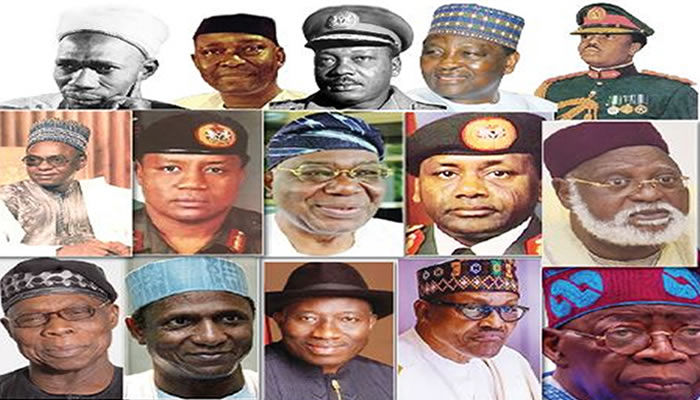
It is both tragic and infuriating that those who allegedly led Nigeria into its current state of economic and political disrepair are the same ones still clutching onto power, refusing to loosen their grip on a country they have run aground. It is as though, after bleeding the nation dry, they now circle its carcass like vultures, scavenging whatever is left for themselves and their cronies.
The Nigerian economy, once full of promise, is now characterized by an unbearable cost of living, a depreciating currency, and an overwhelming sense of hopelessness among its citizens. Under successive administrations, corruption, nepotism, and policy failures have driven the nation into an abyss. Yet, rather than making way for fresh, visionary leadership, the same figures who orchestrated Nigeria’s decline continue to dominate the political space, either directly or through their surrogates.
Despite countless economic summits, policy reviews, and supposed interventions, the situation has worsened over the years. The cost of food, transportation, and basic utilities has soared beyond the reach of ordinary Nigerians, while salaries remain stagnant. Inflation has eroded the purchasing power of the middle class, pushing more people into poverty. Meanwhile, the ruling elite continue to enjoy lavish lifestyles, insulated from the economic struggles faced by the majority.
In a just society, those responsible for economic mismanagement and national decay should have been held accountable. They should have faced investigations, and where necessary, prosecutions. But in Nigeria, these individuals remain in the corridors of power, still making decisions that impact millions of suffering citizens. Worse still, they disguise themselves as the saviors of a nation they helped ruin, offering so-called reforms that are nothing but recycled failures. They use state resources to fund their extravagant lifestyles, amassing wealth through shady government contracts, misappropriation of funds, and the outright looting of public assets.
The political elite in Nigeria have mastered the art of self-preservation. They form alliances not for national progress but for their own survival. When one of their own is in danger of losing political relevance, a new strategy is quickly devised to keep them in circulation. They move from one political party to another, rebrand themselves as reformists, and continue to exploit the nation’s resources with impunity. It is not uncommon to see political figures who once governed poorly return to power in a different capacity, using state machinery to suppress opposition and perpetuate their hold on governance.
This cycle of exploitation is further sustained by a political system that rewards mediocrity, discourages accountability, and suppresses the will of the people. Elections in Nigeria are often a mere formality, where the highest bidder secures victory, not the most competent or visionary candidate. As a result, governance is reduced to a transactional endeavor, where the interests of the masses are secondary to the ambitions of the elite. The same individuals who once mismanaged public funds are rebranded and repackaged to return to the helm of affairs, ensuring that the country never experiences the true change it so desperately needs.
The suffering of ordinary Nigerians is evident everywhere, on the streets, in marketplaces, in homes, and even in educational institutions. Youth unemployment remains alarmingly high, leading to frustration, crime, and the loss of valuable human potential. Nigeria’s young population, once regarded as its greatest asset, has become one of its most neglected groups, with many struggling to find opportunities for growth. Meanwhile, those who led the country into this quagmire continue to send their children abroad for quality education while domestic institutions crumble under poor funding and neglect.
One would expect that the dire economic conditions, marked by hyperinflation, fuel scarcity, and soaring unemployment, would force a radical departure from this destructive status quo. However, the political elite remain insulated from the suffering of ordinary Nigerians. Their wealth, mostly acquired through dubious means, allows them to live in luxury while the common citizen struggles to afford basic necessities. They continue to manipulate the masses, using tribal, religious, and ethnic sentiments to distract the people from their real enemy, corrupt governance.
The question remains: “How long will this tragic cycle continue?” When will Nigeria be freed from the grip of those who have drained its lifeblood? The answers lie in the hands of the people. Until Nigerians demand real accountability, resist the recycling of failed leaders, and insist on genuine political and economic reforms, the nation will continue to be held hostage by the same individuals who led it to its current state.
It is time for Nigerians to wake up. The future of this country cannot be left in the hands of those who have repeatedly failed to deliver meaningful change. Civil society organizations, youth groups, and progressive movements must rise to challenge the status quo. The people must reject politicians who have nothing new to offer, those who have looted the treasury, and those who see governance as a personal entitlement rather than a service to the nation.
Nigeria is not yet beyond redemption, but the path to recovery requires that those who contributed to its downfall relinquish their hold on power. If they refuse to do so willingly, it is the duty of the electorate to force them out through democratic means. The country must move beyond political theatrics and demand real, measurable progress. Anything less is an insult to the suffering millions who still hold onto hope for a better Nigeria.
The time for action is now. The burden of saving Nigeria falls on the shoulders of its citizens, who must refuse to be pawns in a game played by those who see the country as their personal fiefdom. The future of the nation depends on its people’s collective resolve to break the cycle of recycled leadership, hold wrongdoers accountable, and chart a new course toward prosperity and genuine progress.


























You must be logged in to post a comment Login