Africa
The Pricey Road To Landlord Status: Why Many Tenants Can’t Afford To Build Their Own Houses -By Isaac Asabor
Conclusively put, the road to becoming a landlord, either in Lagos or Ogun state is paved with pricey lands and building materials. Today, it feels more like an exclusive club, locked behind high walls of cost, speculation, and structural inflation. For the average tenant in Lagos and its growing suburbs, the road to becoming a landlord has become not just long, but expensive and uncertain.

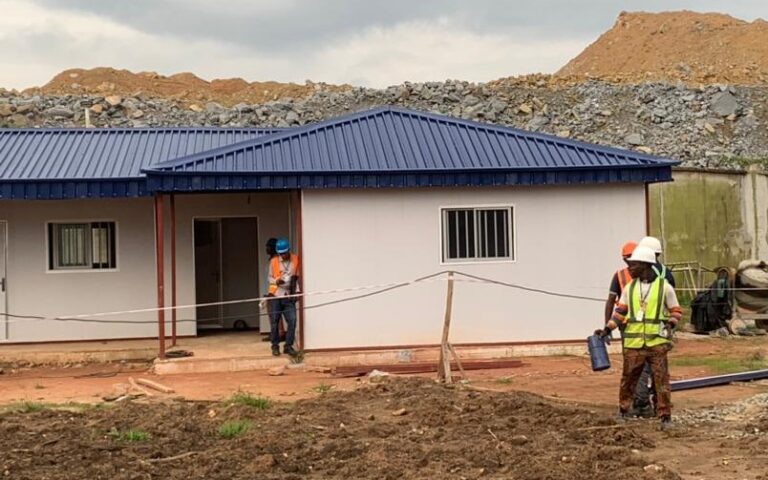
Becoming a landlord, once the defining aspiration for many tenants in Lagos and its semi-urban outskirts, is no longer just about saving a few months’ salary coupled with obtaining loans from work places, and signing on the dotted line. In 2026, it has become an uphill battle against sky-high land costs and soaring prices of essential building materials. For hundreds of thousands of prospective homeowners, the dream of owning and building on land is slipping out of reach, replaced by a steep, expensive journey that looks more like a gamble than a secure investment.
Against the backdrop of the foregoing synopsis, Lagos, Nigeria’s commercial powerhouse and Africa’s fastest-growing megacity, is a story of extremes. On one end, you have high-end estates where land is traded like blue-chip stock. On the other, everyday Nigerians scramble for a patch of earth in the city’s expanding fringes.
For instance, prime land prices in Lagos, in places like Ikoyi, Victoria Island, and Lekki, can exceed ₦1 million per square metre, meaning a modest 300–400 sqm plot easily runs into hundreds of millions of naira.
Even outside the top-tier neighbourhoods, mainland plots in areas like Ikorodu, Badagry, and Epe commonly fetch between ₦500,000 and ₦20 million per plot depending on size and development status. A comprehensive market listing suggests average listing prices in Lagos can cluster around tens of millions of naira per plot, with some properties averaging over ₦25 million.
This means that before a single brick is laid or a foundation is poured, aspirants must find a hefty down-payment for the land itself, a barrier that is increasingly insurmountable for many tenants earning below six-figure incomes.
Given the unaffordable situation in Lagos and its outskirts, not a few aspiring landlords have looked elsewhere, particularly toward Mowe/Ibafo axis in Ogun state, unfortunately market surveys regarding prices of lands of various sizes and building materials show it Ogun state still does not offer affordable alternative for aspiring landlords. For many Lagos tenants, the only way out of the renting cycle has been to look beyond Lagos State, into neighbouring Ogun State, particularly the Mowe-Ofada corridor, but the situation still remains hopeless.
In fact, land in Mowe and environs typically ranges from a few million naira to around ₦12 million or more per plot, depending on infrastructure, title legitimacy, and proximity to the Lagos-Ibadan Expressway.
Online listings show plots in the range of ₦5 million to ₦15 million and sometimes higher for gated estates with good access and services. Some adverts list very small or undeveloped parcels under ₦3 million, but those often come without clear titles or require major additional investment to develop.
Yes, Mowe still looks cheaper compared to upscale Lagos neighbourhoods, but affordability is relative. A prospective builder who spent years paying rent will find that saving ₦10 million or more just to secure land in Ogun is still a massive hurdle if it comes alongside the secondary shock of construction costs.
It is not just the land. Once land is secured, the cost of building materials, the literal bones of a home, has surged relentlessly.
A single bag of cement, the backbone of any structure, now goes for roughly ₦9,000 to ₦10,500 or more, depending on brand and location.
In a similar vein, reinforcing steel bars, vital for structural strength, can cost hundreds of thousands per ton, making them one of the most expensive inputs in construction. Sharp sand, granite, and aggregates, the bulk of concrete mixes, now trade in the tens of thousands per truckload, and logistic constraints, dredging pressures, and environmental limits around Lagos have pushed prices up even further.
Labour costs have also climbed as masons, electricians, and other skilled workers demand higher day rates as demand outstrips supply. Put together, these material and labour expenses can easily push the cost of building even a modest 3-bedroom bungalow into tens of millions of naira, sometimes far more. Estimates suggest total building costs can run from ₦20 million to ₦50 million per home, before landscaping, utilities, fees, and “hidden costs” such as site preparation and service connections.
Compounding the already skyrocketing cost of home ownership is the perennial wahala of the Omonile (or Omo Onile), the so-called “children of the land” who claim ancestral ownership of land. In practice, many operate as land grabbers, levying arbitrary “protection fees” on buyers and routinely creating, or deliberately exacerbating, land disputes.
Against the foregoing analytical perspective, it is hardly an exaggeration to argue that many tenants have been ensnared in what may aptly be described as a rent trap, one that clearly explains why they are unable to catch up financially.
Meanwhile, rental costs in Lagos remain punishingly high. One-bedroom apartments in many neighbourhoods now go for hundreds of thousands to well over a million naira annually, often swallowing a disproportionate share of tenants’ incomes. Against this backdrop, it is hardly an exaggeration to say that many tenants have seen their capacity to save steadily eroded.
For many tenants, especially younger workers or families, these rental payments represent money that could otherwise go toward land or a building project. But with the expense of both land and construction climbing faster than incomes, the idea of buying becomes less plausible, not more.
Without any iota of exaggeration, these dynamics have consequences beyond personal finance. Nigeria already faces a massive housing deficit, and rising costs of land and materials exacerbate shortages by slowing down construction and pushing more people into rental markets. The pattern is clear: A rising proportion of Lagos residents are priced out of homeownership, crowded into rented apartments they will never own.
To worsen the situation, land remains a speculative asset, appreciating faster than the wages of most workers, which turns it into a store of value for investors but a barrier for everyday citizens. Pitiably put, the dream of landlord status has become a luxury good, attainable only for those with wealth or access to substantial capital.
Conclusively put, the road to becoming a landlord, either in Lagos or Ogun state is paved with pricey lands and building materials. Today, it feels more like an exclusive club, locked behind high walls of cost, speculation, and structural inflation. For the average tenant in Lagos and its growing suburbs, the road to becoming a landlord has become not just long, but expensive and uncertain.
The data do not lie: land prices rival salaries, and essential construction inputs have doubled or tripled in cost over recent years. The result? A generation of Nigerians for whom owning a home is no longer a realistic step up, but a distant aspiration, one that demands sacrifices beyond saving alone.
There is no sugar-coating it: the dream of building a home in Nigeria now requires deeper pockets than ever before, and until systemic issues like inflation, housing policy, and infrastructure bottlenecks are tackled, that dream will continue to fade for millions.