Africa
The Real Deep: Wike and the Psychological Siege of the Three Blocks -By Psychologist John Egbeazien Oshodi
This situation is bigger than Wike. It is a mirror of Nigerian governance itself. It reveals what happens when power becomes too personal, when institutions become battlegrounds, and when citizens begin to relate to leadership through rage rather than trust.

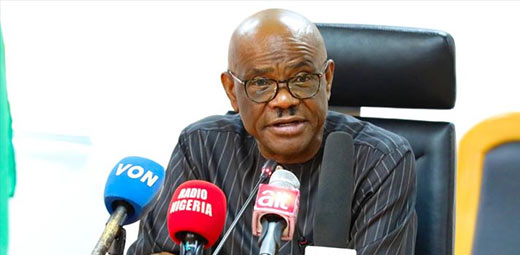
Nigeria is watching something deeper than ordinary politics. What is unfolding around the Minister of the Federal Capital Territory, Nyesom Wike, is not just a matter of party control, personal influence, or public confrontation. It is a visible psychological siege, the kind that rarely announces itself with medical language, yet shows up through exhaustion, escalation, humiliation, and the desperate need to keep proving strength even when strength is no longer producing stability.
In the high velocity terrain of Nigerian power, we often treat political conflict as entertainment. We follow it like sport. We shout. We take sides. We laugh at the drama. But beneath the noise, there is a serious emotional and institutional reality that deserves national attention, because power is not only a strategy. Power is also a burden. And in African societies, burdens carried in public often destroy the carrier privately, while also destabilizing the people watching from below.
Using the Psychoafricalysis framework, this situation can be explained as a three block siege, a three front pressure system closing in on one man at the same time. It is a struggle between a leader and his village, his house, and his political roof. It is a battle with his origin, a battle with his workforce, and a battle with the Presidency’s line of control.
When those three forces collide, even the strongest “strongman” begins to look like a man running out of psychological space to breathe. And that is where Nigeria must pause and ask a harder question, not as supporters or opponents, but as citizens: is this how governance should look in a country trying to survive economic pain, security threats, and daily hardship?
The Three Blocks of the Siege
To understand the pressure facing the Minister, we must identify the three blocks tightening around him. Each block represents a different psychological battlefield. And together, they form a containment system that can break any leader, no matter how tough the public persona appears.
1. The Rivers State Block
The War With the Village
The conflict between Minister Wike and Rivers State Governor Siminalayi Fubara has moved beyond a normal political disagreement. It has expanded into a test of identity, memory, loyalty, and control.
In African village wisdom, your home is not only your birthplace. It is your psychological foundation. It is where your story begins, where your name carries weight, and where your confidence is meant to rest, even when the outside world is harsh. Your village is where you should be able to breathe, even if you are fighting enemies elsewhere.
But what happens when your village becomes the battlefield? What happens when the state that produced you becomes the state where your peace no longer exists? What happens when you cannot return home without political tension, without suspicion, without whispers, without division, without people calculating where they stand in your shadow?
That is where this “Rivers State Block” becomes psychologically dangerous. The Minister is not only dealing with an opponent. He is dealing with the collapse of what should be his emotional resting point. And when a man loses his resting point, he becomes a warrior without a shelter.
In Psychoafricalysis, we understand that an African leader’s identity is deeply tied to origin. Even when you rise to the top nationally, the mind still measures your strength by the respect you command at home. The village is the mirror that confirms your legitimacy.
So, when a leader is in permanent conflict with his own state’s leadership, he enters what I call internal exile. He is present, but not at peace. He is involved, but never resting. He is powerful, but emotionally unsettled.
And this is why the Rivers crisis is not just political. It is psychological. It forces the Minister into a continuous performance of relevance back home while he is also expected to govern in Abuja. That double pressure becomes like living in two wars at once.
It is one thing to have enemies in another land. It is another thing to have conflict inside the land that calls you its son. In Africa, when your own people cannot settle with you, your spirit becomes restless. Your confidence becomes defensive. And the more defensive you become, the more aggressive your leadership style appears, because every action begins to feel like self protection.
This is how power becomes survival. And when power becomes survival, governance becomes secondary.
2. The Institutional Block
The Rebellion of the House
The second block is the one Nigerians saw with their own eyes, and it should shake every serious person in this country, whether you like Wike or not.
Striking workers under the Joint Unions Action Committee, backed by the Nigeria Labour Congress, shut down the FCTA Secretariat. But the protest did not stop at shutting down offices. It crossed into symbolic pursuit, as workers pursued the Minister’s vehicle, chanting “Ole!”
This image is not ordinary. It is not just labour action. It is not just hunger speaking. It is a direct public declaration that the workers no longer recognize the Minister’s authority as sacred. It is the collapse of fear, the collapse of respect, and the collapse of emotional loyalty.
In governance, leaders can survive public criticism. Leaders can even survive opposition parties mocking them. But when a leader is pursued by his own institutional household, it becomes something deeper. It becomes a psychological eviction.
Let us speak plainly. The FCTA workers are not outsiders. They are the people the Minister is meant to lead. They are the hands that move the system. They are the daily machinery of governance.
So, when these workers rise up in such a dramatic and disrespectful manner, it signals a breakdown in the communal bond between leadership and service. It suggests that those under the Minister have stopped seeing his office as leadership and begun seeing it as domination.
This is where the “house on fire” reality becomes clear.
A leader can fight enemies outside the gate and still sleep well if his house is stable. But if your own house is burning, there is no comfort anywhere. Even if you escape the fire physically, you carry the smoke mentally.
When workers chase a Minister, it means they feel unheard. It means they feel desperate. It means they feel exploited. It means they believe their suffering is being ignored while power is being displayed as arrogance.
And from a psychological perspective, this is dangerous for both sides.
For the workers, it shows how frustration can turn into humiliation seeking, where the goal becomes not only demanding rights but also damaging dignity.
For the leader, it becomes a trauma point. The mind begins to interpret every worker, every staff member, every public space, as a possible threat. This is how paranoia enters governance. This is how anger becomes policy. This is how leaders become more authoritarian, not always because they want to, but because they begin to fear humiliation again.
When dignity is attacked publicly, some leaders respond with humility. But many respond with revenge. Many respond with a need to prove power again.
And this is where Nigeria must worry. Because a society where leaders and workers meet each other with humiliation and retaliation is a society entering institutional decay.
The question Nigerians must ask is simple but painful: why has leadership in our nation become so confrontational that workers are chasing Ministers, and Ministers are seen as people to be resisted rather than people to be trusted?
3. The Presidential Block
The Boundary of Truth and the Question Nigerians Must Ask
The third block is the most politically dangerous because it does not come from below. It comes from above. And when pressure comes from above, it is not protest. It is repositioning.
Presidential Advisor Daniel Bwala publicly stated that Minister Wike has been “adequately compensated,” and also stated that Governor Siminalayi Fubara is the recognized leader of the APC in Rivers State.
Those statements were not casual words. In Nigeria, power speaks in coded language. And that statement was the Presidency drawing a boundary line, reminding a powerful Minister that political credit is not infinite.
This is also where the deep national question enters.
Are you the only Minister in Nigeria?
That is the question hidden inside that Presidential message.
Because in Nigeria’s political structure, Ministers are appointed, not elected. Their power depends on the President’s confidence. Their relevance depends on the system’s tolerance. Their longevity depends on whether they remain useful without becoming disruptive.
So when a Presidential voice says “you have been adequately compensated,” it is not just a comment. It is a psychological warning disguised as administrative language. It is a way of saying, “Your sacrifices have been noted, but your entitlement must end here.”
It is the Presidency reminding the Minister, and the entire political class, that government is bigger than one man. That the Cabinet is not built around one personality. That the centre cannot be held hostage by one individual’s regional ambition.
And this is why Nigerians must take that question seriously: Are you the only Minister in Nigeria?
Because some public behaviour, some confrontational approaches, and some constant political warfare can start to look like a man acting as if governance cannot survive without him.
It is a dangerous mindset for any public servant, no matter how effective they believe they are.
A Minister is not the owner of the government. A Minister is not the only brain in the system. A Minister is not the only one who can fight or negotiate. A Minister is not the only one who can deliver development.
When one Minister becomes too loud, too dominant, too constantly present in national conflict, Nigerians begin to ask whether the government has become a one man theatre, where others are silent while one figure performs governance like a personal empire.
This is why that Presidential boundary matters. It is the system saying, “We appreciate your role, but you are not the whole system.”
The Psychological Toll
When the Strongman Mask Becomes a Cage
The strongman persona is not just political branding. It is a psychological mask that demands constant performance.
Once a man becomes known for force, he must remain forceful, even when wisdom would require silence. He must remain hard, even when national peace requires softness. He must keep fighting, even when negotiation would produce better results.
But the human mind is not built for endless siege.
Standing against your village, your house, and your political roof at the same time produces what can be called executive isolation.
Executive isolation is the loneliness that comes when nobody feels safe around you, but you also feel unsafe around everybody.
It is the condition where you cannot trust people because you suspect betrayal. Yet you cannot relax because you fear humiliation.
And when a leader reaches that point, governance becomes emotional management rather than national management.
That is when strategy dies and reaction takes over. That is when ego becomes the steering wheel. That is when power becomes a weapon rather than a responsibility.
From a Psychoafricalytic viewpoint, the mind under siege begins to shift into “defensive leadership.” The leader becomes more aggressive, not always because he loves conflict, but because he believes conflict is the only language that protects him.
This is how the strongman mask becomes a cage. The mask that was meant to create fear begins to create exhaustion. The mask that was meant to create control begins to create loneliness.
And the more the leader feels trapped, the more he must perform toughness, because admitting pressure would feel like defeat.
The Palaver Hut Solution
When Dialogue Becomes Survival
In African traditional governance, the palaver hut is not a place of weakness. It is the place where wise men preserve society. It is where anger is cooled, where pride is reduced, where the community prevents a small fire from becoming a village wide disaster.
The palaver hut represents the leadership skill that Nigeria is losing: the ability to pause, listen, and reduce tension before it becomes irreversible.
For the Minister, this moment signals one urgent truth: the lone warrior posture is no longer sustainable.
Not because he has suddenly become weak, but because the environment has become too heavy for one man’s confrontational style to control.
When a leader faces siege from three directions, he has two options.
He can choose humility, negotiation, and emotional restraint, and preserve his political life while restoring stability.
Or he can choose escalation, vengeance, and stubborn pride, and become the symbol of a national breakdown.
In our village wisdom, the elder who refuses counsel eventually loses the village, even if he keeps the throne for a moment.
A Message to Nigerian
This Is Bigger Than One Man
This situation is bigger than Wike. It is a mirror of Nigerian governance itself. It reveals what happens when power becomes too personal, when institutions become battlegrounds, and when citizens begin to relate to leadership through rage rather than trust.
Nigerians should not celebrate institutional humiliation. But Nigerians also cannot ignore the meaning of what they are seeing.
A state cannot be healthy when workers chase leaders like criminals.
A democracy cannot be stable when home states become war zones for political fathers and political sons.
A nation cannot progress when conflict becomes the daily language of governance.
And Nigerians must also question why public service has become a place where leaders fight like warlords instead of serving like administrators.
Final Reflection
The Three Blocks and the One Question
So here is the question Nigerians must reflect on, beyond party loyalty and emotional bias:
How much can one person carry when the village rejects him, the house pursues him, and the Presidency draws a boundary against him?
And here is the second question, even deeper:
Are you the only Minister in Nigeria?
Because when one political figure behaves as if the entire system must orbit his battles, the nation begins to lose balance. Governance becomes noise. Development becomes delayed. Leadership becomes drama.
In the end, every leader must choose between two paths:
The endless fight that feeds ego, or the difficult dialogue that preserves society.
Nigeria does not need more performance. Nigeria needs restoration. And restoration begins when those in power understand that strength without emotional restraint is not leadership. It is simply prolonged conflict wearing the uniform of authority.
About the Author
Prof. John Egbeazien Oshodi is an American psychologist, an expert in policing and corrections, and an educator with expertise in forensic, legal, clinical, and cross-cultural psychology, including public ethical policy. A native of Uromi, Edo State, Nigeria, and son of a 37-year veteran of the Nigeria Police Force, he has long worked at the intersection of psychology, justice, and governance. In 2011, he helped introduce advanced forensic psychology to Nigeria through the National Universities Commission and Nasarawa State University, where he served as Associate Professor of Psychology.
He teaches in the Doctorate in Clinical and School Psychology at Nova Southeastern University; the Doctorate Clinical Psychology, BS Psychology, and BS Tempo Criminal Justice programs at Walden University; and lectures virtually in Management and Leadership Studies at Weldios University and ISCOM University. He is also the President and Chief Psychologist at the Oshodi Foundation, Center for Psychological and Forensic Services, United States.
Prof. Oshodi is a Black Republican in the United States but belongs to no political party in Nigeria—his work is guided solely by justice, good governance, democracy, and Africa’s development. He is the founder of Psychoafricalysis (Psychoafricalytic Psychology), a culturally grounded framework that integrates African sociocultural realities, historical awareness, and future-oriented identity. He has authored more than 500 articles, multiple books, and numerous peer-reviewed works on Africentric psychology, higher education reform, forensic and correctional psychology, African democracy, and decolonized models of clinical and community engagement.