Africa
The Ripples From The Tinubu’s Tax Reform And The Future Of Nigerian Economy -By Hajia Hadiza Mohammed
I must state without equivocation that the Nigeria Tax Reform Bill will not have any salutary effects on the economy despite proposing modest reduction in tax rates because the reform fails to alleviate the financial strain on businesses and households, particularly low-income earners who have borne the brunt of the inflationary pressures triggered by subsidy removal and currency devaluation. There is need for a more inclusive fiscal strategy to tackle rising poverty rates, heightened inequality, and diminished purchasing power.


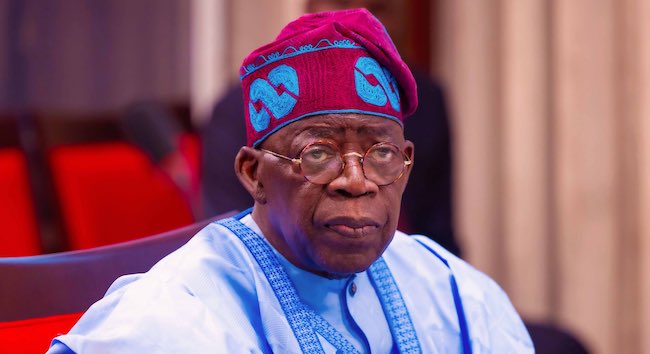
Aside from the issues of terrorism and insecurity, the Tinubu’s tax “reform” agenda is the most vexed issue in Nigeria today. And just as the experts predicted as we match into the New Year, there is tension and anxiety regarding the implementation of the vexed tax reform. There are so many unclear issues around the so-called tax reform bill. The first is that there is inadequate stakeholders’ engagement in the preparation of the tax reform document. Secondly, it is said that the reform is ill-timed. Thirdly and most critical is the intention or motive for the reform. These are the major things I highlighted in my earlier essay on the subject published in October, 2025.
The Nigeria people were not adequately informed and were not carried along in the preparation of the serious policy issue that involve their lives and future as the said tax reform document. Government decisions and policies are about the people and therefore consultation of the people is a necessary requirement for inputs in the policies that affect their lives and well-being. This is beyond mere rhetoric or propaganda but consultation for input in the decision-making process. But in the making of the tax bill, the government relied more on propaganda and media spin-doctors. And this is what I observed concerning that: “The tax reform bill was passed without adequate consultation and input from the people fuelling the speculation that members of the National Assembly were ‘settled’ to pass the controversial bill into law. It will have a cataclysmic effect on the nation when a heavy tax burden is imposed on the already impoverished people.”
Again, just as I observed and rightly agreed by some experts, the timing of the said reform is wrong, economically and politically. There is tension in the land exacerbated by poor economy and insecurity and political instability. Under this state, imposing tax in whatever guise is viewed as oppression. The government has just yanked off the subsidy on petroleum products without cushion, and introduced a policy that devalued the Naira. Domestic prices are soaring to the sky, external balances are dwindling with mounting foreign debt. There is low domestic productivity and high unemployment rate with its attendant undesirable effects on the welfare of the people. It is therefore viewed as insensitivity on the part of the government to be fixated on expanding the tax net rather than the welfare safety net.
It is expected that when the economy is low as it is now in the Nigeria, the government should reduce tax in order to reflate and stimulate investment. This was my view as expressed earlier: “Elementary Economics teaches us that taxation is one of the government fiscal instrument to control and regulate the economy. It is not just a means of revenue generation but a means of regulating the economy depending on the state of it. We are told that when the economy is in the doldrums as the Nigeria economy is right now taxes are supposed to be low in order to increase the purchasing power of the people to stimulate higher investment and production. Since the coming of the Tinubu’s government, the application of the monetary and fiscal instruments seems to be on trial-and-error basis without any clear direction. There is price instability with galloping inflation, declining local production, high and soaring unemployment rate with increasing tariff on goods and services and the government is increasing taxes instead of doing the opposite.”
The most worrisome issue in the whole tax reform debacle is the intention of the government and its fixation on going ahead with the implementation despite opposition to the contrary. If the motive is to grow the economy and improve the peoples’ welfare why force it, why not educate and sensitize the people more on the program and iron out the gray areas before implementation? It seems the motive of the government is not clear here as insinuated. This is fueled by the allegation that clauses not included in the original document sent to the National Assembly for deliberation were inserted in the tax gazette. A friend said that the vexed tax reform bill is a fraudulent piece of legislation. Tinubu’s policies and attitude since coming to power in May, 2023 have also given vent to the insinuations of wrong motive for the reform. And if there is inadequate consultation and the timing of the policy is wrong, the motive could be wrong too. There is also the issue of the sharing formula of the tax proceeds which tends to favor Lagos, the home state of Tinubu. It is believed that the sharing formula will worsen regional imbalance. It is also feared that the new tax regime will impoverish the people and make them more susceptible to political manipulation.
Thus, I still maintain as I state earlier, “if Tinubu is interested in growing the economy of Nigeria, he would not start from imposing taxes on people that are gasping for life breath. If a patient is on life support, you don’t remove the life-support and then begin to apply medication without accurate diagnosis. Tinubu and his team obviously don’t know the problems of Nigerian economy. They are obviously distracted by interests other than that of the Nigerian people. And as I have always maintained, Tinubu’s interest is to sustain his strangle hold on power. And as the year 2026 beckons, let us watch and see how tax issues work out.”
In conclusion, I must state without equivocation that the Nigeria Tax Reform Bill will not have any salutary effects on the economy despite proposing modest reduction in tax rates because the reform fails to alleviate the financial strain on businesses and households, particularly low-income earners who have borne the brunt of the inflationary pressures triggered by subsidy removal and currency devaluation. There is need for a more inclusive fiscal strategy to tackle rising poverty rates, heightened inequality, and diminished purchasing power. Nigeria needs a more genuine, comprehensive reform that will ensure wealth creation, balanced and sustainable development and economic stability not predatory policy that will impoverish the people otherwise tension and needless agitations will be inevitable.
Hajia Hadiza Mohammed
hajiahadizamohammed@gmail.com
An actress, social activist, politician
London, UK