Business
UN Office On Drugs and Crime Ratings: How Egbetokun Made Nigeria Police The Best-Improving Agency, by Adewole Kehinde
Complaint mechanisms could be strengthened and made more accessible. Increasing the use of e-government—and thereby reducing the amount of contact citizens have with public officials—could further reduce the number of bribes paid.

According to the recent United Nations Office on Drugs and Crime (UNODC), ratings, the Nigeria Police Force has emerged as the most improved organisation.
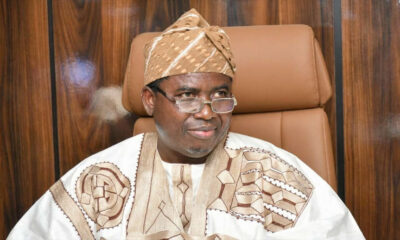
According to this disclosed information, the nation has grown significantly under its new leadership, which has led to the Nigeria Police Force changing under the direction of IGP Kayode Egbetokun, the 22nd indigenous Inspector-General of Police.
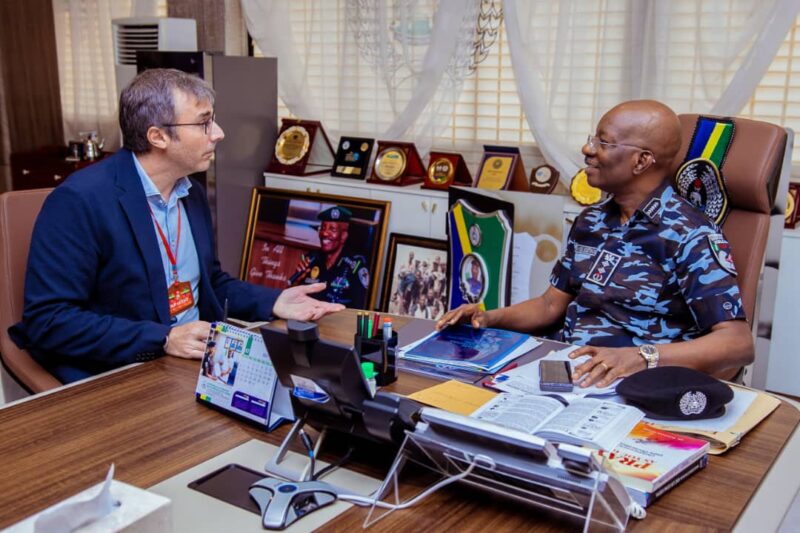
I saw the joy on the faces of the IGP and his management team as the UNODC team led by its acting Country Representative, Mr. Danilo Campisi, read out some major points of the report to the Inspector-General of Police, IGP Kayode Egbetokun, in Abuja on Friday.
At the meeting, Campisi expressed UNODC’s pleasure at the results derived from their recently conducted corruption survey.
The UNODC further revealed that the survey was carried out strictly based on facts and data, and not on perceptions.
Expressing sincere gratitude to the UNODC for their support and commending their efforts and mode of the survey, the IGP emphasised and stated that the results of the survey would serve as motivation for the police to intensify its efforts in combating crime and corruption, and setting a greater standard.
In the past one year, the police under IGP Kayode Egbetokun have successfully apprehended 4,826 armed robbery suspects, 3,078 kidnapping suspects, 2,479 suspects for rape/sexual crimes, 1,243 suspects for unlawful possession of firearms, 3,523 suspects for cultism, 3,381 suspects for murder/homicide, and 13,402 suspects for other offences.
The police operations have also led to the rescue of 1,750 kidnapping victims, the recovery of a significant cache of illegal items, including 2,566 firearms, 19,510 rounds of ammunition, and 1,475 vehicles/motorcycles nationwide.
The Nigeria Police has successfully prosecuted 29,152 criminal cases across the country within the year. Out of these, 17,679 cases have been conclusively dispensed with, while 11,576 cases are still undergoing trial. Additionally, 51 cases are currently under appeal at the respective appellate courts.
Impressively, 16,200 of the dispensed cases have led to the conviction of suspects, who have received various forms of punishment for their criminal acts.
The Inspector General of Police reiterated the steadfastness of the Nigeria Police in ensuring a safer and more secure country while appreciating the continued support of the public, which has been instrumental to achieving these feats.
He urged all citizens and residents in the country to report all suspicious activities to the nearest police station for proper investigation, leaving nothing to chance.
Launched by the Honourable Attorney-General of the Federation and Minister of Justice of Nigeria, the survey finds that fewer citizens reported suffering negative consequences after refusing a bribe request in 2023 compared with 2019 (38 percent versus 49 percent), suggesting that Nigerians are becoming increasingly comfortable with confronting corrupt officials without fear of repercussions.
Out of all citizens who paid a bribe, 8.6 percent reported their experience to an official institution in 2023, a marked rise from 3.6 percent in 2019. The increase may result from enhanced access to complaint channels and an increased readiness of institutions to take such complaints seriously and initiate a formal procedure. The share of bribery reports that led to the initiation of a formal procedure against a public official increased nearly threefold between 2019 and 2023, from 16 percent to 45 percent, while the share of those who experienced no follow-up after reporting fell from 34 percent to 17 percent.
Despite these notable advances, corruption continues to rank among the most important problems affecting Nigerians, after cost of living, insecurity, and unemployment, and there remain challenges to effectively countering corruption in the country.
Roughly US$1.26 billion—or. 35 percent of the country’s gross domestic product—was paid in cash bribes to public officials in 2023. The prevalence of bribe payments in the private sector increased significantly, meanwhile, from 6 percent in 2019 to 14 percent in 2023.
A special gender equity and social inclusion component of the survey report highlights that women continue to be less likely to engage in bribery irrespective of where they live, their age, educational background, and employment status. When in contact with public officials, women (28 percent) are less likely to experience bribery than men (39 percent). The survey further shows that only 19 percent of women public officials solicit or take a bribe when interacting with the public, compared to 35 percent of male public officials.
In addition, the 2023 report found that people with disabilities are as likely as everyone else to be approached for the payment of bribes. Yet having to pay bribes when accessing public services is likely to place a far greater burden on people with disabilities.
The survey concludes with several policy recommendations. The positive attitude and behavioural changes towards corruption could be further encouraged by rewarding honest citizens and public officials, while holding those who do solicit or accept bribes, including those in the criminal justice system and Parliament, accountable.
Complaint mechanisms could be strengthened and made more accessible. Increasing the use of e-government—and thereby reducing the amount of contact citizens have with public officials—could further reduce the number of bribes paid.
“Through this 3rd National Survey, Nigeria leads in establishing international best practices in the implementation of the United Nations Convention against Corruption through the conduct of periodic and scientific assessments of corruption and anti-corruption efforts, reinforcing the importance of evidence-based strategies in the journey towards a corruption-free society,” said Dr Oliver Stolpe, Country Representative, UNODC Nigeria.
Adewole Kehinde is the publisher of Swift Reporters and can be reached via 08166240846. E-mail: kennyadewole@gmail.com