Business
When Given The Opportunity To Operate, Dangote Refinery Stands The Chance Of Disrupting The Market As Done By Glo And Air Peace, by Isaac Asabor

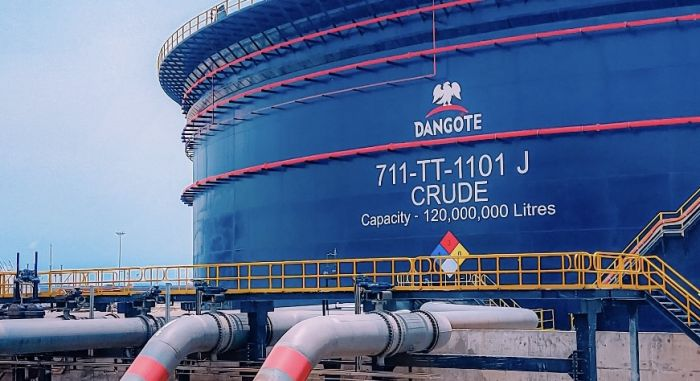
Africa’s richest man, Aliko Dangote, has invested a staggering $20 billion in the Dangote Refinery, Nigeria’s largest refinery. The facility, commissioned early last year, was expected to revolutionize the Nigeria’s fuel industry by ending costly imports and offering affordable pump prices. However, clashes with local regulators and oil majors have turned this ambitious project into a public war of words.
The Refinery, designed to refine 650,000 barrels of oil per day, could potentially meet all of Nigeria’s fuel needs when operating at full capacity. But here is where the plot thickens: Aliko Dangote and his team accuse international oil producers of selling locally produced crude to the refinery above market prices. Meanwhile, Nigerian regulators claim that Dangote is seeking a monopoly over refined oil products.
To understand the potential impact of the Dangote Refinery, it is expedient to look at two other disruptors: Glo (a telecommunications company) and Air Peace (an airline). Both companies shook up their respective markets by challenging established players and offering innovative solutions.
It will be recalled in this context that when Glo entered the Nigerian telecom market, it disrupted the status quo dominated by MTN and Airtel. Glo’s aggressive pricing, extensive network coverage, and data-centric approach forced competitors to adapt or lose market share. Similarly, the Dangote Refinery aims to challenge the existing fuel import model.
In a similar vein, Air Peace, recently disrupted the aviation industry by providing affordable domestic flights and expanding routes. Air Peace’s emergence led to increased competition, better services, and lower fares. Similarly, the Dangote Refinery could drive down fuel prices, benefiting consumers and businesses.
Not only that, Dangote’s $100 million investment in land for the refinery shows his commitment. However, clashes with authorities have created uncertainty. Minister of State, Heineken Lokpobiri acknowledges the challenges and emphasizes the need for a resolution. Lawmakers have even asked for the suspension of the regulator accusing Dangote of monopolistic intent.
In fact, traders and shipping data reveal that the Dangote Refinery is ramping up fuel exports to West Africa, potentially capturing market share from European refineries. Analysts predict that about 400,000 barrels of European refining capacity daily are at risk of closure due to rising fuel production.
Without a doubt, Dangote Refinery stands at a crossroads. If given the chance to operate smoothly, it could disrupt the market just as Glo and Air Peace did in their domains. However, resolving regulatory issues and fostering cooperation are crucial for its success. As Nigeria watches, the fate of this mega-refinery hangs in the balance.
According to an African proverb, “When the pounded yam is not eaten because of the badly cooked soup, it should be eaten because it is well pounded.” In the context of the Dangote Refinery, this ancient proverb reminds us to focus on the greater good. Regardless of any ill-conceived shortcomings or controversies surrounding Alhaji Aliko Dangote as a person, we must recognize the immense potential of this refinery for Nigeria, particularly as the refinery promises to end Nigeria’s reliance on costly fuel imports. Imagine a Nigeria where fuel scarcity is a distant memory, and energy security becomes a reality.
Without a doubt, the refinery will create jobs, stimulate local businesses, and contribute significantly to the nation’s GDP. It is an opportunity for prosperity that transcends individual opinions. In fact, operating at full capacity, the refinery can refine enough oil to meet Nigeria’s needs and even export surplus. This technological leap forward will no doubt benefits all Nigerians.
In a similar vein, lower fuel prices mean reduced transportation costs, which ripple through the economy. Families, farmers, and entrepreneurs will benefit alike.
Let us not be distracted by personal biases. Instead, let us celebrate the well-pounded yam, the Dangote Refinery, and savor the benefits it brings to our nation.
Without any scintilla of hyperbole, it is expedient in this context to highlight the significant funds spent on Nigeria’s existing refineries and why the Dangote Refinery deserves a chance.
Without sounding unpatriotic, Nigeria, despite being Africa’s largest oil producer, has for decades been grappling with underperforming refineries. Notwithstanding substantial investments made so far toward resuscitating the unarguably dilapidated refineries, these facilities have failed to meet domestic fuel demands. It is against the foregoing backdrop that not a few Nigerians are seeing reasons why the Dangote Refinery represents a crucial opportunity.
Despite the fact that Nigeria owns four government-controlled refineries: two in Port Harcourt, one in Warri, and another in Kaduna, and have a combined refining capacity of 445,000 barrels per day (bpd), they operate far below their aggregate potential.
For instance, between 2010 and 2020, the Nigerian National Petroleum Corporation (NNPC) poured a staggering $10.3 billion (approximately 4.8 trillion naira) into maintaining these refineries, and despite this massive investment, they remain inefficient and unable to meet fuel demands.
Given the inherent futility that characterizes the humungous spending towards the rejuvenation of Nigeria-owned refineries that have practically refused to work, there is no denying the fact that Dangote Refinery remains a Game-Changer. This is as Aliko Dangote’s $20 billion investment in the Dangote Refinery promises a different narrative. With a refining capacity of 650,000 bpd, it dwarfs the existing facilities. If given the chance to become operational without characterizing the project with controversies, it could end Nigeria’s reliance on fuel imports and alleviate perennial queues at petrol stations.
Without a doubt, the Dangote Refinery aims to refine enough oil to meet Nigeria’s entire fuel needs. Imagine a Nigeria where fuel scarcity becomes a distant memory.
In a similar vein, given the fact that job creation, local business stimulation, and GDP growth are on the horizon upon the seamless operations of the refinery, it is not an exaggeration to opine that its success ripples through the economy, benefiting all Nigerians. This is as lower fuel prices mean reduced transportation costs for families, farmers, and businesses, and that means a win-win situation.
In fact, since the establishment of Dangote Refineries became an issue of debate, not a few experts and analysts have unanimously asserted that the $26.5 billion spent on maintaining the existing refineries could have built three new refineries of the same size, instead, these funds yielded minimal output. And given the foregoing backdrop, not a few experts and commentators on the issue have concluded in their views that Aliko Dangote’s $20 billion investment in the Dangote Refinery is a bold move.
At this juncture, there is wisdom in appealing to those that seem to be stopping at nothing to ensure that Dangote Refinery does not work to channel their focus toward its potential benefits rather than mischievously and jealously expressing the personal differences they have with the man behind the project.
The reason for resorting to appeal in this context cannot be farfetched as the refinery represents hope, a chance to break free from the cycle of inefficiency. In fact, as Nigerians, we must embrace this opportunity. Proverbially put, let us give the well-pounded yam a chance, even if the soup has not been perfect in the past.