Africa
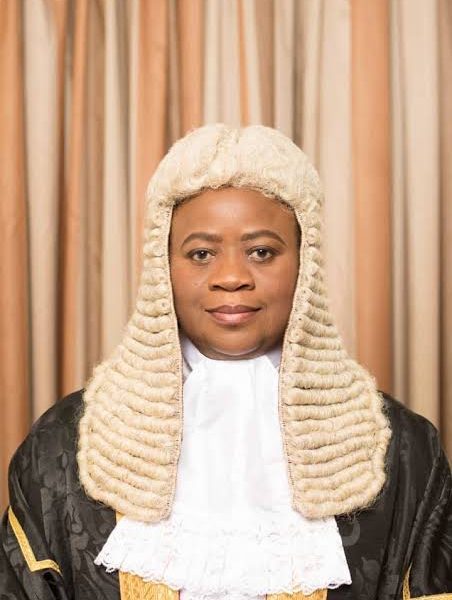
When Leadership Misunderstands Corruption: Justice Monica Dongban-Mensem -By Prof. John Egbeazien Oshodi
Her words determine whether people sleep believing justice is possible, or whether they whisper to themselves that truth has no chance. That is why what she recently said — dismissing concerns about judicial corruption unless “evidence” is produced — did not reassure the nation.

When the Guardian of a Courtroom Reduces Corruption to Only Bribery
In a fragile justice system, language from the top matters. So when Justice Monica Dongban-Mensem, President of the Court of Appeal, suggested that unless citizens can prove bribery the judiciary is “not corrupt,” she did more than defend judges.
She reduced corruption to one narrow idea:
money exchanged in secret.
But corruption is far broader — and far more dangerous — than envelopes or transfers.
It is any abuse of entrusted power, whether the reward is:
• influence
• protection
• political favor
A judge does not need to collect money to be corrupt. A judge becomes corrupt the moment truth is bent, outcomes are tilted, or justice is intentionally delayed.
That is why Justice Monica’s statement raised concern, not only among Nigerians but internationally. Instead of reassuring the nation, it misled the public about what corruption truly is.
It suggested that unless someone can produce a receipt, nothing is wrong. It ignored what citizens witness every day: cases slowed to death, powerful suspects shielded, sensitive rulings that feel predictable, and honest judges punished quietly for refusing to bend.
This is not imagination.
It is lived reality.
And while Justice Monica was narrowing the meaning of corruption, Justice Emeka Nwite stood in open court and warned that attempts were being made to influence him. He did not speak about bribes. He spoke about pressure.
That moment exposed the flaw in her argument:
corruption begins long before any money appears.
What Leadership Should Have Said — But Didn’t
No one expects judicial leaders to declare the courts guilty.
But the country expects honesty about weakness.
Justice Monica could have said:
“There are pressures. There are temptations. There are structural problems. And we must confront them.”
Instead, she closed the door — and subtly blamed citizens for doubting.
That approach does not defend the judiciary.
It separates it from the people it serves.
When leaders minimize corruption, they unintentionally protect those who exploit the system while leaving honest judges exposed. Manipulators grow bolder. Reformers are left isolated.
Justice is not strengthened by denial.
It is strengthened by truth, transparency, and humility.
An Educational Truth Nigerians Must Understand
Corruption in courts is rarely about quick bribes.
It is about quiet privileges and silent manipulation.
And when leaders pretend otherwise, they do not protect institutions — they weaken them.
Justice Monica’s defenders may believe she was protecting judicial dignity.
But dignity is not preserved by denial.
Dignity is preserved by courage, reform, and honesty.
Justice Emeka Nwite demonstrated that courage.
Leadership should learn from him — not lecture the nation.
Corruption Begins Long Before Money Appears
Most of the corruption that destroys courts does not involve direct payment. It occurs in subtler, more sophisticated ways — through influence, intimidation, loyalty trading, and structural manipulation.
Corruption happens when:
• politically sensitive cases are quietly assigned to judges known to be “reliable”
• case panels are formed deliberately to tilt judgment outcomes
• junior judges understand that some results are expected, not argued
• sensitive cases are delayed repeatedly until the plaintiff gives up
• judges who insist on independence are suddenly transferred or stalled
• “friendly” phone calls create pressure without giving a direct order
• powerful lawyers are treated as untouchable while others face sanctions
None of these actions involve a bribe.
Yet they warp justice more deeply than bribery ever could.
Bribery is crude.
Systemic manipulation is subtle — and far more dangerous.
When Justice Monica suggests corruption exists only if citizens can produce evidence of bribes, she overlooks the truth that ordinary Nigerians — and honest judges — confront every single day.
When Leaders Deny Reality, Corruption Becomes Comfortable
The head of an institution sends signals, even when speaking briefly.
Justice Monica’s message — intended or not — sounded like this:
“If you cannot prove a cash transaction, do not accuse the judiciary.”
To dishonest actors inside the system, that becomes an invitation. They learn that as long as they avoid envelopes, they are safe. Influence can be traded quietly. Cases can be steered gently. Justice can be shaped softly.
And technically, no one can accuse them of corruption.
This is how moral rot disguises itself as professionalism.
When leadership refuses to name broader forms of wrongdoing, corruption adapts and evolves. It grows comfortable. It becomes procedural. It hides behind polished language instead of brown envelopes.
Leadership does not need to provide legal excuses for corruption.
Leadership needs to identify where it hides.
In that duty, Justice Monica failed the conversation.
The Judiciary Cannot Be Defended With Denial
It is understandable that Justice Monica wants to defend an institution struggling against public mistrust. But true defense requires truth, not denial.
A courageous leader could have said:
“Yes, there are pressures. Yes, there are abuses of power. Yes, we must confront them.”
Instead, she closed the door on discussion by demanding proof of bribery as the only acceptable evidence of corruption. In doing so, she left good judges unprotected and the public unheard.
Good judges know what they live through.
They know about whispers. They know about subtle expectations. They know that resisting influence sometimes means losing promotion or being transferred quietly.
When leadership refuses to acknowledge these realities, honest judges feel abandoned. Meanwhile, corrupt ones believe they have institutional insurance.
The judiciary does not need reassurance.
It needs cleansing sunlight — and protection for those who refuse to bow.
Corruption Is About Power, Not Just Money
The most destructive corruption in courts is corruption of power.
It appears as:
• favoritism disguised as judicial discretion
• loyalty rewarded above competence
• legal technicalities weaponized against truth
• unspoken rules determining who wins
• insiders shielded while outsiders are punished
Money is crude. Influence is refined.
Influence bends the system from within until injustice looks lawful and unfair rulings appear merely technical.
That is why leaders like Justice Monica Dongban-Mensem cannot afford to pretend that corruption only appears when it is traceable through receipts. The corruption we fear most is the one that leaves no receipts at all.
A Leader’s Words Can Heal — or Harden — a System
The judiciary stands at a moment where trust is bleeding. Citizens are not merely critical. They are disillusioned. Judges like Justice Emeka Nwite have openly admitted pressure. Lawyers quietly acknowledge unfair privileges. Court insiders talk among themselves about political influence.
In such a climate, what Nigerians needed to hear from Justice Monica was acknowledgment, compassion, and commitment to reform.
What they heard instead was technical defense — the message that unless there is proof of bribery, there is nothing to discuss.
Leadership that chooses denial trains institutions to lie to themselves.
The first step to rescuing justice is not courtroom reform. It is emotional truth at the top. And emotional truth begins with admitting:
“Yes — corruption is larger than money.”
When Public Trust Breaks, Justice Loses Its Authority
There is something more dangerous than corruption inside a courtroom.
It is the moment citizens quietly stop believing that justice matters.
When people hear senior judicial leaders dismiss concerns by demanding only “proof of bribery,” they do not feel reassured. They feel mocked. They feel invisible. They feel as though their lived experiences of unfair rulings, political interference, unexplained adjournments, and selective outcomes are being treated as fantasies.
Trust does not collapse loudly.
It fades slowly — case by case, ruling by ruling, statement by statement — until citizens no longer expect fairness, only outcomes determined by power.
And when that happens, something tragic occurs:
• ordinary people stop seeking justice
• the wealthy begin to treat courts as tools
• honest judges lose moral support
• corrupt judges gain confidence
A judiciary does not lose legitimacy when critics speak.
It loses legitimacy when leadership refuses to hear why people are speaking.
Once the public concludes that courts protect themselves first and truth second, the system may continue functioning outwardly — but inwardly, its authority has already died.
Power Is Sweet — But It Is Never Permanent
There is something Justice Monica Dongban-Mensem surely understands, because every judge eventually learns it: power is sweet.
It feels comforting to sit above conflict, to sign orders, to determine outcomes, to be saluted, protected, deferred to, praised. Over time, that environment can quietly persuade a person that they are untouchable — not corrupt, not wrong, simply beyond question.
Politicians fall into the same illusion.
They build mansions, secure titles, stack influence, and believe these things will outlive truth. Many of them now walk through cities where hospitals lack medicine, schools decay, roads crumble, and citizens suffer — all while living inside houses that corruption helped to build.
They succeeded outwardly.
But inwardly, something sacred was lost.
Judges are not politicians, but they face a similar temptation:
to trust power more than conscience.
That is why leadership must speak humbly, not defensively. Because the law may shield for a season, institutions may protect for a time, and public relations may silence critics briefly — but something greater keeps a record.
Not a committee.
Not a tribunal.
Not a journalist.
Something divine, quiet, relentless.
The courtroom can be deceived.
Society can be managed.
History can be rewritten.
Conscience cannot.
And the One who sees conscience is not impressed by titles, cars, or ceremonial robes. He does not measure success by rank. He measures it by the unseen decisions made when nobody is watching — by the moments when justice could have been defended and was not.
So when Justice Monica narrows corruption to only money, she may win applause inside the institution. But beyond the institution, something else is taking note:
• when the weak were denied fairness,
• when influence replaced truth,
• when silence was chosen over integrity,
• when leadership defended image instead of justice.
No newspaper needs to print that record.
No investigator needs to file it.
It already exists.
And because it exists, every judge — not just Justice Monica — should walk carefully. Not fearfully, not defensively, but humbly, knowing that the robes they wear are temporary, the titles they hold are temporary, and even the buildings they sit in will one day crumble.
Justice remains.
And the One who watches justice does not forget.
A Final Appeal to Justice Monica Dongban-Mensem
This final part is not written with anger.
It is written with grief — and with fear for what happens when a nation loses faith in its courts.
Justice Monica Dongban-Mensem does not simply lead a court.
She shapes how Nigerians feel about justice.
Her words determine whether people sleep believing justice is possible, or whether they whisper to themselves that truth has no chance. That is why what she recently said — dismissing concerns about judicial corruption unless “evidence” is produced — did not reassure the nation.
It wounded it.
Because instead of acknowledging pain, she questioned the right of citizens to feel it.
Instead of listening to suspicion, she acted as though suspicion itself was the problem.
And instead of confronting uncomfortable realities inside the judiciary, she spoke as if the absence of formal reports automatically proves innocence.
Nigeria is not angry because judges are criticized.
Nigeria is angry because, too often, judges refuse to understand why they are criticized.
Corruption is Not Only About Money — It is About Power Misused
Justice Monica spoke as though corruption exists only where bribes can be counted.
But corruption is far more subtle — and far more dangerous.
Globally, corruption is understood as:
the abuse of entrusted power for personal or institutional advantage — whether the benefit is money, influence, protection, reputation, or silence.
In courts, corruption appears in forms that never touch cash:
• nepotism — when relatives rise faster than merit
• conflict of interest — when one sits in judgment while personally connected
• selective justice — when the powerful get technical relief and the poor get punishment
• panel engineering — when cases land where outcomes are predictable
• strategic transfers — used to punish judges who refuse to bend
• intimidation wrapped in petitions
• endless adjournments designed to kill cases quietly
These are not rumors.
These are realities Nigerians live with.
And they damage justice far deeper than envelopes ever could — because they rewrite the unwritten rule of society:
If you know the right people, the law becomes optional.
Once that belief settles into public consciousness, no constitution, no doctrine, and no oath can rescue legitimacy.
When Leadership Refuses to See — It Becomes the Problem
Here is the painful irony:
The person teaching Nigerians about judicial integrity today is not the head of the Court of Appeal.
It is a “junior” judge who stood in court and said simply:
“Do not approach me. I will not bend the law.”
Justice Emeka Nwite did not organize a conference.
He did not hide behind explanations.
He did not say, “There is no evidence.”
He named the disease without performing surgery on the truth.
He spoke like a man who had been approached, who had watched others approached, and who finally decided: enough.
In that moment, something remarkable happened.
A judge with less institutional power demonstrated more moral authority than those above him.
That should humble senior leadership, not irritate it.
Because leadership is not proven by title.
Leadership is proven by whether conscience follows you — or questions you.
And if truth is coming from below while denial sits above, then the institution is upside down.
When Those Who Stand Are Punished — Heaven Takes Note
We know the pattern. Judges who resist pressure are:
• suddenly transferred to remote courts,
• quietly denied promotions,
• targeted with suspicious petitions,
• painted as “difficult,”
• isolated instead of protected.
Meanwhile, those who bend quietly rise.
And leadership rarely speaks — except to lecture the public about “respecting institutions.”
But institutions deserve respect only when they respect justice.
When good judges cry out and senior leadership responds with silence, something darker than corruption takes root: institutional cowardice.
At that point, Nigerians must remember something critical:
What power refuses to confront, God eventually examines.
The courtroom records opinions.
Conscience records truth.
Heaven records motives.
And every robe, every chamber, every title eventually returns to dust, leaving only the question:
Did you protect justice when you could — or did you protect yourself?
Leadership Still Has One Last Choice
Justice Monica Dongban-Mensem still holds a rare opportunity.
Not to defend the judiciary.
Not to rescue its image.
But to rescue its conscience.
She can choose to stand beside judges who refuse compromise.
She can declare openly that corruption includes intimidation, favoritism, nepotism, hidden influence, and the quiet manipulation of outcomes.
She can acknowledge the wounds — instead of pretending they do not exist.
No leader is diminished by honesty.
Leaders are diminished by denial.
Today, Justice Monica’s words may have protected the reputation of the judiciary.
But they did not protect its soul.
History will remember that difference.
And Heaven will never forget it.
Because the greatest corruption is not when courts take bribes.
The greatest corruption is when courts lose the fear of God — and yet continue to sit in judgment over others.
And in a moment of unexpected candor, Senate President Godswill Akpabio said, “Trump is on our neck.”
Joking or not, the message beneath it was unmistakable: in a world where accountability increasingly crosses borders, any judge who treats justice casually may soon discover that consequences do not end inside the courtroom.
About the Author
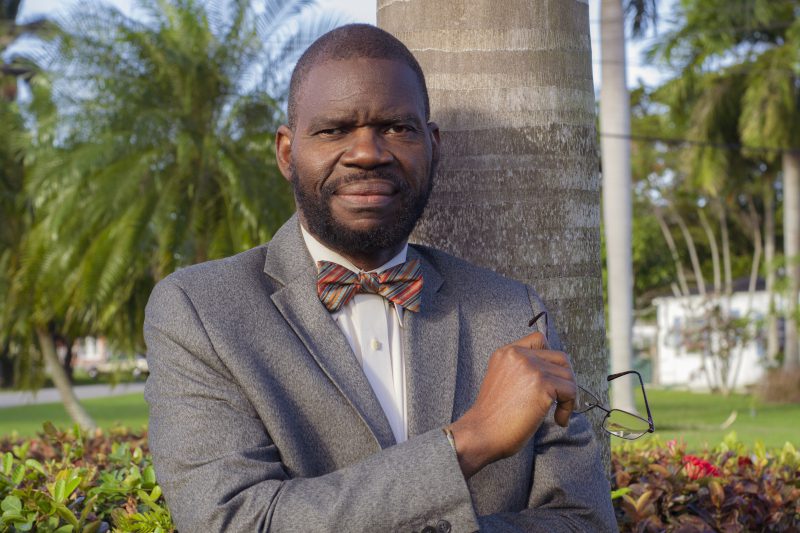
Prof. John Egbeazien Oshodi is an American psychologist, an expert in policing and corrections, and an educator with expertise in forensic, legal, clinical, and cross-cultural psychology, including public ethical policy. A native of Uromi, Edo State, Nigeria, and son of a 37-year veteran of the Nigeria Police Force, he has long worked at the intersection of psychology, justice, and governance. In 2011, he helped introduce advanced forensic psychology to Nigeria through the National Universities Commission and Nasarawa State University, where he served as Associate Professor of Psychology.
He teaches in the Doctorate in Clinical and School Psychology at Nova Southeastern University; the Doctorate Clinical Psychology, BS Psychology, and BS Tempo Criminal Justice programs at Walden University; and lectures virtually in Management and Leadership Studies at Weldios University and ISCOM University. He is also the President and Chief Psychologist at the Oshodi Foundation, Center for Psychological and Forensic Services, United States.
Prof. Oshodi is a Black Republican in the United States but belongs to no political party in Nigeria—his work is guided solely by justice, good governance, democracy, and Africa’s development. He is the founder of Psychoafricalysis (Psychoafricalytic Psychology), a culturally grounded framework that integrates African sociocultural realities, historical awareness, and future-oriented identity. He has authored more than 500 articles, multiple books, and numerous peer-reviewed works on Africentric psychology, higher education reform, forensic and correctional psychology, African democracy, and decolonized models of clinical and community engagement.