Africa
When Nations Die: The Wike-Yerima Metaphor -By Leonard Karshima Shilgba
Nigeria’s future depends on the earnest, consistent regard for law, authority, and process. If the President allows this incident to pass with ambiguity or partiality, he undermines one of the most basic pillars of statehood: that every person—no matter junior or senior—recognises the rule of law. He sets up a governance culture where emotion, ethnocentrism, and selective outrage dominate instead of reason, constitution, and public interest.

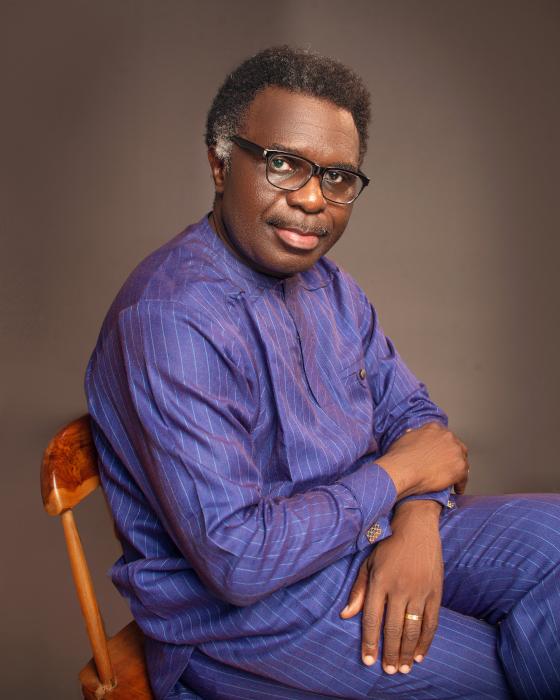
To the leadership of the Federal Republic of Nigeria—especially President Bola Ahmed Tinubu and his ministers—and citizens.
It is with grave disappointment and deep concern that I address the recent incident involving Minister of the FCT, Nyesom Wike, representing the President, and a junior naval officer, Lieutenant Yerima, who chose to assert himself as a security guard at a private construction site in Abuja and then, astonishingly, refused to recognise the civil authority of the Minister of the Federal Capital Territory (FCT), constitutionally governing the FCT on behalf of the President and Commander in Chief of the Armed Forces of the Federal Republic of Nigeria.
This debacle reveals far more than a clash of personalities. It exposes the rot of selective obedience to the law, the breakdown of institutional hierarchy, and the dangerous elevation of emotion over reason in our public discourse.
1. On the question of duty and authority:
* Was Lieutenant Yerima legitimately posted at that private construction site as part of his official naval duty? If the answer is “yes,” then we must ask: under whose orders, under which legal instrument, and under which ministerial or military command structure? If the answer is “no,” then his presence alone was illegitimate—and his defiance of a minister representing the President becomes not composure, but crass insubordination.
* Can the Minister of the FCT—acting on behalf of the President—be denied access to a site within the FCT by a junior military officer? The very principle of democratic civil authority demands that the chain of command be clear. If the President’s representative is obstructed by a subordinate, the state has begun to unravel.
2. On the culture of selective outrage and tribal dimensions:
Many Nigerians celebrate Lieutenant Yerima’s “calmness,” his poise. Yet poise cannot override lawful authority. What we are witnessing is a dangerous pattern: tribal or ethnic sympathies determine who gets celebrated, and whose affronts to the law get ignored. When that happens, the nation drifts from justice into favouritism, from rule of law into rule of prejudice.
3. On the ministerial response—and the implications for loyalty and unity:
The reaction from the Minister of Defence—apparently treating the episode as inconsequential—should be a wake-up call to President Tinubu. If a junior officer can risk defying a minister of state and the minister tasked with the FCT, and the Defence Ministry says “nothing to see here,” then the system of civilian oversight and ministerial accountability is under threat. A government that allows pockets of impunity in its security apparatus cannot claim to be serious about reform or governance. And let me add that the Wike-Yerima episode mirrors how Nigeria is “fighting terrorism.” No wonder the cancer remains incurable! There are sabotaging forces within the government.
4. On the national stakes:
A nation that cannot enforce its boundaries of legitimate authority is by definition a lawless nation where terrorism can flourish. And a lawless nation is a “disgraced country” (apologies to President Trump). If citizens believe law is optional or negotiable, public institutions are hollowed out, and every conflict becomes a matter of personal privilege rather than public order.
5. On the imperative for presidential leadership:
President Tinubu must not remain silent. If the facts show that Lieutenant Yerima was out of line, acting privately rather than as part of his official duty as a naval officer, then swift and unequivocal action must follow. Either the President withdraws or disciplines Minister Wike for failing to enforce his own rights and responsibilities (which he couldn’t have when military officers, led by the defiant Naval Lieutenant Yerima, brandishing guns threatened his life)—or the President affirms the minister’s authority, disavows the junior officer’s defiance, and reasserts the supremacy of civil authority over security personnel. To do otherwise is to signal that might makes right, that protocols and hierarchies are optional, and that emotional spectacle outranks institutional order.
6. To those celebrating the junior officer:
I say this to you: “Examine your moral compass.” Calm demeanour does *not* excuse undermining the law. The applause you give today may be the very precedent that robs someone else of access to justice tomorrow. Celebrate virtue, yes—but not when that virtue is a cloak for disobedience.
Nigeria’s future depends on the earnest, consistent regard for law, authority, and process. If the President allows this incident to pass with ambiguity or partiality, he undermines one of the most basic pillars of statehood: that every person—no matter junior or senior—recognises the rule of law. He sets up a governance culture where emotion, ethnocentrism, and selective outrage dominate instead of reason, constitution, and public interest.
This moment is far bigger than one construction-site altercation. It is a test of Nigeria’s maturity as a republic. Let us pray that our leadership passes this test with integrity, clarity and courage.
© Shilgba