Africa
When Olukoyede Becomes the Target, The Real Battle Is No Longer Just Political — It Becomes A Moral Test Before God, And A Quiet Assault On EFCC -By Prof. John Egbeazien Oshodi
Public frustration with EFCC over perceived selective enforcement is understandable. But the truth is more complex. The chairman operates within layers of authority, policy control, and political weather far beyond his reach. It is easy to point at one man. It is much harder to confront systems that allow certain cases to move and others to slow quietly. When the environment sends mixed messages — arrest one figure, celebrate another — institutions get confused. And confusion is where corruption survives longest.

When a nation turns away from those still trying to confront corruption, it is not only institutions that face judgment. Political power may avoid the courtroom, but it never escapes the gaze of God — and history does not forget leaders who destroy the very people meant to help them.
Nigeria is entering a troubling phase in the fight against corruption — not because offenders have suddenly become invincible, but because reformers are being pushed to the edges. Whenever accountability threatens powerful interests, the first attack rarely focuses on the wrongdoing. The first blow is almost always directed at the person who dares to lead the battle.
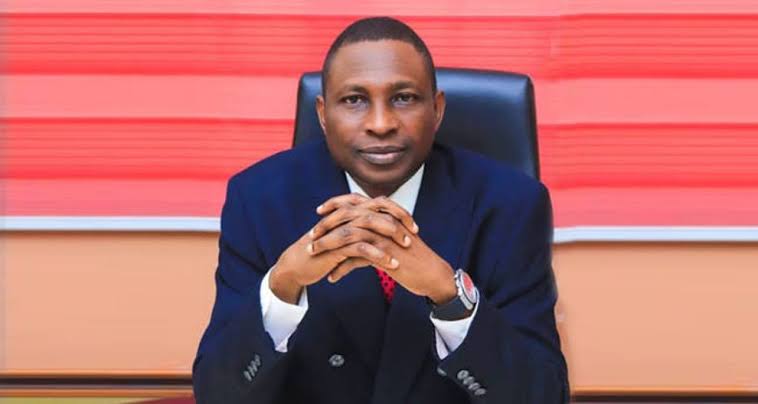
Right now, that storm is gathering around EFCC Chairman Ola Olukoyede.
He is not flawless, and EFCC itself is far from perfect. Citizens are justified in demanding fairness, transparency, and balance. Yet something deeper is unfolding — psychological, political, and profoundly moral. The effort to discredit and wear down Olukoyede is also an effort to weaken EFCC, frighten future reformers, and warn anyone who might challenge entrenched power.
At that point, the issue stops being purely legal.
It becomes spiritual.
Because when a society repeatedly tears down those making sincere attempts — however imperfect — to confront corruption, it invites something far worse: cynicism in institutions, despair among citizens, and ultimately, divine consequences. God does not remain indifferent when truth is twisted, integrity is mocked, and honest public servants are sacrificed to shield the powerful.
So when we witness organized campaigns against EFCC, pressure on judges, attempts to bend legal outcomes, and political gestures that rehabilitate the accused before justice takes its course, we must confront a hard question:
Are we truly fighting corruption — or are we destroying those courageous enough to challenge it?
If the answer tilts the wrong way, the cost will not only be political.
It will shape the soul and future of the nation for years to come.
A Moral Battle Disguised as Legal Disputes
Nigeria has reached a point where the fight against corruption is no longer just a legal contest; it is a struggle over the nation’s moral and spiritual direction. Institutions like the EFCC are asked to stand against entrenched power, political interference, media manipulation, and quiet pressures within the justice system. Reformers are often celebrated when appointed, isolated when they begin to confront sensitive interests, and eventually portrayed as the problem when they refuse to bend. This recurring ritual of discarding good servants explains why discussions about accountability in Nigeria can no longer ignore both power and God.
Coordinated Attacks and Psychological Warfare
In recent months, the EFCC has warned that politicians, activists, and interest groups are organizing coordinated campaigns to discredit its work and intimidate its leadership. The message from the Commission is simple: investigations touching powerful figures trigger backlash designed to weaken both credibility and morale. Whether one fully agrees with EFCC’s assessment or not, the reality remains that corruption in Nigeria has evolved beyond theft. It now functions as psychological warfare, using narrative, fear, and reputation damage as tools of resistance.
When Corruption Becomes Normal
This is why the EFCC’s public outcry matters. It is not only about files, bank records, or court summonses. It is about the normalization of corruption, where suspects return from court as heroes, delays are celebrated as strategy, and technical victories are treated as moral vindication. In such an environment, the EFCC is no longer confronting individual criminals; it is confronting an entire ecosystem trained to protect wrongdoing.
Turning Reformers Into Enemies
The danger is that genuine reformers inside institutions can be recast as enemies. Once they threaten the comfort of entrenched interests, questions begin to arise about their motives, integrity, and neutrality. Rather than confronting wrongdoing, attention shifts to undermining those who insist that the law must be applied consistently. The result is predictable: honest actors begin to feel exposed, and the system quietly punishes them for trying to uphold its rules.
The Malami Properties Case and Public Trust
The interim forfeiture order on fifty-seven properties linked to former Attorney-General Abubakar Malami and his family is a striking reminder of how deep the stakes run. The assets span hotels, estates, educational institutions, agro-factories, and religious facilities across several states — a pattern that raises profound questions about public office, personal accumulation, and trust. The courts will determine guilt or innocence, but symbolically, cases of such magnitude force Nigerians to ask whether public service has become a gateway to private empires.
Leadership Signals and Moral Confusion
Moments like this test not only the law, but the sincerity of political leadership. Many Nigerians still remember when former Kogi governor Yahaya Bello, despite facing serious allegations and active court proceedings, appeared publicly in dignified political company and was later appointed into a reconciliation committee. Legally, he remains presumed innocent. Morally and psychologically, however, such gestures create doubt. They send a subtle message that power can still offer shelter even where accountability is demanded.
Selective Justice — Or Public Perception?
This frustration is what fuels suspicion that corruption fights are selective. Some cases appear urgent and forceful, while others move with unusual caution. Critics such as Timi Frank have gone as far as urging the EFCC chairman to resign over perceptions of political bias. Whether one agrees with this view or not, it reveals the depth of public anxiety: Nigerians fear that justice may depend on affiliation rather than truth.
The Weight Of Invisible Pressure
Yet the reality is more complex. The EFCC chairman does not control the weather around him. His authority exists inside political structures that shape momentum, resources, and public narrative. When he insisted in 2024 that he would resign if the Yahaya Bello matter did not progress properly, it was less an act of defiance than a signal of frustration — the cry of someone trying to push the law forward while negotiating invisible pressure.
Loneliness Inside Reform
The psychological weight deepens when a man under prosecution appears comfortable in high political spaces while the institution pursuing him must remain cautious. This is not about guilt or innocence. It is about symbolism. Anti-corruption work suffers when the public sees defendants treated as honored allies while those enforcing the law are warned to “be careful.” In that moment, reform feels lonely. And loneliness is where integrity is most at risk.
When Judges Are Pressured
Meanwhile, the judiciary — the last refuge of fairness — is not immune from pressure. When Justice Emeka Nwite openly warned that private approaches were being made to influence his handling of the Malami case, it was not courtroom drama. It was a national alarm. For a judge to speak like that in open session means interference has moved from whispers to boldness.
Sabotage From Within
Behind that warning lies a deeper truth: some saboteurs live inside the very system meant to defend justice. They are the intermediaries who carry messages to chambers, the registrars who bury files under piles, the lawyers who confuse issues through endless technicalities, and occasionally the judges who allow delays to become verdicts. They do not shout on television. They work quietly — and the damage lasts longer than any political speech.
Naming and Shaming the Corrupt Influencers
This is why the call by Jibrin Okutepa (SAN) to “name and shame” lawyers and litigants who approach judges improperly carries unusual weight. He was not defending EFCC alone. He was defending the courtroom as sacred space. When legal officers collude with political interests to bend justice, the institution itself begins to rot from the inside.
EFCC Is Fighting More Than Crime
At that point, EFCC is no longer fighting money laundering or bribery. It is fighting networks. It is fighting influence. It is fighting stories crafted to confuse the public. It is fighting silence from quarters that should speak — and pressure from those who should remain quiet. No single agency, no matter how determined, can shoulder that burden without allies.
The Real Risk — Loss Of Faith
The greater danger is not losing cases. The greater danger is losing faith. When people begin to believe that corruption always wins eventually, something collapses internally. Institutions weaken. Citizens detach emotionally. The rule of law becomes performance rather than principle. And the nation slowly accepts injustice as normal life.
Corruption Is Also A Spiritual Crisis
That is why Nigeria’s anti-corruption struggle can no longer be discussed only in technical terms. It is also spiritual. A country that repeatedly discards sincere reformers invites a moral consequence. The Bible, the Quran, and history agree on one truth: when societies mock justice, they are eventually judged by the same injustice they tolerated.
God, Conscience, And The Cost Of Silence
I say this cautiously: God cannot be separated from this discussion. Without moral fear, leaders become comfortable with manipulation. Without conscience, courts become transactional. Without divine accountability, power feels secure in wrongdoing. And when those who try to do right — including officers, investigators, prosecutors, and yes, those like Ola Olukoyede — are left unprotected, the country risks breaking its own future servants before they even begin.
Why I Worry For EFCC
Over the years, I have written both supportive and critical commentary about EFCC — never to flatter or destroy, but to push for an agency Nigeria desperately needs to function honestly. My concern today is not about personalities. It is about what happens when institutions punish integrity and reward manipulation.
A Closing Prayer For Justice
So I end this reflection not as an analyst, but as a citizen — and as someone who believes God remains witness to how nations treat truth.
May God prevent the powerful, including those closest to leadership, from discarding good men and women simply because they refused to bend.
May He protect judges who resist interference, prosecutors who choose honesty over convenience, and officers who still believe public service is sacred.
May He shield reform-minded leaders — including those within EFCC — from becoming casualties of politics.
And may He expose every hand that twists justice in darkness, whether in courtrooms, party offices, or media rooms.
Because no society destroys its reformers and remains whole. And no nation repeatedly mocks justice without eventually being ruled by injustice itself.
A Closing Prayer For Justice
So I end this reflection not as an analyst, but as a citizen — and as someone who believes God remains witness to how nations treat truth.
May God prevent the powerful, including those closest to national leadership, from discarding good men and women simply because they refused to bend — especially when false whispers are placed around them.
May He silence every voice that intentionally misleads the Presidency, poisons perception, or turns honest reformers into targets through half-truths and manipulated reports.
May He protect judges who resist interference, prosecutors who choose honesty over convenience, and officers who still believe public service is sacred.
May He awaken every registrar, court clerk, investigator, agency head, and legal practitioner to the weight of conscience — and may He quietly remove from influence anyone who willingly turns justice into a bargaining chip.
May He shield reform-minded leaders — including those within EFCC — from becoming casualties of politics, while exposing any EFCC official who secretly works against the very mission they were sworn to defend.
May He strengthen lawyers who stand for truth, and frustrate the schemes of those who approach courts not to seek justice, but to manipulate outcomes.
And may He expose every hand that twists justice in darkness — whether in courtrooms, chambers, agency offices, registries, advisory circles, or media rooms — so that truth may breathe again in this nation.
Because no society destroys its reformers and remains whole. And no nation repeatedly mocks justice without eventually being ruled by injustice itself.
A Dangerous Season: Reformers Under Pressure, Not Criminals
Nigeria is entering a deeply troubling season in its anti-corruption struggle — not because criminals have suddenly become stronger, but because reformers are becoming increasingly isolated. We have reached a moment where those who try, even imperfectly, to confront corruption are more likely to be attacked than supported. History rarely treats such societies kindly. Political power may outmaneuver courts for a while, but it never escapes God, and it never escapes the judgment of time.
Corruption Has Evolved — It Now Fights Through Perception and Psychological Warfare
The Economic and Financial Crimes Commission, under Ola Olukoyede, now finds itself inside a battle far larger than prosecutions or courtroom appearances. The EFCC has publicly warned that politicians, interest groups, and carefully organized voices are coordinating efforts to portray the commission as partisan ahead of the 2027 elections. This is not merely messaging. It is strategy. Corruption in Nigeria has evolved beyond bribery and money laundering. It now fights psychologically — by destroying reputations, planting suspicion, intimidating investigators, and framing reformers as enemies before cases are even heard.
Why EFCC Is “Crying Out” — Normalized Corruption Is the Real Enemy
This is why the EFCC is “crying out.” It is not simply overwhelmed by files. It is reacting to something more dangerous: the normalization of corruption. Cases stall and return quietly. Proceedings drag for years. Technical victories are celebrated as innocence. Some suspects leave the courtroom to applause, as if legal process itself has become an inconvenience. In that environment, EFCC is not just confronting financial wrongdoing. It is confronting a national mindset that treats accountability as negotiable when power is involved.
Malami’s Properties and the Question of Public Office as Private Empire
The interim forfeiture order on 57 properties linked to former Attorney-General Abubakar Malami and his family illustrates the scale of the challenge. Hotels, academic institutions, religious centers, estates, hospitality facilities, factories — across several states. Whether Malami is guilty or not remains the court’s responsibility to determine. But symbolically, questions remain: how does public office in Nigeria continue to transform so easily into vast private empire? And who truly pays for that transformation?
Selective Courage, Selective Silence — The Yahaya Bello Dilemma
Then there is the case of former Kogi governor Yahaya Bello — a name that has become a symbol of selective courage and selective silence. While he is constitutionally presumed innocent, Nigerians watched him move comfortably in the highest political spaces and even secure appointments, despite active cases in court. At the same time, Olukoyede once publicly declared that he would resign if Bello’s case was not properly pursued. He was not grandstanding. He was signaling frustration — the frustration of someone trying to move a legal process forward while facing invisible resistance.
When Reformers Carry the Shame While the Accused Carry Applause
Imagine carrying the public anger, taking the criticism, doing the investigations — then seeing the same individual you are prosecuting photographed warmly beside national leadership. That is not simply institutional pressure. It is psychological wear. It quietly whispers to reformers: “Be careful. There are people you must never touch.” In moments like that, law becomes secondary to political calculation, and honest officers begin to wonder whether integrity still has value.
A Judge Speaks Out — And The Country Should Have Listened
Complicating matters further, the judiciary itself has started signaling distress. When Justice Emeka Nwite publicly warned that attempts were being made to improperly influence him in the Malami case, the nation should have paused. Judges rarely speak that way without reason. His statement was not courtroom theatrics — it was a sober indication that interference has become bold enough to walk up to the bench. EFCC’s lead prosecutor, Jibrin Samuel Okutepa (SAN), responded by calling for naming, shaming, and even arresting lawyers and litigants who attempt to “shop for judicial favour.” His position was direct: the courtroom cannot survive if it becomes a negotiation hall.
The Hidden Saboteurs Inside the System
It is here we must acknowledge an uncomfortable truth. The greatest enemies of justice are not always politicians. Sometimes they are the insiders: lawyers who whisper quietly to judges, registrars who bury files until momentum dies, court officers who trade adjournments like merchandise, and judges who drown cases under technicalities until truth suffocates. These individuals do not rant on television. They work quietly — and the damage they cause lasts decades.
An Overloaded EFCC Standing Alone
Under such conditions, EFCC is not only prosecuting alleged criminals. It is defending its credibility, shielding cooperative judges, battling organized media manipulation, responding to political pressure, and carrying public expectation — all at once. No single institution can carry such a burden without fracture. When reforms begin to cost too much politically, leadership often quietly distances itself while pretending support. Eventually, reformers become the problem — not corruption.
Public Anger Is Real — But The System Is Bigger Than One Man
Public frustration with EFCC over perceived selective enforcement is understandable. But the truth is more complex. The chairman operates within layers of authority, policy control, and political weather far beyond his reach. It is easy to point at one man. It is much harder to confront systems that allow certain cases to move and others to slow quietly. When the environment sends mixed messages — arrest one figure, celebrate another — institutions get confused. And confusion is where corruption survives longest.
The Real Danger: A Collapse of Faith in Justice
What Nigeria must confront now is not simply whether EFCC wins or loses cases. The deeper danger is a collapse of faith in justice. When citizens conclude that corruption always eventually wins, something breaks internally. Courtrooms become theater. Laws become tools of convenience. Cynicism hardens. And nations governed by cynicism rarely recover easily.
Anti-Corruption Must Become National Duty — Not EFCC’s Lonely Assignment
This is why anti-corruption cannot remain an isolated fight carried by EFCC alone. It requires disciplined courts, ethical legal practice, political restraint, honest executive backing, and a media system unwilling to be rented. Without alignment, EFCC becomes both the attacker and the scapegoat — blamed when it acts, criticized when it hesitates, and abandoned when it needs support.
Beyond Law — The Spiritual Cost of Destroying Reformers
More importantly, this struggle is not simply legal. It is deeply moral — and spiritual. A country that repeatedly discards sincere reformers invites consequences beyond politics. The Bible, the Quran, and history say the same thing: when societies mock justice long enough, they eventually become ruled by injustice itself. When that day comes, nobody — including the powerful — is safe.
Leadership Must Choose — A Final Warning
This appeal is not written to defend any one individual, nor to attack any particular leader. It is written to confront a dangerous national habit: applauding those who weaken accountability while isolating those who try to uphold it. When the Presidency — or any authority — receives distorted advice about the motives or integrity of anti-corruption leaders, the damage rarely stops with those individuals. It travels forward — into Nigeria’s future.
We must protect reform-minded officers, even when they are imperfect. We must restrain political gestures that quietly signal comfort and protection to those under investigation. We must expose the lawyers, registrars, judges, and insiders who quietly sabotage cases while publicly speaking about “rule of law.” And we must insist that leadership across institutions stop treating anti-corruption as theatre, while quietly weakening the very people tasked with enforcing it.
Because one truth remains unbreakable: no nation survives after repeatedly destroying those who are trying to heal it. If Nigeria keeps mocking justice long enough, justice will eventually answer back — not in headlines, but in weakened institutions, shrinking credibility, and the moral memory our children will one day inherit.
And there is an added warning we must not ignore. When Senate President Godswill Akpabio said, “Trump is already on our neck,” it was not comedy — it was caution. The world is watching, and those who frustrate EFCC today may find tomorrow’s consequences arriving from outside Nigeria.
By the time that reality becomes clear, the warning may already have come too late.
About the Author
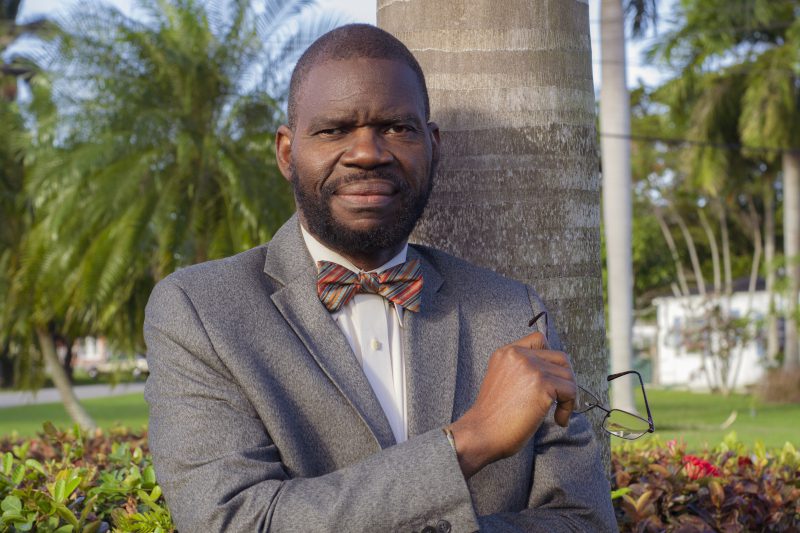
Prof. John Egbeazien Oshodi is an American psychologist, an expert in policing and corrections, and an educator with expertise in forensic, legal, clinical, and cross-cultural psychology, including public ethical policy. A native of Uromi, Edo State, Nigeria, and son of a 37-year veteran of the Nigeria Police Force, he has long worked at the intersection of psychology, justice, and governance. In 2011, he helped introduce advanced forensic psychology to Nigeria through the National Universities Commission and Nasarawa State University, where he served as Associate Professor of Psychology.
He teaches in the Doctorate in Clinical and School Psychology at Nova Southeastern University; the Doctorate Clinical Psychology, BS Psychology, and BS Tempo Criminal Justice programs at Walden University; and lectures virtually in Management and Leadership Studies at Weldios University and ISCOM University. He is also the President and Chief Psychologist at the Oshodi Foundation, Center for Psychological and Forensic Services, United States.
Prof. Oshodi is a Black Republican in the United States but belongs to no political party in Nigeria—his work is guided solely by justice, good governance, democracy, and Africa’s development. He is the founder of Psychoafricalysis (Psychoafricalytic Psychology), a culturally grounded framework that integrates African sociocultural realities, historical awareness, and future-oriented identity. He has authored more than 500 articles, multiple books, and numerous peer-reviewed works on Africentric psychology, higher education reform, forensic and correctional psychology, African democracy, and decolonized models of clinical and community engagement.