Africa
Why Nigeria Can Still Achieve a One-Trillion Dollar Economy by 2030, by Kenechukwu Aguolu


There are divergent views about Nigeria’s ability to attain a $1 trillion economy by 2030. I am still optimistic, as it is too early to conclude that it won’t be achievable. Nigeria’s economy has shown signs of improvement and potential for more growth. President Tinubú’s economic policies are gradually paying off despite not having any significant positive impact on the standard of living of Nigerians at the moment. To achieve its target, the Federal Government, must remain focused, and adopt an agile approach as today’s world is volatile, uncertain, complex, and ambiguous (VUCA).
According to the National Bureau of Statistics, Nigeria’s Gross Domestic Product grew by 3.19% in the second quarter of 2024 (on a year-on-year basis) which is higher than the 2.51% recorded in the second quarter of 2023 and the 2.98% recorded in the first quarter of 2024. With Nigeria’s GDP standing at $384 billion, a GDP growth rate of 3.19% is seemingly too low if Nigeria is to attain a $1 trillion GDP by 2030. However, the National Bureau of Statistics is in the process of rebasing Nigeria’s Gross Domestic Product. When the last rebasing exercise was done in 2014, Nigeria’s Gross Domestic Product moved from $270 billion to $510 billion, an increase of 89%. We can only keep our fingers crossed while we await the conclusion of the current rebasing exercise.
It is no longer news that Nigeria’s headline inflation on a year-to-year basis decreased in July2024, for the first time since December 2022. It dropped to 33.40% from 34.19% in June 2024. Also, on a month-on-month headline inflation has been on the decline consistently since March 2024, with June 2024 being an exception. However, the government needs to monitor the situation closely, as the recent fluctuation in the value of the Naira may undermine this progress.
Nigeria’s debt service-to-revenue ratio dropped from 97% to under 70% under the watch of the current administration. There is still a lot of work to be done, as it is far higher than the 22.5% prescribed by the World Bank. However, it has freed up resources for the government to invest more in infrastructure, healthcare, education, security, and other sectors of the economy. These investments will increase the growth of Nigeria’s Gross Domestic Product.
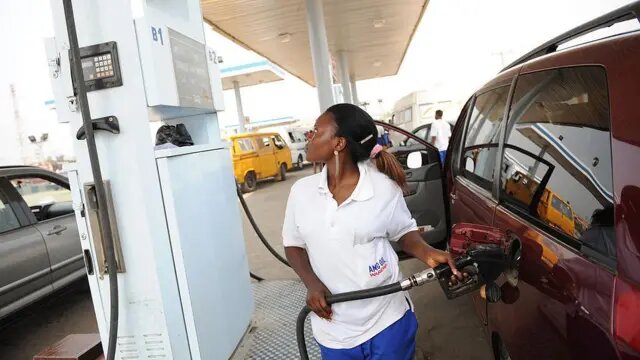
As part of efforts to reach a $1 trillion economy, Nigeria targets an oil production of 2 million barrels per day by 2025 and is intensifying its efforts to diversify the economy. With the Port Harcourt, Warri, and Kaduna refineries yet to recommence operations, the Dangote refinery will boost the Nigerian economy when it becomes fully operational due to the positive multiplier effect it will have. The refinery projects a turnover of $30 billion in the next two years. More domestic refineries are expected to become operational before 2030.
The implementation of the new national minimum wage will stimulate consumer spending. Household consumption shrunk as a result of the devaluation of the Naira. The demand for non-essential goods and services drop significantly. Companies experienced declining revenues, and some downsized staff strength to remain afloat. Also, better wages lead to more innovation, productivity, less staff turnover, and reduced brain drain as a result of “Japa,” leading to increased GDP in the long run.
Using the rebasing exercise conducted in 2014, which led Nigeria’s Gross Domestic Product to jump from $270 billion to $510 billion, as a precedent, one should be optimistic about the outcome of the current rebasing exercise by the National Bureau of Statistics. Furthermore, there are positive signs of increased economic growth, namely’; increased oil production, diversification of the economy, multiplier effect of the implementation of the new national minimum wage and self-sufficiency in refining of crude oil, etc. The government must be agile and remain steadfast in its economic reforms if Nigeria is to achieve a $1 trillion economy by 2030.
Kenechukwu Aguolu FCA, ACIT, PMP, FCIA
Kenerek1@gmail.com