Africa
Why Nigeria’s Electricity Crisis Is Not About New Laws or Reforms -By Monica Maduekwe
But it also means progress is possible. A serious and reform-minded governor, minister, or administrator can begin to shift outcomes by focusing on incentives, starting with how state electricity markets are structured, how professionals are compensated, how performance is measured, and how political interference is constrained.


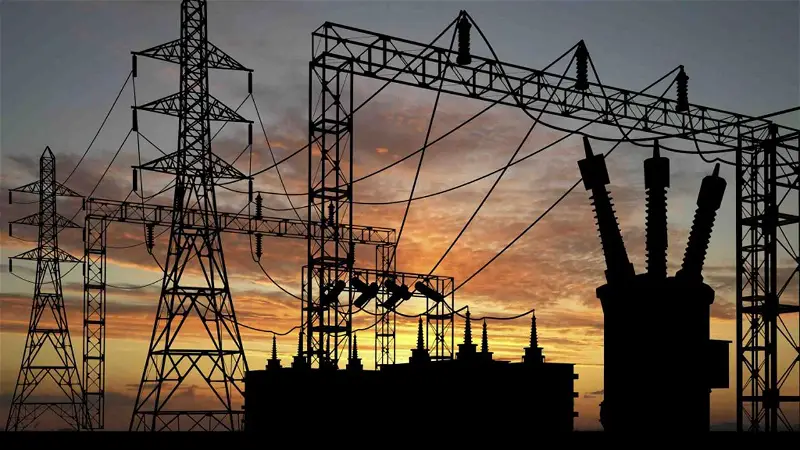
On 29 December 2025, while many Nigerians were in a festive mood preparing for the new year, the national electricity grid collapsed yet again. It did not abate in the following days and weeks. Power supply fell so sharply that electricity was available to only a handful of distribution companies. For most households and businesses, it was another reminder of how fragile Nigeria’s power system remains.
Although once a technical term, “grid collapse” has become part of everyday Nigerian language. So too has public frustration with the electricity sector. That frustration partly explains why Nigeria passed the 2023 Electricity Act, following the 2005 Electric Power Sector Reform Act (EPSRA), in the hope that decentralisation and new market structures would finally deliver reliable power.
Yet the central problem remains. Nigeria continues to reform its electricity sector, but outcomes change little.
This has led many Nigerians to ask an important question: why does the power problem persist despite repeated reforms? The fact that this question is now being asked more openly suggests the country may be ready for a deeper conversation.
Why reforms keep reproducing the same outcomes
The 2005 EPSRA was a serious attempt to restructure Nigeria’s electricity sector. It unbundled the old monopoly, introduced regulations and aimed to attract private investment. Symbolically, it also replaced the National Electric Power Authority (NEPA) with the Power Holding Company of Nigeria (PHCN), signalling a break from the past.
Yet nearly two decades later, Nigerians still exclaim “up NEPA” when electricity returns, even though NEPA no longer exists. The phrase has survived institutional change because the experience behind it has not fundamentally improved.
This captures an uncomfortable truth: even when new laws are enacted, the electricity sector often continues to behave like the old system. The same patterns re-emerge: weak planning, limited technical depth, political interference, poor coordination and dependence on external support.
This happens because reforms tend to change structures, but not the drivers of behaviour. As long as those drivers remain intact, new policies will continue to reproduce old outcomes even under new institutional names.
The real problem: the rules of the game
The underlying issue is institutional. In simple terms, institutions are the rules of the game, the incentives that shape how actors behave within a system.
In the electricity sector, these incentives influence:
- how ministries plan and prioritise,
- how regulators exercise authority,
- how utilities operate,
- how technical talent is attracted or lost,
- and how decisions are made under political pressure.
Institutions are not built overnight. They are shaped over decades by accumulated practices, reward systems, political norms and historical choices. This is why Nigeria’s electricity problem cannot be blamed on any single administration, especially not recent ones. The sector reflects long-standing ways of doing things, learned behaviours that persist even when formal rules, such as electricity laws, change.
Whether those behaviours are productive or not is a separate question. What matters is that they are deeply embedded.
Why some power sectors perform better than others
In my recent peer-reviewed study, Energy Transition in the Global South: Donor Bargains and the Future of the Aid Machine, published in Energy Research & Social Science (Elsevier), I examine why power sectors perform differently across West African countries, even when they pursue similar reforms.
One key finding is that institutional capacity, particularly the incentives that shape how technical expertise is developed and retained, plays a decisive role.
Institutional capacity is not simply about training or technical assistance. It is about whether systems reward learning, competence, continuity and performance over time. These incentives are shaped not only by domestic politics, but also by interactions with donors and financiers, especially during periods of financial stress.
Although development assistance accounts for a relatively small share of total power-sector funding, it exerts disproportionate influence over reform priorities, policy choices and institutional behaviour. When incentives are misaligned, reforms may look successful on paper but fail to translate into durable performance.
Why fixing electricity requires system-wide thinking
If Nigeria is serious about solving its electricity problem, it must go beyond sector-specific fixes and take a system-wide view.
This means examining incentives across:
- federal and state revenue structures,
- how public-sector talent is recruited, paid and retained,
- how political authority interacts with technical decision-making,
- and how external partners influence institutional choices.
For example, when subnational governments rely heavily on centrally distributed revenue rather than locally generated income, incentives for long-term investment, innovation and institutional learning are weakened. Similarly, when professional expertise in the public sector is poorly rewarded or politically exposed, technical capacity erodes over time.
Incentives matter because they determine what behaviour is rewarded and what behaviour is discouraged. If innovation is not rewarded, it will not occur. If competence is not protected, it will be lost. If political interference carries no cost, it will persist.
This also explains why reform is politically difficult. Changing incentives inevitably creates new winners and losers. Some institutions and individuals benefit from the status quo and will resist change. That resistance should not be underestimated.
But it also means progress is possible. A serious and reform-minded governor, minister, or administrator can begin to shift outcomes by focusing on incentives, starting with how state electricity markets are structured, how professionals are compensated, how performance is measured, and how political interference is constrained.
The way forward
The 2023 Electricity Act, which empowers states to develop their own electricity markets, is a welcome step. But the absence of immediate transformation should not be interpreted as a failure of decentralisation, nor as a reason for yet another round of structural reform.
Nigeria does not need more electricity laws that merely reshuffle institutions. What it needs is system-wide reform that targets incentives at their core.
The power sector is a good place to start. But success will depend on whether reforms change how institutions behave, not just how they are organised.
Until incentives change, outcomes will not.
Monica Maduekwe is an energy policy and finance specialist and Founder of PUTTRU, working at the intersection of electricity reform, institutional capacity, and development finance in Nigeria and West Africa.