Africa
Will Tinubu Beat Obasanjo’s Travel Record, And Should That Even Be the Goal? -By Isaac Asabor
So the real question is not whether Tinubu will travel more than Obasanjo. It is whether each journey will carry Nigeria forward in ways that citizens can measure without consulting flight logs. Until that becomes clear, the comparison will persist, not as a scoreboard of movement, but as a reflection of expectations about leadership in a country still negotiating its place in the world.

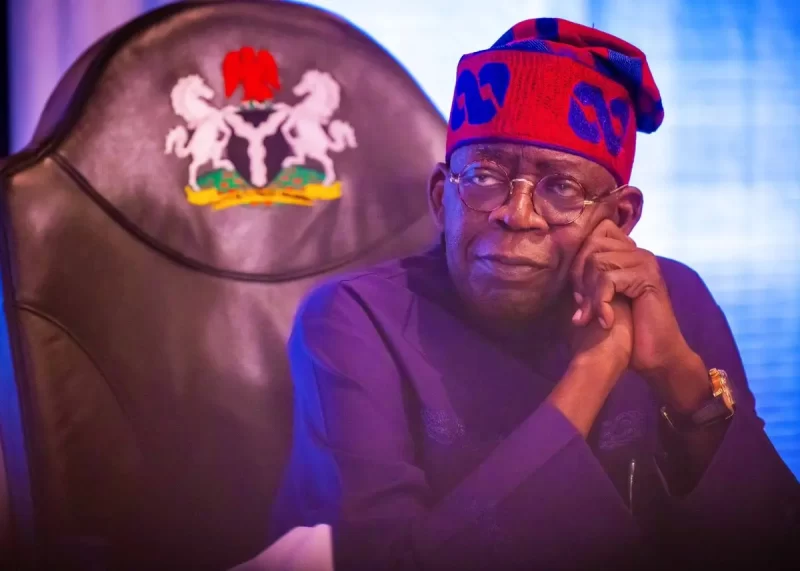
In Nigeria’s modern political memory, few presidential habits have generated as much debate as foreign travel. It is not just about miles logged or countries visited; it is about priorities, symbolism, and the constant tension between domestic urgency and global engagement. Olusegun Obasanjo’s presidency from 1999 to 2007 established what many still regard as the gold standard, or depending on one’s view, the cautionary tale, of presidential globetrotting. Today, as President Bola Ahmed Tinubu continues to define his governing style, a question naturally emerges: will he surpass Obasanjo’s record, and more importantly, what would that mean for Nigeria?
At this juncture, it is expedient to explain that this article was written in response to a question that arose during a lively social gathering I recently attended: would President Bola Tinubu surpass former President Olusegun Obasanjo in terms of foreign travel? The forum was too rowdy and spirited to allow for a proper exchange of ideas, so I opted to put my thoughts in writing. The piece is intended to offer a measured perspective and will later be shared with the debaters and arguers from that gathering for a fuller discussion.
Against this backdrop, it is clear that Obasanjo’s “shuttle diplomacy” was far from accidental; it was a calculated strategy shaped by a particular historical moment. Emerging from years of military rule, Nigeria faced a tarnished reputation, strained diplomatic relationships, and an economy struggling to regain credibility. The country was widely seen as isolated, unpredictable, and unstable. In response, Obasanjo’s frequent travels were framed as a concerted effort to restore Nigeria’s standing. Over his first term alone, he undertook more than 103 trips to 97 countries, a sustained campaign to reposition Nigeria on the global stage.
His stated objectives were clear. Nigeria needed to restore trust, rebuild diplomatic relationships, attract foreign investment, and renegotiate the burden of external debt. On several fronts, results appeared tangible. Nigeria secured a historic $18 billion debt relief deal from the Paris Club. Foreign investors began to return. The introduction and rapid expansion of GSM telecommunications, a turning point in Nigeria’s economic and social landscape, occurred within that broader climate of renewed international engagement. Supporters of Obasanjo argue that none of this would have happened without persistent personal diplomacy at the highest level.
But from the beginning, the strategy provoked sharp criticism. To opponents, the scale of travel was excessive, costly, and disconnected from everyday realities at home. Estimates placed travel expenses at billions of naira within just a few years. Critics argued that Nigeria’s pressing domestic challenges, poverty, infrastructure decay, governance reforms, demanded more attention than international circuits of summits and state visits. Legal luminary, late Gani Fawehinmi, and others framed the issue not simply as a budgetary concern but as a matter of political focus: a president should not appear more visible abroad than at home.
This tension between international visibility and domestic presence is precisely the lens through which Tinubu’s travel pattern is now being examined. Every presidential trip today is instantly measured against the Obasanjo era, whether fairly or not. The benchmark has become part of Nigeria’s political folklore: the traveling president who sought to restore national dignity through global engagement.
Tinubu governs in a different context, yet one that also demands international outreach. Nigeria’s economy is undergoing structural adjustments, including subsidy removal and currency reforms that have global implications. Investment attraction, debt negotiations, and energy partnerships remain central to national strategy. The global economy is more interconnected than it was in 1999, and diplomatic presence often translates into economic opportunity. In that sense, foreign travel remains a functional instrument of governance, not merely a ceremonial exercise.
It has, however, been gathered that President Tinubu plans a State Visit to the United Kingdom in March, 2026. According to Buckingham Palace, the visit is scheduled for March 18 and will last two days. Tinubu will be accompanied by First Lady, Senator Oluremi Tinubu, marking the first Nigerian state visit to the UK in 39 years. The invitation came from King Charles, who has previously met President Tinubu during a private visit in 2024 and earlier in 2023 ahead of the UN Climate Change Conference in Dubai. This visit reinforces Nigeria’s ongoing diplomatic engagements and underscores Tinubu’s growing visibility on the global stage. It also raises fresh questions: will these travels be strategic steps toward national growth, or another tally in a race to match, or exceed, Obasanjo’s record?
However, context complicates direct comparison. Obasanjo’s travels were framed as rehabilitation after isolation. Tinubu operates in a Nigeria that is already reintegrated internationally but faces credibility challenges of a different kind, fiscal pressures, security concerns, and social discontent. The question is no longer whether Nigeria belongs in global conversations; it is whether international engagement produces measurable domestic benefits quickly enough to justify the optics.
This is where the debate about records becomes misleading. Counting trips alone obscures the deeper issue: effectiveness. A president could travel less frequently but secure strategic outcomes that outweigh sheer numbers. Conversely, frequent travel without visible returns risks reinforcing the perception of distance from domestic realities.
Still, political symbolism matters. Nigerians pay attention to presence, who is seen addressing local crises, visiting affected communities, or convening domestic stakeholders. Excessive travel can easily be framed as absence, especially in a country where many citizens feel governance is remote from their daily struggles. Obasanjo navigated this tension with mixed success; his achievements abroad did not fully shield him from criticism at home.
Tinubu’s challenge is therefore not simply whether he will surpass Obasanjo’s travel record, but whether he can redefine the meaning of presidential mobility. If travel is tied transparently to economic deals, investment flows, or strategic partnerships, public skepticism may soften. But if trips appear routine, repetitive, or lacking clear outcomes, comparisons with Obasanjo will likely intensify, and not in a flattering way.
There is also a generational dimension to the conversation. Nigeria’s political culture has evolved. Citizens now demand quicker, more visible results. Social media compresses the distance between action and judgment. Every trip is scrutinized in real time, every photo interpreted politically. Obasanjo operated in an era when communication cycles were slower and diplomatic symbolism carried different weight. Tinubu’s travels unfold in an environment of constant evaluation.
Yet one must also acknowledge that modern governance requires international presence. Negotiating energy transition financing, securing development partnerships, and positioning Nigeria within regional and global institutions cannot be done exclusively from Abuja. Leadership today operates simultaneously on domestic and international stages. The real test is balance.
Will Tinubu beat Obasanjo’s record? It is possible, though not inevitable. The structure of global diplomacy, frequent summits, economic forums, and multilateral engagements, creates natural pressure for presidential travel. If his administration prioritizes aggressive international engagement as a core economic strategy, the numbers could climb quickly. But surpassing Obasanjo numerically would carry symbolic weight that could either strengthen or weaken political perception, depending on outcomes.
What is more important than the count is the narrative attached to the travel. Obasanjo framed his journeys as national rehabilitation. Tinubu must frame his within a compelling domestic agenda that citizens can see and feel. Without that connection, the comparison will be unforgiving.
The deeper question, then, is whether Nigeria should still evaluate leadership through the lens of travel frequency. Measuring governance by air miles risks trivializing complex policy outcomes. Diplomatic activity is a means, not an end. A president who travels less but secures transformative domestic impact may ultimately be judged more favorably than one who accumulates global visibility without equivalent results.
Obasanjo’s era demonstrated that international engagement can reshape a country’s trajectory under the right conditions. But it also showed that perception of distance from domestic realities can overshadow achievements. Tinubu stands at a crossroads between those two lessons.
If he surpasses Obasanjo’s record, history will not remember the number of trips alone. It will remember whether those journeys translated into economic stability, institutional strength, and improved living conditions for Nigerians. Travel, in itself, neither redeems nor condemns a presidency. Outcomes do.
So the real question is not whether Tinubu will travel more than Obasanjo. It is whether each journey will carry Nigeria forward in ways that citizens can measure without consulting flight logs. Until that becomes clear, the comparison will persist, not as a scoreboard of movement, but as a reflection of expectations about leadership in a country still negotiating its place in the world.