Africa
Zacch: No More Climbing Sycamore Tree! -By Abiodun KOMOLAFE
The military, in an attempt to gain cheap popularity and acceptance, simply relegated taxation to the back-burner. This is hardly surprising, since authoritarian rule is at total variance with any genuine conception of a social contract. The new tax reforms spearheaded by the progressives are an attempt to build an enduring democracy based on the acceptance of the social contract as well as the concept of shared prosperity.

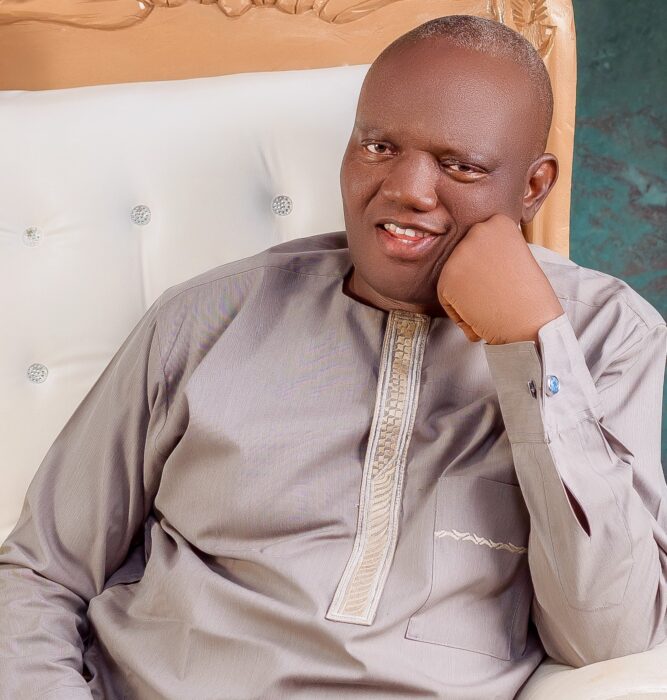
It is unfortunate – though pleasant surprises can occasionally ‘crop up’ – that Zacch Adelabu Adedeji is unlikely to be among the recipients of the ubiquitous ‘Man of the Year’ awards. These accolades, jocularly referred to by the mischievous as being showered like confetti at a wedding, are often a poor reflection of true impact. That Adedeji – a modern reincarnation of the Biblical Zacchaeus – might be overlooked speaks volumes about the judgment and hidden motives propelling many of these awards.
A vantage strategist and fiscal architect, the Executive Chairman of the Federal Inland Revenue Service (FIRS) should be a leading contender for any seriously considered award. The way things are shaping up, he is carving his way into the history books in a manner that, in our view, will be overwhelmingly positive. His work has decisively altered the territory of public discourse – and the very way we define society.
As his Biblical forerunner illustrated, taxation has always been at the heart of human evolution – from hunter-gatherer roots to the urbanization that birthed structured governance and state authority. Indeed, it confirms that old adage often met with applause from American audiences: the only certainties in life are death and taxes.
Taxation is, or certainly should be, a fundamental part of the social contract. It should be predicated on the understanding that contributions will be recognized and, in turn, rewarded with tangible benefits. This is the only sustainable way to develop a modern democracy. The alternative is the crude enforcement of the state through brutality. By shifting the territory of this debate, Adedeji has secured a legacy that will be viewed favourably by economic historians in the decades ahead.
In this age, when our politics is intense and good governance is a major factor, the Iwo-Ate, Oyo State-born technocrat remains a vital bridge between ancient wisdom and modern global discourse. He is essentially reinventing a more edifying past. As a matter of fact, President Bola Tinubu should be commended for placing tax reform on the front burner and demonstrating a positive alternative to the disappointments of past decades.
History, after all, should be both our guide and our guard. I have argued elsewhere that, in the 1950s, the Action Group (AG) government in Western Nigeria continuously suffered electoral losses because of what the National Council of Nigeria and the Cameroons (NCNC) opposition tagged its ‘high taxation’ regime. This is, of course, what any opposition is expected to do! Nevertheless, the government stayed the course, albeit at a negative electoral cost. Vindication arrived in 1961 when a succeeding government attempted to cut taxes to improve its electoral prospects. To the government’s surprise, the response to these tax cuts was widespread civil disobedience, particularly in the Ijebu and Ekiti provinces.
According to reports in the Daily Times at the time, dozens of people were arrested and arraigned before magistrates. What the incidents of that year proved was that, contrary to the alternative reality often painted, Nigerians are not averse to the payment of taxes. Common sense dictates that the judicious and transparent use of collected revenue benefits the overwhelming majority and their families. The crux of the matter is transparency and judicious application.
The military, in an attempt to gain cheap popularity and acceptance, simply relegated taxation to the back-burner. This is hardly surprising, since authoritarian rule is at total variance with any genuine conception of a social contract. The new tax reforms spearheaded by the progressives are an attempt to build an enduring democracy based on the acceptance of the social contract as well as the concept of shared prosperity.
Of course, there will be opposition to reforms and change from the beneficiaries of the old order. Indeed, it would be astonishing if it were not so! It is to be expected that virulent personal attacks will be mounted against anyone associated with the effort to dismantle a way of life that has benefitted only a few at the expense of the majority. This has always been the case in Nigeria’s long march of history.
Imagine Zacchaeus in the Bible, squeezing through a crowd to see Jesus – just like how we struggle every day, jumping through studs just to get things done in Nigeria. For years, the ‘Sycamore tree’ has represented the exhausting and often desperate effort Nigerians put in to traverse the difficult terrain of systemic bottlenecks. When messy bureaucracy blocks the way, people are compelled to ‘climb’- resorting to complex workarounds and middlemen just to fulfill basic duties. This struggle was once a necessary survival tactic in an environment where government services felt completely out of reach.
But here’s the twist: our own Zacch is tearing down those hurdles. Thanks to the 2025 Tax Reform Acts, the FIRS becomes the Nigeria Revenue Service (NRS) in January 2026. This transition brings one tidy rulebook instead of a jungle of papers, alongside a Tax Ombudsman to fight for us if things go sideways. It’s like saying: “We tax growth, not struggle.”
The Act is a total game-changer. It offers immediate relief for individuals: those earning ₦800,000 or less are now exempt from income tax, while essentials like food, school fees, and hospital bills can breathe easy – no VAT on them. The poorest among us won’t pay a kobo. To lower housing and transition costs, it introduces a 20% rent deduction (capped at ₦500,000) and makes job-loss compensation tax-free up to ₦50 million.
Small businesses also see the “heavy hand of the state” lifted. Companies with turnovers under ₦100 million and assets below ₦250 million are now exempt from Company Income Tax (CIT) and Capital Gains Tax (CGT). By eliminating multiple taxation and simplifying compliance, the reform allows entrepreneurs to focus on growth over paperwork.
Ultimately, the impact is twofold. According to fiscal analysts, the Act will bolster government revenue through a broader tax base while simultaneously incentivizing investment and job creation. It is a strategic move to foster a more inclusive and expansive economy.
By focusing on “taxing the fruit rather than the seed”, Adedeji is clearing away the bureaucratic ‘crowd’ that encouraged the climb in the first place. Through simple digital tools and new protections, the government is finally coming down from its ivory tower to meet people where they are. This changes the entire relationship between the state and the people. It signals that in a modern Nigeria, progress should be visible from the ground, without anyone needing to be a ‘hero’ just to be seen.
Tax reforms are the most realistic way in a democracy to dismantle Nigeria’s debilitating rentier state. For this country to make progress, we must move away from parasitic relationships towards a system based on production – one that leads to higher revenue which can be equitably shared. Unfortunately for reformers like Adedeji, the rentier state has created a host of parasites; and as every student knows at JAMB-level Biology, the parasite, as it feeds on the host, often begins to assume its very features.
The parasites in Nigeria have long been feeding fat on the host of a rentier state, and both must be dismantled. Those attacking Adedeji’s valiant efforts are the primary beneficiaries of this old order. They must be stopped in their tracks through vigorous and sustained public enlightenment. Such enlightenment can never be a one-off effort in the face of a determined, self-preserving opposition. It must be continuous – a marathon, not a sprint.
To that end, Happy New Year in advance to Dr. Zacch Adelabu Adedeji and all those of a progressive bent, both at home and abroad!
May the Lamb of God, who takes away the sin of the world, grant us peace in Nigeria!
Email: ijebujesa@yahoo.co.uk
Mobile: 08033614419 SMS only.