Forgotten Dairies
ADC: As Tinubu’s Cat Readies To Eat A Poisonous Toad -By Festus Adedayo
In our very before, we are seeing a replay of the Ap’ejalódò allegory. From a very humble and challenged beginning, a travailed youth and turbulence of an early political journey, the fish god made our Aso Rock Ap’ejalódò Nigeria’s No 1 Citizen, in spite of his myriad foibles. Yet, upon waking up from his magnificent bed, seeing an intruding blinding ADC ray meandering into his bedroom, Nigeria’s Ap’ejalódò is enraged. Couldn’t the Sun respect the privacy and majesty of the most powerful man in Nigeria?

Published
5 months agoon

At this time, the lord of Lagos, Bola Tinubu, had sworn to do away with his protege, Akinwumi Ambode, as governor. The piece warned that Tinubu would encounter maggots inside his salt if he did. But, like a bettor who loses his bet, that projection lost its hit. Tinubu not only removed Ambode, fate went ahead to make him president of Nigeria. As I brooded over this off-target shot, I am reminded of the child who, seeking to make falsity of the power of the god residing inside an Iroko tree, pelted the tree with stones. Momentarily afraid, he then looked backwards to see if the tree god would indeed harm him. As he gloated on the perceived effete power of the Iroko god, elders remind us that the retaliation of the Iroko tree god is never instant.
Political events in Nigeria, especially in the last one week, make the need to retell the Ap’ejalódò story compelling. Set in an African village, it revolves round a young fisherman ravaged by palpable failure. Even his fishing trade proved incapable of rescuing him from years of pangs of lack. One day, as he thrust his fishing hook into the river, it caught one of the largest fish he had ever seen. Excited, Ap’ejalódó pulled his awesome catch up the river bank. He then yanked it off the hook. As he attempted to carry it into the basket, the fish began to speak like a human being. Ap’ejalódò was at first afraid but he eventually pulled himself together and listened to the sermon of the strange fish. Singing, “ap’ejalódò, yé mo dé, jà lò lò, ja ló ló…” (Fisherman, here I come…), the fish pleaded to be rescued by the fisherman. It promised that if he spared its life, in lieu of this rescue, he should ask for whatever he wanted in life. Excited, Ap’ejalódò lets it off the hook, having asked for wealth. Truly, by the time he got home, the ragged clothes on him and his wife had become very costly damask agbádá and àrán respectively. His wretched hut had also transformed into a big mansion, and both husband and wife subsequently lived a life of unimaginable splendour.
After a few years, and the couple still being barren, the wife entreated Ap’ejalódò to go fishing again and ask his fish friend to rescue them from this social shame. As he thrust his hook into the river, it caught the strange fish again and the earlier process was repeated. This time, he asked for a child and the strange fish granted it. Over the years, Ap’ejalódò
Off Ap’ejalódò went to the river bank, thrust his fishing hook into the river and again invoked the strange fish. And Ap’ejalódò made his plea. The fish was peeved by the fisherman’s greed and audacity: “You were nobody; I made you somebody and you now have everything at your beck and call. Yet, you want to compete with God in majesty and you will not allow even a common Sun to shine and perform the illuminative assignment God gave it to perform on earth!” The fish angrily stormed back into the river and as Ap’ejalódò, downcast, walked back home, his old torn and wretched dress suddenly came back on him, his mansion transformed into the hut of the past and the couple’s latter wretchedness was more striking than the one of yore.
Though aware that folklores and tales by moonlight were largely untrue, Africa believed in the power of their messages. Its cosmology was governed by anecdotes, lores and mores which prescribed moral codes. They helped to shape the moral man. For centuries, those farcical narratives strengthened the people’s moral forte. So also did traditional African songs. Stories of petty thieves who came to ghastly ends were told by the elderly, sometimes couched in songs. They were rendered to children even in their infancy and helped to navigate future leaders from the path of crime.
For instance, the destructive end of greed was foretold in folklores of pre-colonial Yoruba society. The emblematic story of Tortoise and the scalding hot porridge on the fire he stole did the magic. Tortoise then covertly put the hot porridge on his head and capped it. This, in the moral of the story, burnt his scalp so mortally that, till today, Tortoise remains bald. Almost since I was weaned from diapers, my mother sang a grim song that seared my flesh, till today. It centers on the ultimate end of an armed robber. Post-independence Nigeria of my growing up years had witnessed a huge surge in robbery borne of the stampede for petro-dollars. So, my mother sang, in our native Akure dialect, “In m’ehin re t’okun, omo k’e sa’re moto k’o binrin-binrin dana o…” – Tie his back to the stake to face the lagoon, the child who, in hot pursuit to own an automobile, chose robbery as trade…
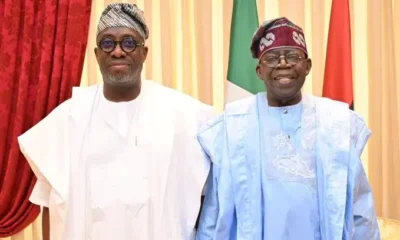
From the way he fiddles with power today, it will be difficult to determine who, between God and President Tinubu, wields greater authority and majesty. Give it to him, Tinubu worships power, more than any politician this country has ever known. He cuddles it like a mother her baby. Unlike Fuji music legend, Sikiru Ayinde Barrister, who counseled that the one in possession of that core Yoruba cultural virtue of patience, tolerance or forebearance called Sùúrù, has everything, to Tinubu, he who has power has everything. Tinubu is impatient with political laggards. Nigerians now complaining that he has a totalitarian conception of power are not being fair to Seyi’s father. We were forewarned that our farm was infested with the striped ground squirrel and yet went ahead to plant its meal, groundnuts, on it. Before coming to power, Tinubu articulated his totalistic understanding of power. He said, “At all cost, fight for it, grab it, snatch it and run with it”. He is meticulously strategic about grabbing and sustaining the levers of power.
Those who hyped Tinubu as a democrat must have found out that they suffered premature sense of judgement, like one who heard the noise of thunderstorm, assuming it signified an impending rain, poured water inside their pitcher away. Tinubu has a morbid fear of rejection and competition. He is at best an autocratic, absolute monarch, a fief in a personal rule.
My people believe in the philosophical chain of cause and effect. Nothing happens in isolation. In tracing the foundation of a pestilence, they ask that it should be looked at from its fundament, represented as, “Ẹ jẹ k’á ti ibi ìṣáná kí’yè sóògùn“. Did Tinubu the totalitarian just happen on us? How has he run Lagos since 1999? Was this not the same man who, jettisoning the voice of the entirety of the Lagos parliament who wanted a political wastrel in leadership garb out of a seat, single-handedly brought the fellow back? Whatever political monster we have on our hands today is a product of our political hubris. We are all complicit.
Tinubu has held Lagos together in the last 26 years by an unseen iron fist of a totalitarian, a cultic abidance by torturing rules and ascendancy of the interest of the Capon. Deviance is met by financial, social and political ostracism and extinguishing. Until 2023 when the will of the Leviathan was rudely subverted at the presidential polls, no political party dared to peer light into the darkened eyes of the Lion, king of the jungle, the “Kìnìhún Olóólà Ijù”. He purchased resistance with the most costly of ornaments, muffled voices of dissent and stomped on with his feet, like a matador, persons he forbids.
Take it or leave it: Tinubu is a maximalist and an absolutist; no middle of the road suffices for him. If his rattlesnake embarks on a journey, no cog is strong enough to halt its strike. He is however very strategic and clear-minded. He studied Nigeria and Nigerians very meticulously and has their password at his finger-tip. From the moment he was sworn in in 2023, he began strategizing for 2027. The walls of political parties are not collapsing by happenstance. Tinubu already drew the template of their collapse. Like they do in the underworld to suborn allegiance, Tinubu buys favour. He shopped for and got the crusty poo-poo of erstwhile opposition governors as they sat on power swing chairs. With this, their balls rotated firmly in his grips. He only needed to flash the smelly excrement in their faces. The gluttons of cash among them, he lured with monies enough to get them bend over backwards awkwardly.
In the Tinubu lexicon, conscription of minds must be total. Having totally conscripted the legislature, funneling indescribably huge cash to manacle their feet, he proceeded to the judiciary. His lickspittle, vested with holding down the PDP, would proceed to do the job, directly taken from his own playbook. Mansions sprung up in the federal capital to whet judicial palates. The gavel lost its weight. Justice, like salt that lost its savour, became mere flaking dust.
Tinubu must have carefully studied Bola Ige’s concept of five fingers of a leprous hand. When fingers of a hand are leprous, no matter the health of the hand hoisting them, they are dead in deed. Having carefully observed how Gen Sani Abacha conscripted and castrated the five political parties he created, preparatory to his transmutation into a life president, Ige saw no good ahead of the parties. Tinubu is presiding over same leprous fingers. Having been an opposition leader himself, he knows that inordinate ambition, internal wranglings and disaffection are the bane of Nigeria’s political opposition. He then capitalized on them. Few months to the elections, it is a done deal. PDP is totally held down by the man who unabashedly admitted that he could shoot a journalist without a trifle. APGA is already in the pouch. Labour Party is almost totally destroyed by presidential agent provocateurs. Rabiu Kwankwaso’s erstwhile NNPP is riven by irreconciliable strife. Even Seriake Dickson’s NDC has been infiltrated by presidency bugs. They have begun to sow tares of discord in its field. Forget the claim that Tinubu had no hand in those parties’ travails. It is bunkum.
In all these disaggregation assignments, the presidency’s hands are invisible and its voice inaudible. He is the one Juju music legend, Ebenezer Obey, seemed to be describing when he sang about one who pounds the yam of evil but whose pestle and mortar utter no single sound (agún’bàjé ò l’ódó).
When we shouted from the rooftop that Tinubu’s main 2027 goal was a one-party state, we were called names. Last week’s INEC derecognition of the leadership of the African Democratic Congress, (ADC) the only viable opposition carcass left, blew the feathers off the hen’s rump. Don’t mind Joash Amupitan and his marine tale. Though he is a law professor, he is a theatre man. He is trapped right inside the vortex of the one-party conundrum. The de-recognition has one part resembling a groundnut seed and the other a bean seed. Anyone who knows the no-captive politics of Tinubu would see both seeds as maturation of his politics. He dreads fair democratic contestation. He gets his “victory” through the muzzling of brawns and sweet-smelling scent of cash that purchases consciences. This is autocracy simplicita.
Many ignoramuses do not see political and national calamity ahead. What they see are “agents behind June 12 annulment” whose gang-up has been annulled by INEC. They do not know that democracy is a vehicle for saints and sinners alike. It is only the electorate that is permitted to sieve the wheats from the chaffs on election day. In any case, are they unaware of trending claims that, even at some point, the man who claims to have suffered for democracy in Aso Rock today, at one time was in dalliance with Abacha?
As laid-back and docile as Nigerians are, they cannot countenance autocracy. Methinks Tinubu’s bid to be the sole presidential candidate in 2027 is good for the health and development of our democracy. We need to do away with ants-laden faggots on our way to the castle of democracy. I remember the Yoruba poetry we read in primary school those days called the Alawiye series. One of the poems in it runs thus: The creation that will spark trouble/If you attempt to stop them, they will be deaf to entreaties/As Ekulu, rat of the savannah, when given power to eat plenty of meadows, becomes so fat that he threatens Ira, a bigger, big-chested animal/Even the cricket, powerfully drunk, attempts to tear its own belly. The poem’s original Yoruba version is rendered thus: “Èdá tí yíó bá fà ’jògbòn/Bí a bá dáa lékun, sé kò níí gbó/Ohun tí ó fé se níí káa l’ára/Ààyè gb’èkùlù òdàn, ó fé nípon l’áyà bí ìrà/Olówó jeun yó tán, ó ńwá ikú kiri/ìrè yó tán, ó bé ara rè níkùn.”
Like the Èkùlù Òdàn, a hitherto small-size rat, absolute power opportunity of a fertile land is making Tinubu attempt the imponderable. Nigeria has never gone into a presidential election with a single candidate. We may, in January 2027. Our forefathers warned that he who does what nobody ever did would see what nobody ever saw. Like the dog that is fated to get lost which must turn deaf ear to the hunter’s whistle, our president will not listen to words of wisdom. In the ADC, his cobra has swallowed a porcupine. Its spines will burst its entrails.
In our very before, we are seeing a replay of the Ap’ejalódò allegory. From a very humble and challenged beginning, a travailed youth and turbulence of an early political journey, the fish god made our Aso Rock Ap’ejalódò Nigeria’s No 1 Citizen, in spite of his myriad foibles. Yet, upon waking up from his magnificent bed, seeing an intruding blinding ADC ray meandering into his bedroom, Nigeria’s Ap’ejalódò is enraged. Couldn’t the Sun respect the privacy and majesty of the most powerful man in Nigeria?
Now, Tinubu is by the river bank, his fishing hook held firmly in his hands. He is about telling the fish god to yank the ADC ray from shining alongside his. The cat is about to eat the poisonous meat of the toad.