
Politics
The Troubling Theatre Of Wike’s Media Chats: A Chronological View -By Isaac Asabor
If media chats are to remain a meaningful tool of governance, they must be reclaimed from the brink of spectacle and restored to their rightful place as instruments of accountability and public service.

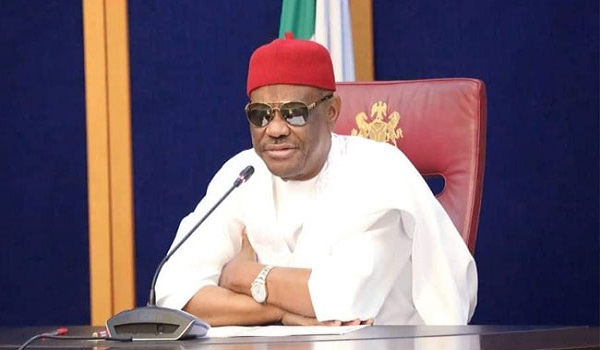
In Nigeria’s evolving democratic space, public communication by political office holders is expected to inspire confidence, clarify policy, and deepen accountability. However, the recent pattern of media engagements by the Minister of the Federal Capital Territory, Nyesom Wike, has raised serious concerns about the tone, purpose, and implications of such interactions. Rather than serving as platforms for transparent governance, Wike’s media chats have increasingly morphed into arenas of confrontation, political score-settling, and rhetorical excess.
A chronological review of his public engagements between 2024 and 2026 reveals a consistent trajectory, one marked by combative exchanges with journalists, controversial policy pronouncements, and the personalization of governance discourse. This trend not only undermines the integrity of public communication but also raises deeper questions about respect for democratic institutions and press freedom.
In fact, the early signs of discord became evident in August 2024 during a media briefing marking Wike’s first year in office. In what should have been a straightforward assessment of his administration’s achievements, the minister abruptly declared the controversial “park and pay” policy illegal. This pronouncement directly contradicted ongoing enforcement activities by the Federal Capital Territory Administration (FCTA), thereby creating confusion among residents and stakeholders.
As widely understood, public policy thrives on clarity and consistency. When a sitting minister publicly disowns a policy already being implemented under his watch, it signals either a breakdown in internal coordination or a disregard for the implications of public statements. In either case, the result is the same: diminished public trust.
By January 2025, Wike’s media engagements had taken on a more combative tone. During a live session, he openly chastised a journalist from Arise News, accusing the reporter of disseminating “wrong stories” about the constitutional status of the FCT. Rather than offering clarification in measured terms, the minister adopted a lecturing posture, asserting his interpretation of Supreme Court rulings and dismissing the journalist’s perspective.
This approach reflects a troubling tendency to conflate authority with infallibility. In a democratic setting, journalists are not subordinates to be reprimanded but critical stakeholders tasked with holding power to account. When public officials resort to belittling media professionals, it creates a chilling effect that discourages probing questions and robust debate.
The line between governance and personal vendetta became even more blurred in August 2025, when Wike used a media chat to launch a direct attack on Ireti Kingibe, the senator representing the FCT. Questioning her legislative performance in a highly personal manner, the minister transformed what should have been a policy-focused engagement into a political spectacle.
Such conduct is particularly concerning given the distinct constitutional roles of ministers and legislators. While disagreements are inevitable in politics, public officials are expected to engage with decorum and focus on issues rather than personalities. Wike’s approach, however, suggests a preference for confrontation over collaboration.
By the end of 2025, Wike’s media chats had evolved into full-blown political theatre. During a December session, he openly mocked several political figures, including Seyi Makinde and Siminalayi Fubara, while also launching personal attacks against Bode George, whom he labelled a debtor.
This episode underscored a recurring theme: the use of official platforms to prosecute personal and intra-party conflicts, particularly within the Peoples Democratic Party (PDP). Rather than addressing the pressing challenges of the FCT, the minister appeared more invested in settling political scores.
The implications are significant. When governance platforms are repurposed for partisan battles, the public interest is sidelined. Citizens expect updates on infrastructure, security, and service delivery, not a running commentary on political rivalries in Rivers State or elsewhere.
The most controversial moment in Wike’s predilection to committing faux pas came on April 3, 2026. In a live media chat, Wike reacted sharply to a previous interview conducted by Channels Television host Seun Okinbaloye. In a statement that quickly went viral, the minister declared: “If there was any way to break the screen, I would have shot him.”
Even if intended as hyperbole, the remark was widely perceived as crossing a dangerous line. In a country where journalists often operate under challenging conditions, such language from a high-ranking officials carry serious implication. Words matter, especially when they come from those in positions of power.
The backlash was swift and widespread. Organizations such as Amnesty International, alongside civil society groups and political actors, condemned the statement as a threat to press freedom. Attempts by Wike’s aides to downplay the comment as exaggerated rhetoric did little to quell public outrage.
In the same April 2026 media chat, Wike ventured into legal territory, offering interpretations of court rulings related to the PDP crisis in Rivers State. He also criticized opposing political parties for what he described as inconsistency.
While public officials are entitled to express opinions, there is a fine line between commentary and overreach. When a minister publicly “lectures” on judicial matters, it risks undermining the perceived independence of the judiciary. It also raises questions about the appropriateness of using official platforms for such discourse.
Taken together, these incidents reveal a consistent pattern. Wike’s media chats are characterized by three key elements: confrontational rhetoric, personalization of issues, and a tendency to blur institutional boundaries. This combination has transformed what should be routine engagements into recurring controversies.
At the heart of the matter is a fundamental question: What is the purpose of a media chat? Ideally, it should serve as a bridge between government and the governed by serving as a forum for explaining policies, addressing concerns, and fostering dialogue. In Wike’s case, however, the bridge often collapses under the weight of combative exchanges and political theatrics.
The implications of this trend extend beyond the individual. They speak to the health of Nigeria’s democratic culture. When public officials adopt adversarial attitudes toward the press, it weakens one of the key pillars of accountability. When governance platforms are used for personal battles, it erodes public trust in institutions.
Moreover, the normalization of aggressive rhetoric risks setting a dangerous precedent. If such behavior goes unchecked, it could encourage similar conduct among other public officials, further degrading the quality of public discourse.
There is no denying that Wike is a seasoned and influential figure in Nigerian politics. His track record as a former governor and now FCT minister speaks to his experience and political acumen. However, experience must be matched with restraint, and influence must be exercised responsibly.
A reset is urgently needed. Media engagements should return to the purpose meant for: informing the public, clarifying policies, and engaging constructively with stakeholders. Journalists should be treated as partners in democracy, not adversaries. Political disagreements should be addressed through appropriate channels, not broadcast as personal attacks.
The story of Wike’s media chats is, in many ways, a cautionary tale. It highlights how quickly the line between governance and grandstanding can be crossed, and how damaging the consequences can be. In an era where public perception is shaped in real time, the stakes are higher than ever.
Nigeria’s democracy deserves better communication, better conduct, and better respect for the institutions that sustain it. Whether Wike chooses to recalibrate his approach remains to be seen. But one thing is clear: the current trajectory is neither sustainable nor beneficial to the democratic project.
If media chats are to remain a meaningful tool of governance, they must be reclaimed from the brink of spectacle and restored to their rightful place as instruments of accountability and public service.



















You must be logged in to post a comment Login