Africa
Adelabu: A Minister at Work -By Pius Mordi
The 2027 deadline President Tinubu gave himself to solve the electricity conundrum is already here, albeit, at a time that governance has taken the backstage. Minister Adelabu is yet to read the script. If ours is a society where leaders are held to account for their campaign promises, Tinubu’s reelection would have hung on the balance, even if the subject of electricity alone was the only challenge. Luckily, this is Nigeria.

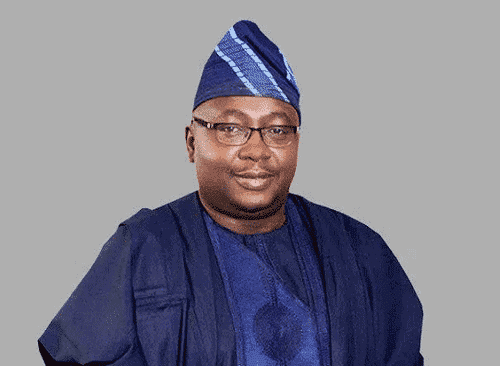
The Minister of Power, Adebayo Adelabu, has been in the news since his appointment by President Bola Ahmed Tinubu. For a critical determinant of development as electricity is, being constantly on the front burners is not a surprise given the monumental promise his principal made before the election that got him into office as President.
In the lead up to the election, Tinubu had boldly declared that he will ensure there is stable public power supply within his first term.
He was so bullish in his belief that he challenged Nigerians not to vote him for a second term if he failed to deliver regular power supply or if estimated billing of electricity consumers continues. Giving Nigerians stable and reliable power supply was positioned as a low hanging fruit that will be delivered without much fuss. It was akin to declaring a state of emergency in the sector. And for good reasons.
It was a campaign promise that required a minister with radical ideas and drive to fast track the dismantling of the nebulous “national grid” with the transfer of the electricity from the exclusive to the concurrent list.
Unfortunately, Minister Adelabu did not read the script. He seemed pre-occupied with the wellbeing of the various electricity distribution companies (DISCOs). His introduction of different bands of tariff for electricity that benchmarked 20 hours supply to Band A consumers is akin to the declaration made by David Mark as Minister of Communication under Ibrahim Babangida that telephone is not for the poor.
To Adelabu, reliable power supply is not for the poor. Only the well-to-do should aspire to have reliable power supply. But he failed to study the immediate and long term effects of his Band A clients, especially public institutions. Universities and the teaching hospitals found they could not cope with the geometric rise in tariff best illustrated by events at the University College Hospital, Ibadan where patients going for surgery were compelled to provide the electricity generators to power and operate critical equipment during surgeries.
However, despite the band system, many consumers, particularly those in Band A, have reported receiving less than the promised hours of supply, leading to dissatisfaction and accusations of unfair practices. The higher tariffs associated with Band A and other bands have raised concerns about affordability, especially for low-income households and small businesses.
Minister Adelabu thought nothing of taking a cue from his principal’s pledge to make his reelection for a second term contingent on his giving Nigerians regular power supply. With state governments granted the power to set up their individual power grids, Adelabu’s job was made easier. He could have engaged the governors to key into the search for stable power by evolving guidelines for them to set up their own power infrastructure. Rather, he contrived to frighten the people about a phantom subsidy in electricity.
The Nigerian Electricity Regulatory Commission (NERC) alleged that the federal government spent N1.94 trillion on electricity subsidies in 2024 due to the continued gap between customer tariffs and actual market costs. If Adelabu had taken the smart option of paving the way for states, especially those in the south to establish their own electricity independent of the national grid, the burden of improving access to power would have been shared with the governors.
A former President of the Chartered Institute of Bankers of Nigeria (CIBN), Professor Segun Ajibola, described the recent tariff adjustment by NERC as a rational move that could help retain more consumers on the national grid. He said the forces of demand and supply must be considered, warning that a monopolist cannot fix both price and quantity simultaneously.
The 2027 deadline President Tinubu gave himself to solve the electricity conundrum is already here, albeit, at a time that governance has taken the backstage. Minister Adelabu is yet to read the script. If ours is a society where leaders are held to account for their campaign promises, Tinubu’s reelection would have hung on the balance, even if the subject of electricity alone was the only challenge. Luckily, this is Nigeria.