
Africa
The Fear Of Obi Is A Tremor Among Opponents, It Is Real -By Isaac Asabor
Senator Okpebholo’s warning must not be taken lightly. If even insiders in the ruling party are acknowledging Obi’s threat, then Nigerians should be preparing for another stormy season of disruption in 2027.

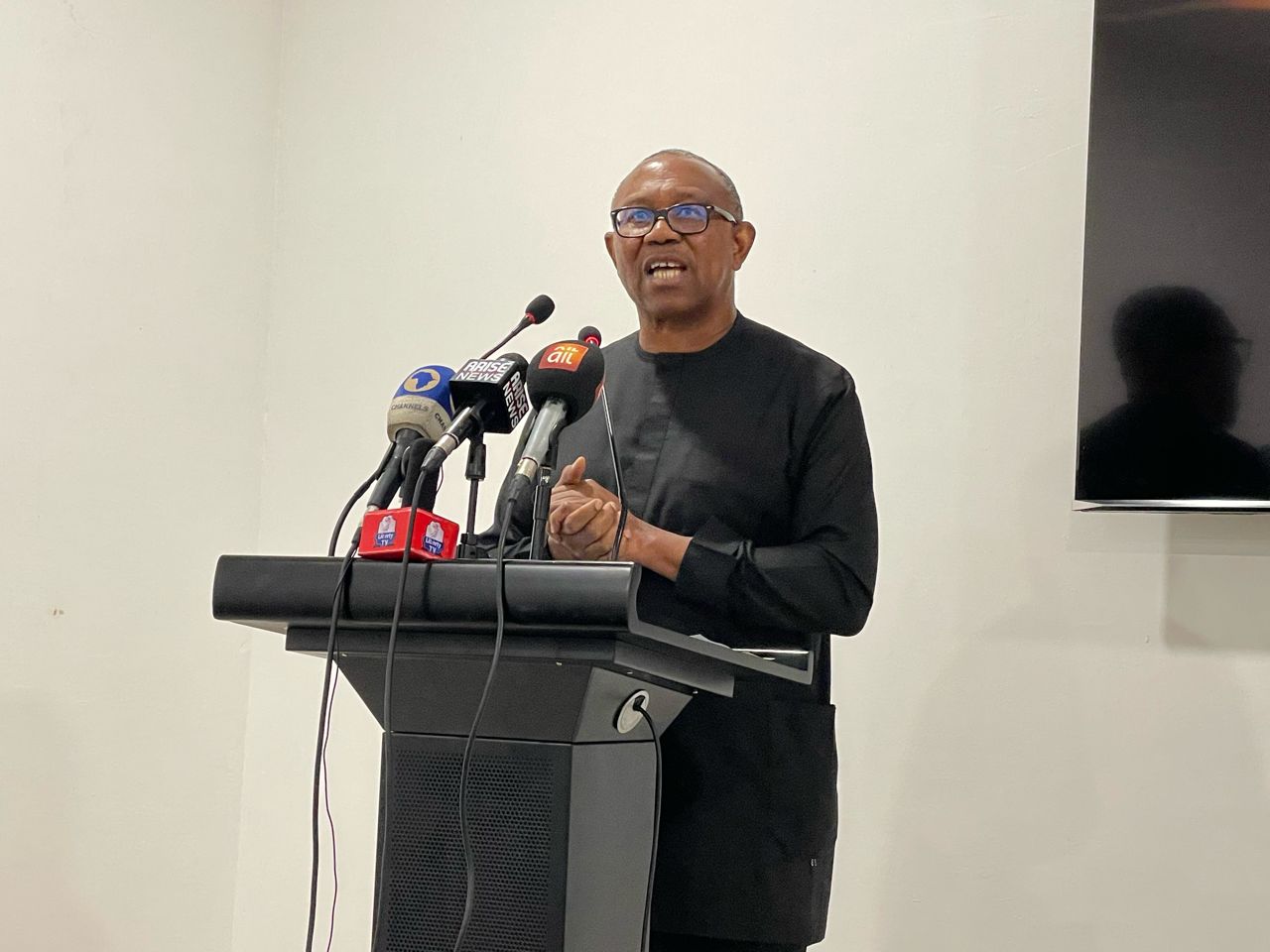
As Nigeria’s political landscape gradually reawakens in preparation for the 2027 general elections, a silent but powerful wave is stirring within the corridors of power. And at the center of that wave is none other than Mr. Peter Obi, the former Governor of Anambra State and the Labour Party’s 2023 presidential flagbearer. Though he is yet to officially declare his intention to run again, one thing is abundantly clear: Peter Obi is feared.
Not just disliked. Not just criticized. He is “feared”. And that fear is not imaginary, it is a political tremor shaking Nigeria’s entrenched political order to its core. The tremor is real, and it is being felt even in the most fortified political strongholds across the country.
Peter Obi’s 2023 campaign started as a political experiment. A candidate dismissed by political pundits as a “social media sensation” with “no structure” and “no chance” in a country where power typically rests in the hands of moneybags and old political warhorses. But by the time the dust settled after the elections, Obi had not only placed third with over six million votes, he had redefined what a serious contender looks like in Nigeria’s democracy.
He defeated well-oiled political machines in states like Lagos and Plateau. He outshined traditional heavyweights in campaign delivery. He brought statistics, data, and policy depth to national conversations that had long been dominated by sloganeering and stomach infrastructure.
In doing so, Obi did not just contest an election. He disrupted an entrenched system, and that is why he is feared.
At this juncture, the question “How is the fear of Obi manifests on Nigeria’s political landscape?” The answer to the foregoing question cannot be farfetched as there are manifestations of political and strategic reactions that cannot be denied in this context.
First among the political and strategic reactions that are being used against him are character assassination attempts. In fact, one of the oldest tricks in the political playbook is character assassination. Since 2023, Peter Obi has been the target of several orchestrated campaigns designed to paint him as an ethnic jingoist, a religious bigot, or a closet dictator. False reports, misleading headlines, and social media attacks have attempted to reduce his image from that of a disciplined reformer to a “divisive politician.”
But these efforts often backfire. Why? Because Nigerians have witnessed his tenure in Anambra State. They have seen his modest lifestyle, his documented track record of prudent financial management, and his refusal to use public office for personal enrichment.
These constant attacks prove one thing, his adversaries are worried. If he were irrelevant, they would ignore him. But they cannot.
Another mischievous strategy being used against him is Labour Party destabilization. The Labour Party, under whose platform Obi contested in 2023, has faced repeated internal crises since the elections ended. Leadership tussles, factional claims, court battles, and media controversies have plagued the party in what many believe are deliberate sabotage tactics.
Political insiders know that weakening Obi’s platform is a strategic move to fracture his support base. If his message cannot be attacked, then perhaps the vessel carrying that message can be broken.
This fear-driven tactic shows that the elite recognize Obi’s popularity, and rather than confront it head-on, they are trying to weaken it from the inside.
Thirdly is the undermining of the Obidient Movement. Without a doubt, this is another clear sign of fear as it is a coordinated effort to discredit the Obidient Movement which is invariably his nationwide base of supporters. These young Nigerians, mostly first-time voters, professionals, students, and tech-savvy citizens, were instrumental to Obi’s strong performance in 2023.
Since then, the movement has been branded as “toxic,” “naïve,” or “unruly” by political actors who feel threatened by its influence. Political commentators have tried to distance Obi from his followers, claiming he has lost control of them or that they are damaging his brand.
But what these critics fail to see, or fear to admit, is that the Obidients represent a new breed of citizens who are politically conscious, demanding accountability, and intolerant of political nonsense. They are not fanatics, they are fed-up Nigerians who finally found a voice through Obi.
In a similar vein, not a few Nigerians have witnessed attempts by other politicians to co-opt his style. In fact, co-opting his style is another silent sign of fear as to them, imitating him is a better way of bringing him to irrelevance. Since 2023, some politicians have begun adopting Obi’s language of simplicity and data. They talk about cutting costs. They mention the poor. They criticize government waste.
But Nigerians know the difference between performance and performance “theater”. The fact that these politicians now attempt to “talk” like Obi proves they have seen what resonates with the masses, and they are scared of being left behind.
One of the boldest public acknowledgments of this fear came from Governor Monday Okpebholo of Edo State. Speaking candidly, he warned members of his party not to underestimate Peter Obi and the Labour Party again. According to him, ignoring Obi’s influence in 2027 could be a grave political error. Ostensibly to buttress the fear he has for Obi, he warned that Obi should be seeking his permission before coming into Edo State, and that failing to do that may be to the detriment of his personal security, and he, as the governor of the state should not be hold to account.
His words were not accidental. They reflect a growing understanding within the APC that Obi is not a flash in the pan. He is now a standing force. When a candidate of the ruling party admits openly that Obi is a political threat, it is safe to say that fear has left the whispers of backroom meetings and entered public discourse.
Like him or hate him, Obi is still the standard. Despite not holding any official position, Peter Obi continues to set the tone for national debates. When he speaks, the country listens. When he tweets, it trends. When he attends an event, media coverage explodes.
Government officials dread being compared to him because they know he brings facts, not fiction. He talks cost-saving; they defend waste. He advocates transparency; they hide behind bureaucracy. He shows humility; they flex arrogance. In that contrast lies their greatest fear: the people may start demanding more Obi-like governance, and less business-as-usual.
In fact, the existence of Obi on Nigeria’s political landscape is unarguably like a silent earthquake that would not go away. The political elite hoped that the Obi wave would fade after the 2023 elections. But it has not. If anything, it has grown more mature, more patient, and more reflective. Unlike traditional politicians who vanish after losing elections, Obi has remained visible, commenting on national issues, engaging the public, and strengthening his base.
He does not need to shout. His silence often speaks louder than their propaganda. The more the nation sinks into hardship and despair, the more Obi’s stock rises. He has become a benchmark of what “could have been”, and possibly what “still could be”.
Without a doubt, Peter Obi represents a political shift that is unsettling to Nigeria’s old order. They fear his influence not just because of what he did in 2023, but because of what he still could do in 2027.
The attempts to smear him, destabilize his party, mock his supporters, and copy his style are all indicators of a political opponents trembling under pressure. They may not say it out loud, but behind the scenes, they are scrambling to deal with a political reality they once dismissed.
Senator Okpebholo’s warning must not be taken lightly. If even insiders in the ruling party are acknowledging Obi’s threat, then Nigerians should be preparing for another stormy season of disruption in 2027.
Like the fact or don’t, the fear of Obi is a tremor among other politicians, and it is very, very real.




















You must be logged in to post a comment Login