Africa
Beyond Eze Ndigbo: Confronting Xenophobia Against Nigerians In South Africa -By Isaac Asabor
The real protest, then, is not against a title like “Eze Ndigbo.” It is against a pattern of violence that has been normalized for far too long. Until that changes, debates over titles will remain what they are: noise in the face of a crisis.

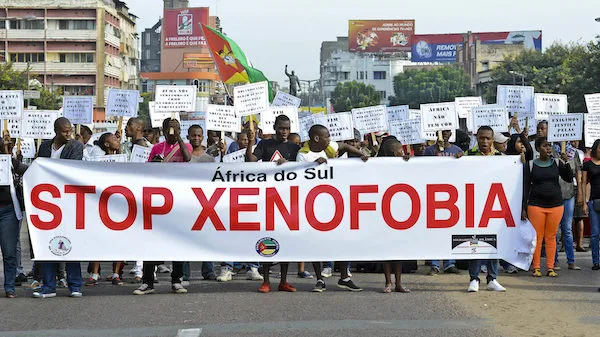
The conversation around Nigerians in South Africa has, for too long, been reduced to symbolism. Titles like “Eze Ndigbo”, intended as cultural anchors for Igbo communities in the diaspora, have become lightning rods for controversy. But focusing on chieftaincy titles misses the point entirely. The real issue is far more urgent, far more dangerous, and far less ceremonial: the persistent wave of xenophobia that Nigerians face in South Africa.
Let us be honest, this is not just about misunderstanding cultural institutions. It is about hostility. It is about Nigerians being targeted, profiled, attacked, and in some cases killed, simply for being foreigners who are perceived as competitors or scapegoats.
Xenophobic violence targeting foreign nationals, including Nigerians, has been a recurring issue in post-apartheid South Africa. It tends to intensify during periods of economic hardship, high unemployment, and social unrest. These attacks are not abstract, they frequently involve the looting of businesses, burning of property, and outright physical assault. Behind every statistic is a life disrupted or destroyed.
A closer look at the chronology reveals a troubling pattern of recurrence. In August 2000, early reports of xenophobic assaults in the Cape Flats (Cape Town) led to the deaths of seven Africans, including two Nigerians. In May 2008, large-scale riots began in Alexandra, Johannesburg, spreading nationwide and leaving at least 62 people dead, alongside hundreds injured and displaced.
The period, from 2009 to 2012, was marked by scattered but persistent attacks, particularly against foreign-owned businesses. In April 2015, targeted violence caused significantdestruction of Nigerian-owned property, with losses estimated at 21 million naira; being a huge montary loss at that time.
In a similar vein, in October 2015, another wave of attacks against foreign nationals, including Nigerians occurred. Also, 2016 was particularly grim year for Nigeria and Nigeria as about 20 Nigerians were reportedly killed. Among them was Tochukwu Nnamdi, allegedly killed extrajudicially by police.
The timeline highlights a troubling pattern of xenophobic violence in South Africa, particularly targeting Nigerians and other foreign nationals. On February 18, 2017, Nigerians living in Pretoria West were attacked, with five buildings, a garage containing 28 cars, and a church looted and set ablaze. Reports of killings and harassment continued into April 2018, showing that tensions had not subsided. By March 2019, a renewed wave of widespread anti-foreigner violence erupted, escalating fears among migrant communities.
The situation intensified in mid-2019 with deadly incidents involving Nigerian nationals. On June 14, 2019, Maxwell Ikechukwu Okoye was reportedly killed by police in Ladysmith, KwaZulu-Natal. Just over a month later, on July 20, 2019, 17-year-old Chinonso Obiaju was shot dead in Johannesburg. These individual tragedies were followed by large-scale, coordinated attacks in September 2019 across Johannesburg and Pretoria, during which Nigerian-owned businesses were specifically targeted, looted, and destroyed.
From 2020 to the present, the violence has persisted in intermittent waves, often linked to vigilante-style actions and anti-immigration movements such as Operation Dudula. While not always at the same intensity as earlier outbreaks, these recurring incidents underscore ongoing hostility toward foreign nationals and the lack of a lasting solution to xenophobic tensions in the country.
The foregoing attacks were not random. They were systemic. Between 1999 and 2018 alone, an estimated 118 Nigerians lost their lives in xenophobic attacks. That number should force a pause. It should provoke outrage. Instead, the cycle repeats violence, condemnation, silence, and then violence again.
South Africa, a nation that emerged from the brutal injustices of apartheid, carries a moral weight in Africa and globally. It symbolizes resistance and human dignity. That history makes the persistence of xenophobic violence not just troubling, but deeply contradictory.
The underlying drivers are not difficult to identify. High unemployment, widespread poverty, and fierce competition for limited opportunities have created a climate of frustration. Foreign nationals are often blamed, accused of fueling crime, dominating informal trade, or “stealing” jobs. But this narrative collapses under scrutiny. It is easier to blame the outsider than to confront structural economic failures.
And then there is leadership. While there have been moments of accountability, such as President Cyril Ramaphosa’s 2019 apology acknowledging that the attacks contradicted South African values, these have not translated into sustained preventive action. Words, without enforcement and reform, do little to deter mobs.
The fallout has not been contained within South Africa’s borders. In 2019, retaliatory protests erupted in Nigeria, with South African-owned businesses targeted in anger. This tit-for-tat dynamic only deepens divisions and undermines the very idea of African unity.
This is why the fixation on “Eze Ndigbo” is, frankly, a distraction. Whether or not such titles are recognized within South Africa’s sociopolitical framework is secondary. The real question is why Nigerian communities feel the need to organize so visibly for protection and identity in the first place. Communities under threat tend to close ranks. That is not provocation, it is survival.
None of this absolves Nigerians, or any migrant group, from responsibility. Respect for local laws, constructive engagement with host communities, and efforts to counter negative stereotypes are essential. But accountability cannot be one-sided. Safety is not conditional.
The conversation we should be having is about enforcement, justice, and coexistence. About dismantling the conditions that allow xenophobia to thrive. About leaders who act before violence erupts, not after.
Most importantly, it is about redefining what African solidarity truly means. If “Africa for Africans” becomes a slogan of exclusion, then it has lost its soul.
The real protest, then, is not against a title like “Eze Ndigbo.” It is against a pattern of violence that has been normalized for far too long. Until that changes, debates over titles will remain what they are: noise in the face of a crisis.