Forgotten Dairies
Beyond the Microphone: When Political Promises Become Empty Noise –By Muhammad Bashir Abdulhafiz
Nigeria is a great country, not because of the politicians who lead it, but because of the resilient and hardworking people who live in it. We deserve leaders who match our resilience, patience, and hardwork with integrity. Let us refuse to settle for fake promises. Let us reject the culture of betrayal. And when the time comes to choose again, let us choose the ones who proved that our trust was not a waste.

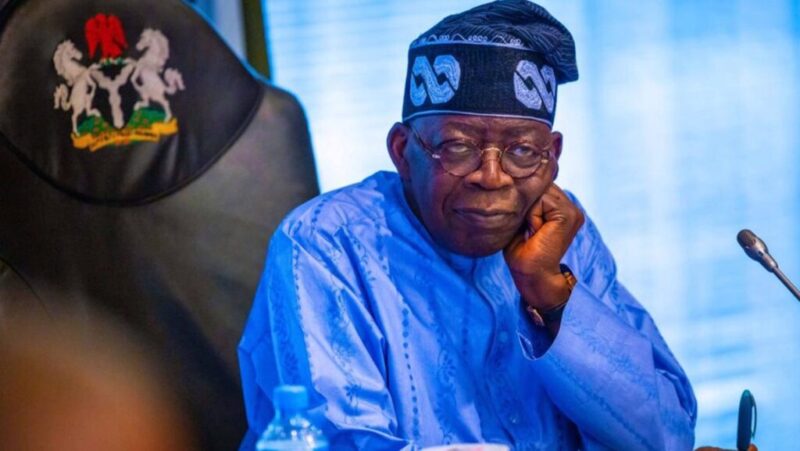
There is a peculiar kind of magic that fills the air in Nigeria during campaign season. It is a season of color, of loudspeakers, of branded T-shirts, and of hands held high in the air. It is a time when the men and women who seek our votes transform into something almost supernatural. They walk among us not as distant elites, but as servants. They sweep markets with borrowed brooms, carry the crosses of the faithful, and speak with the tenderness of a mother promising to protect her child.
For a few fleeting months, they promise us heaven. They tell us that the roads will be fixed before the rains come. They swear on their lives that the hospitals will have drugs, that the teachers will be paid, and that the darkness that covers our streets will be replaced by light. They look us in the eyes, our fathers, our mothers, our struggling youths, and they say: ‘I am one of you. I feel your pains. I know your struggles, challenges, and problems. Trust me, I will fix everything when I get there. I will empower youths and women, support students, build roads and bridges, fix electricity power supply, provide adequate water supply, and there will be nothing like insurgency and insecurity. I will make sure not a single person, street, area, ward, local government, and state is left behind. We are in this together, and we are going to fix it all together, I promise’.
And because we are a hopeful people, we do trust them. We give them the one thing that money cannot buy: our faith. We stand in the sun for hours to listen to them. We wave our hands, we chant their names, and we carry them on our shoulders to the polling booths. We believe that this time, it will be different. We believe that this one is not like the others.
But then, the music stops. The microphones go silent. The cameras turn away. And the politician, now seated in the air-conditioned comfort of an office he fought so hard to get, begins to change. The man who once swept the market with a broom now drives past it without a glance, complaining that the traffic caused by the traders is an inconvenience to his convoy. The man who promised to fix the schools sends her own children to expensive institutions abroad. The promises that were shouted with so much passion become whispers, and eventually, they vanish into thin air.
This is the tragedy of politics as it is played in our country today: a game of betrayal, fake promises, and personal interest. It is a game of betrayal not just of the electorate, but among the players themselves. We see it all the time. Two men stand on a stage, arms wrapped around each other, promising to work together for the good of the state. They call each other ‘brother’. They swear that their alliance is built on trust and a shared vision for the people. But the moment the election is won and the seat is secured, the brotherhood shatters. One stabs the other in the back to secure a budget allocation. One plots the impeachment of the other simply because he refused to be a puppet. The trust that was built on the campaign trail is the first casualty of the assumption of office. In Nigerian politics, loyalty is often just a transaction that expires the moment the votes are counted.
It is also a game of personal interest. When they were seeking our votes, they spoke in the plural: ‘We will do this’, ‘Our people deserve this’, ‘We are in this all together’. But once they assume office, the language changes. The pronoun shifts from ‘we’ to ‘I’ and ‘my’. The focus shifts from the dilapidated classroom in the village to the new luxury cars in the convoy. The billions of naira meant to provide water for thirsty communities somehow find their way into private bank accounts. They forget that they are there to serve, they begin to act as if they are there to be served.
They build mansions while the people who voted for them sleep in crumbling shanties. They award contracts to their cousins and in-laws, not because these relatives are qualified, but because the game of politics, in their eyes, is an investment that must yield personal profit. The mandate given to them by the suffering masses becomes a tool for self enrichment. The sacred trust becomes a bargaining chip for the next election cycle.
How did we get here? We got here because too many of us have been content to be spectators. We cheer the players on the field without reading the rules of the game. We allow ourselves to be swayed by the rhythm of the music and the color of the cloth, forgetting that leadership is not a concert, it is a covenant.
But we do not have to remain trapped in this cycle of hope and disappointment. As a people, we must learn to evolve. We must move from being fans of politicians to being customers of good governance. When you buy a product and it fails to do what the advertisement promised, you do not buy it again. Why then do we keep re-electing leaders who have proven, through four years of neglect, that they do not care for our welfare?
Here is my advice to every Nigerian citizen who still believes in the possibility of a better nation: Let us vote with our memory.
We must stop treating elections like a religious ceremony where we follow a charismatic preacher blindly. Instead, we must treat elections like a performance review. When a politician comes to ask for your vote, do not just listen to what he says he will do. Look at what he did when he had the chance before. Did he fix the road he promised five years ago? Did the school he built have desks, or was it just a signboard with his name on it?
Let us reward competence over connection. Let us support and re-elect only those leaders who fulfill their promises. If a man promised to pay worker’s salaries and he did it, keep him. If a woman promised to install streetlights and the streets are bright tonight, defend her with your vote. But if a leader used your taxes to buy private jets while you are counting the cost of bread, let him know, with your ballot paper, that betrayal has consequences.
We must understand that power belongs to us. We surrender it to them temporarily so they can organize our society for our benefit. The moment they begin to use that power for their personal interest and against the public good, we have the right, the ability, and the responsibility to take it back.
The game of politics does not have to be a game of betrayal. It can be a game of service, but that will only happen when we, the citizens, stop playing the role of cheerleaders and start playing the role of referees. Let us judge them by their works, not by their words. Let us hold them accountable not just at the end of their term, but every single day they occupy that office.
Nigeria is a great country, not because of the politicians who lead it, but because of the resilient and hardworking people who live in it. We deserve leaders who match our resilience, patience, and hardwork with integrity. Let us refuse to settle for fake promises. Let us reject the culture of betrayal. And when the time comes to choose again, let us choose the ones who proved that our trust was not a waste.
Our future is not in their hands. It is in ours. Let us hold it tightly.
God bless the Federal Republic of Nigeria.
Muhammad Bashir Abdulhafiz wrote from Jos, and can be reached via abdulhafizmuhammad81@gmail.com instantly.