Football
Beyond The Noise: The Hard Realities Of Football Governance In Nigeria -By Barr. Adefila Kamal
Our football story, much like our national story, is one of resilience amid chaos and brilliance amid uncertainty. We cannot afford to keep starting over every few years. The future will not be built by those who shout the loudest, but by those willing to work quietly, strategically, and faithfully to sustain what has already been achieved.

In any serious football nation, governance is not about noise—it’s about structure, patience, and continuity. The current barrage of criticism against the Nigeria Football Federation (NFF) reflects an old national habit: our tendency to destroy what we should improve. Football is not just a sport in Nigeria. It is one of the few institutions that still binds us together across tribe, faith, and generation. From dusty fields in Jos to crowded viewing centres in Lagos, it remains a shared dream — yet beneath the cheers lies a fragile institution once again under pressure.
To understand today’s challenges, we must remember how far we’ve come. When Amaju Pinnick became NFF President, he brought a new era of professionalism — connecting Nigeria to the global football community, attracting record sponsorships that made the Federation nearly 90% self-funded, and representing our nation on the prestigious FIFA Council. Under his leadership, Nigerian football regained credibility among international bodies and corporate sponsors. For the first time in years, the NFF was being discussed not for scandal, but for structure.
Pinnick’s tenure also saw visible progress in youth and women’s football. The Golden Eaglets remained world-class, the Super Falcons cemented their African dominance, and the domestic leagues began to attract corporate partners again. It was not a flawless era, but it built a foundation of professionalism — a legacy that today’s NFF leadership under Ibrahim Musa Gusau has worked hard to consolidate with calmness and steady reform.
Unfortunately, as progress takes root, familiar forces have resurfaced. Some of the loudest critics today are the same discredited actors who once fed on chaos within the football ecosystem. They have found in social media and sensational headlines new tools to spread misinformation — not to reform the system, but to regain lost relevance. Their noise is not new. Before the 2022 World Cup qualifiers, similar distractions weakened morale and diverted attention from preparation. The result was national heartbreak. We cannot afford that mistake again.
The truth often ignored in these debates is that football governance anywhere in the world is a long, painstaking process of reform. Institutions like FIFA and CAF have some of the most rigorous audit systems in global sport — and both have consistently affirmed that Nigeria’s football administration meets their standards. The idea that a few loud voices can suddenly delegitimize a system recognized by world football’s governing bodies says more about our national impatience than the NFF’s competence.
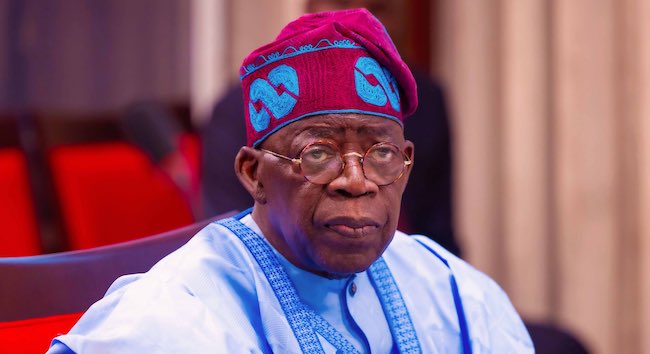
In this context, President Bola Ahmed Tinubu’s bold decision to restore the National Sports Commission (NSC) and take sports administration out of partisan politics marks a turning point. For the first time in decades, sports management is being repositioned under professionals rather than political appointees. This structural reform is not just bureaucratic — it is visionary. It recognizes sports as a strategic tool for national development, diplomacy, and employment, not just weekend entertainment.
Already, the impact is visible. The President’s unprecedented investment in sports — from football to basketball, athletics, and beyond — has raised morale across the board. Enhanced funding, better welfare packages for athletes, and support for international participation are redefining how the Nigerian state treats its sports ambassadors. This is leadership that understands that a thriving sports sector contributes to economic growth, social cohesion, and the nation’s global reputation.
Against this backdrop, the NFF must be understood as part of a larger national reform story. Football remains Nigeria’s greatest unifier and one of its most valuable exports. It generates jobs, fosters national pride, and projects soft power globally. The Federation’s mandate is not only to manage teams but to nurture the system that keeps this cultural engine running — from grassroots development to elite competition.
Every time we undermine our institutions, we weaken our collective progress. No country that constantly attacks its own builders ever grows. The NFF, under the current administration, continues to prioritize youth football, women’s development, and institutional rebuilding — initiatives that may not make flashy headlines but are the backbone of sustainable growth. Reform takes time. It takes quiet work, not noise.
Civil society and the media have a critical role here — not as cheerleaders or critics for hire, but as constructive partners in accountability. Transparency reforms, independent audits, and digital governance tools can strengthen public confidence, but they must be pursued through collaboration, not combat. Our football future depends on it.
President Tinubu’s sports reforms and the NSC’s renewed authority provide the framework for such collaboration. The Civil Society Network for Good Governance (CSNGG) stands ready to partner with the NFF and NSC to ensure transparency, fairness, and engagement among all stakeholders. The objective is not to defend individuals but to protect the institutions that carry our collective aspirations.
Nigeria’s football does not need another war of words. It needs patience, cooperation, and courage — the courage to build on the gains of the past rather than destroy them in a fit of emotion.
Our football story, much like our national story, is one of resilience amid chaos and brilliance amid uncertainty. We cannot afford to keep starting over every few years. The future will not be built by those who shout the loudest, but by those willing to work quietly, strategically, and faithfully to sustain what has already been achieved.
If we truly love Nigerian football, then this is our duty — to defend its institutions, refine its processes, and build on its progress. Anything less is self-sabotage.
Barr. Adefila Kamal is a legal practitioner and development practitioner. He is the National President of the Civil Society Network for Good Governance (CSNGG), with a focus on sports governance, civic accountability, and institutional reform.