National Issues
Beyond The Screen: Kate Henshaw’s Unyielding Voice For Justice -By Isaac Asabor
The story of Ozoro may eventually fade from the headlines, but the issues it has exposed will remain. And as long as they do, voices like Kate Henshaw’s will continue to matter, not just for what they say, but for the change they demand.

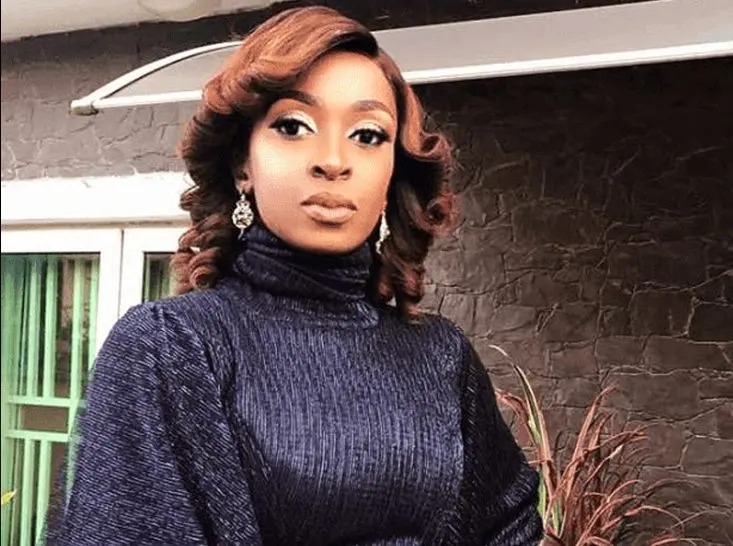
For decades, Kate Henshaw has remained one of Nollywood’s most recognizable faces, celebrated for her talent, discipline, and enduring presence in Nigeria’s film industry. Yet, beyond the lights, scripts, and cinematic acclaim lies another identity, one that has steadily defined her public persona: a relentless advocate for justice, particularly for women and children.
Time and again, Henshaw has shown that her voice is not reserved for entertainment alone. When issues of human dignity arise, she steps forward, clear, direct, and unflinching. That instinct was once again evident in her reaction to the reported mass rape incidents in Ozoro, Delta State, an episode that has ignited national outrage and forced a difficult reckoning with the intersection of culture and human rights.
Her response was immediate and uncompromising. Describing the incident as “evil,” Henshaw called for swift accountability and urged the community to reject any attempt to shield perpetrators under the cover of tradition.
“If it has been hijacked, then the community must do the right thing and perpetrators punished,” she stated.
But beyond the call for justice, what stood out was her insistence on confronting a deeper, more uncomfortable reality, the normalization of abuse when it is wrapped in cultural language. For Henshaw, this is not just about one incident; it is about a pattern that has persisted for far too long.
“The fact that this evil occurred during the day with none of the perpetrators hiding their faces and moving about unhindered speaks to the silent consent of the rape culture against women, which didn’t start today but has been gift-wrapped as tradition,” she said.
It is a bold assertion, one that challenges not only individuals but entire systems of thought. And it is consistent with the stance she has maintained over the years.
Henshaw’s advocacy did not begin with Ozoro. Long before this latest controversy, she had carved out space for herself as one of the few celebrities willing to consistently speak on sensitive social issues. In cases of domestic violence, she has publicly condemned abusers and called for stronger protection for victims. When stories of child abuse surface, she has used her platform to amplify calls for justice, often urging authorities and communities alike to act decisively.
She has also been vocal about the everyday realities women face, harassment, discrimination, and societal pressures that often silence victims rather than protect them. In doing so, she has aligned herself with a growing movement of voices demanding accountability and cultural change.
The Ozoro incident, however, struck a particularly deep chord. To reinforce her position, Henshaw referenced a viral Instagram post by user “a_yinna”, whose words captured the frustration of many Nigerians grappling with the issue. “Some traditions need to be questioned, not protected. I can’t stand for anything that puts women at a disadvantage and still call it heritage. That’s not who we are at our core. Honoring where we come from should never come at the cost of someone’s dignity,” the post read.
It continued with a pointed critique of societal hypocrisy: “If we want a stronger future, then we have to be willing to do better than the past. We cannot celebrate women in March and stay silent when they are violated in public.”
For Henshaw, this sentiment reflects a truth she has long championed, that culture is not static and should never be used as a justification for harm.
“Any festival that dehumanizes any human in any way should be done away with,” she insisted. “Fertility is not only a woman’s issue. Enough of the blame on women.”
Her comments also highlight a recurring theme in her advocacy: the disproportionate burden placed on women in societal narratives. Whether in discussions about fertility, morality, or family structure, women often bear the weight of expectations, and, too often, the blame. Henshaw has repeatedly challenged this imbalance, calling for a more equitable and humane perspective.
In addressing the Ozoro situation, she also turned attention to generational responsibility. “Our forefathers did what they did with the knowledge at their disposal. Do we not know better? Is this what should be happening in this day and age?” she asked.
It is a question that resonates beyond the immediate context, touching on a broader societal dilemma: how to honor cultural heritage without perpetuating harm. For Henshaw, the answer is clear progress must take precedence over blind preservation.
Her stance is not without risk. In a society where cultural identity is deeply valued and often fiercely defended, questioning tradition can invite criticism. Yet, Henshaw has shown a willingness to take that risk, prioritizing human dignity over public approval. That courage has become a defining feature of her public life.
Over time, she has built a reputation not just as an entertainer, but as a voice of conscience, someone willing to say what many think but hesitate to express. It is a role that carries both influence and responsibility, and one she appears to embrace fully.
“Do women not face enough antagonism in society?” she asked, drawing attention to the broader struggles that make incidents like those reported in Ozoro even more troubling.
Her conclusion was unequivocal. “There is no excuse whatsoever and no explanation that will suffice for such depravity.”
In many ways, Henshaw’s response reflects a larger shift within Nigerian society, where increasing numbers of people, especially younger generations, are questioning long-held norms and demanding change. Social media has amplified these conversations, creating spaces where voices like *a_yinna*’s can gain traction and influence public discourse.
Yet, as Henshaw’s comments suggest, awareness alone is not enough. Action is required, both from authorities tasked with enforcing the law and from communities responsible for shaping cultural practices.
She posed a final, pointed question to the Ozoro community: “Is that what the Ozoro kingdom wants to be known for? Do they not have other cultures and traditions that are of value to the community as a whole?
It is a challenge, but also an invitation, to redefine identity in a way that uplifts rather than harms.
As the outrage surrounding the incident continues, the focus now turns to what comes next: investigations, accountability, and, perhaps most importantly, reflection.
For Henshaw, the path forward is clear. Justice must be served. Harmful practices must be confronted. And society must choose empathy over indifference.
In a landscape where silence often prevails, her voice cuts through, steady, insistent, and impossible to ignore.
The story of Ozoro may eventually fade from the headlines, but the issues it has exposed will remain. And as long as they do, voices like Kate Henshaw’s will continue to matter, not just for what they say, but for the change they demand.