Forgotten Dairies
War Without Responsibility: Private Military Companies and the Legal Vacuum in International Law -By Fransiscus Nanga Roka
The development of networks between private military actors and organized criminal groups is a worrying sign for world order. These actors can supply logistics, weapons, intelligence systems, training and safety to rogue groups which transgress national borders and undermine government authority. In fragile situations they might become part of informal systems of regulation, maintaining peace not with law but through violence.

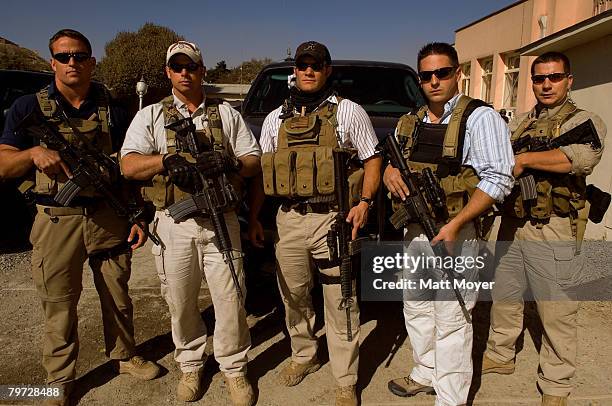
In the 21st century, war is not confined only to nation states. Now it is also being increasingly privatized, using the resources of these organizations fueled by international contraband. Such action operates clandestine and thanks to lack of controls and as a result rarely comes in for criticism from other non state actors not with a direct interest in the matter or by public opinion. What was once the monopoly of syndicates has become a world market for violence. Here wars can be bought and sold as easily as shares. Private military companies are not just a security trend, but also a gap in international law that is potentially more lethal that any other. International laws were never designed to keep pace with these new realities and do not adequately address them. The responsibility remains unclear; the jurisdiction is divided at best; and often it is simply impossible to determine who should be held accountable for what happened. When there are incidents, states claim there was no direct state involvement while companies do not accept liability and the victims have no remedy left in any case. Either the problem is indifference or has implications for a broader order that is more threatening than theoretical speculation on its long term meaning for society. In many cases, private military and security companies have been involved in arms trade, extractive industries, trade in illicit goods of all kinds including cyber operations to plunder information systems as well as protecting criminal networks. In some situations they work environments corrupted by political instability and weak institutions with near total impunity granting them greater freedom than anarchy alone might yet in other instances they are hired precisely because governments want deniability. The problem is not about anarchy versus government but structure. International humanitarian law was formulated for the treatment of combatants and so does regulate them; while private contractors do not fit neatly into traditional categories. Human rights laws bind states to observe these principles although private companies often transcend any single jurisdiction where enforcement may be weak. Domestic law might be applicable but only within a territorially limited scope between these overlapping structures of power and authority there is space for a yawning lack without any means to make it responsible.
The consequences could be substantial. If violence becomes privatized, there is no chain of responsibility. If there’s no chain of responsibility, human rights can become a bargaining chip. And if human rights are renegotiable, then international order erodes as well.
The development of networks between private military actors and organized criminal groups is a worrying sign for world order. These actors can supply logistics, weapons, intelligence systems, training and safety to rogue groups which transgress national borders and undermine government authority. In fragile situations they might become part of informal systems of regulation, maintaining peace not with law but through violence.
However, regulation on a global scale remains fragmented and politically contested weak. Ending in global rules and oversight agencies that are humbled before increasingly independent actors and corporations one finds a who. Basically an empire of international law without power. The net result is a situation where violence is privately grown increasingly while the accountability for it vanishes into nowhere
This is not just a matter of law. It’s moral and political as well. A world in which violence can be outsourced without accountability becomes one where the rule of law is optional. If the international community allows private armies to function in a kind of twilight zone between war and crime, it risks codifying a system where might makes right rather than vice versa.
The solution is not simple nor optional. States must further regulate private military and security companies at the international level, establish clear legal provisions on jurisdiction and responsibilities and lay out efficient supervisory and record-taking mechanisms. Transparency in procurement contracts, independent monitoring and an accessible remedy system for victims are not romantic ideals but the minimal requirements for upholding international law’s credibility.
The alternative is evident War without responsibility leads to violence without boundaries. And violence without boundaries leads a situation where the power cf force is all but over law itself.ecoread makes legal principles into guidelines written in sand.”
Fransiscus Nanga Roka
Faculty of Law University 17 August 1945 Surabaya Indonesia