Education
Biting Inflation is Taking a Toll on Nigerian Education -By Basheeroh Omowumi Hashim
Inflation, therefore, is not merely a statistic recited in economic reports. It is the tired teacher calculating transport fare at dawn. It is the parent counting coins beside a school-fee notice. It is the crowded classroom where a child still raises a hopeful hand. And the question hangs softly in the air: if the cost of learning keeps rising, who will remain seated in Nigeria’s classrooms tomorrow?

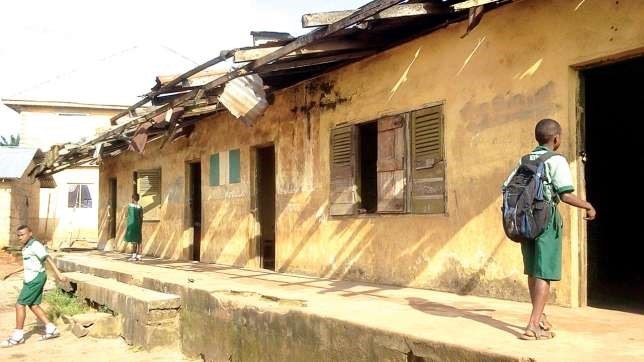
Something fragile is beginning to crack in our classrooms. It is neither the tired walls, nor the dusty chalkboards, but the promise of schooling itself. Inflation has moved through the education system like a slow, stubborn storm. Food prices rise, transport costs swell, electricity tariffs climb, and somewhere within that rising tide sits the Nigerian schoolchild. When a nation’s inflation drifts towards 30 per cent, the first tremors are felt not only in markets but along in the delicate architecture of learning.
For many households, the arithmetic of survival has become cruelly simple. When the price of rice or garri rises by 40 or even 50 per cent in a year, the family budget begins to suffocate. School fees, uniforms, exercise books, and transport must compete with food and rent. In such moments, education is often pushed to the edge of the table. Parents do not abandon schooling lightly, yet difficult decisions are being made in quiet living rooms across the country. School administrators themselves are trapped in a tightening economic vice. Operational costs have surged across nearly every line of expenditure. Diesel for generators, electricity bills, security services, maintenance, internet subscriptions, and teaching materials have all become more expensive. Many schools, especially private ones, have been forced to increase fees simply to remain open. In some institutions, fees have climbed by 20 to 40 per cent within a single academic cycle.
As fees rise, a silent migration has begun. Thousands of pupils have been withdrawn from private schools and moved into public ones, where classrooms already groan under the weight of numbers. In some urban public schools, a single teacher may now face 80 or even 100 pupils in one classroom. Learning, under such pressure, begins to thin out like diluted ink.
Teachers themselves have been placed at the very centre of this storm. Their salaries, often modest to begin with, have been steadily hollowed out by inflation. A wage that once covered transport, rent, food, and basic dignity now struggles to last through the month.
When fuel prices surge and market prices double, the teacher’s income remains frozen like a photograph from another era. The result is quiet exhaustion. Many educators now juggle extra work, private tutoring, or small trading simply to survive. Morale within the teaching profession has therefore been deeply bruised. Passion alone cannot fill empty stomachs. When teachers are forced to spend hours worrying about household survival, the emotional and intellectual energy required for teaching begins to drain away. In some schools, experienced educators have quietly left the classroom for banking halls, private businesses, or international opportunities. Each departure is a small erosion of the nation’s intellectual foundation.
Inflation has also tightened its grip on school infrastructure. Building materials such as cement, steel rods, tiles, and electrical fittings have risen dramatically in price. As a result, renovation projects stall, classroom expansions are delayed, and maintenance is frequently postponed. A school environment that should inspire curiosity sometimes begins to look neglected and weary.
The cost of learning materials has also climbed steadily. Textbooks, laboratory equipment, printing paper, computers, and even simple chalk are no longer as easily affordable as before. In many classrooms, students now share textbooks across several desks. Knowledge is still being pursued, yet the tools required for that pursuit have quietly diminished.
Transportation has become another silent burden. With fluctuating fuel prices affecting the entire economy, the daily journey to school has grown more expensive for both teachers and students. For educators who travel long distances to their schools, transport costs now consume a troubling portion of their salaries. In rural communities, this challenge sometimes translates into late arrivals, irregular attendance, or teacher shortages.
The deeper danger lies in inequality. Wealthier schools with affluent parents can still absorb rising costs, though not without strain. But low-fee private schools, which educate millions of working-class children, operate on fragile margins. Many of these institutions now stand on the edge of closure. Should they disappear, the already strained public system will be asked to carry an impossible load.
The consequences of this quiet crisis will not only be measured today. Education is the furnace in which a nation’s future workforce is forged. When inflation weakens schools, the ripple travels decades forward. Skills decline. Productivity softens. Innovation grows faint. What appears today as an economic challenge may tomorrow emerge as a national development crisis.
Inflation, therefore, is not merely a statistic recited in economic reports. It is the tired teacher calculating transport fare at dawn. It is the parent counting coins beside a school-fee notice. It is the crowded classroom where a child still raises a hopeful hand. And the question hangs softly in the air: if the cost of learning keeps rising, who will remain seated in Nigeria’s classrooms tomorrow?
Basheeroh Omowumi Hashim is the proprietress of Ar-Rahman (The Ben) Group of Schools