Africa
Bridging The Education Gap: The Struggle For Literacy In Rural West Africa -By Aisha Ahmad Bukar
Every child deserves the opportunity to read, write, and dream beyond the limits of poverty. Bridging the education gap will require more than policies — it will require political will, community involvement, and global solidarity. When the world invests in the education of West Africa’s rural children, it invests in peace, progress, and the limitless potential of the human mind. The path may be long, but the journey toward universal literacy is one worth taking, for it leads to a future where no child is left behind.

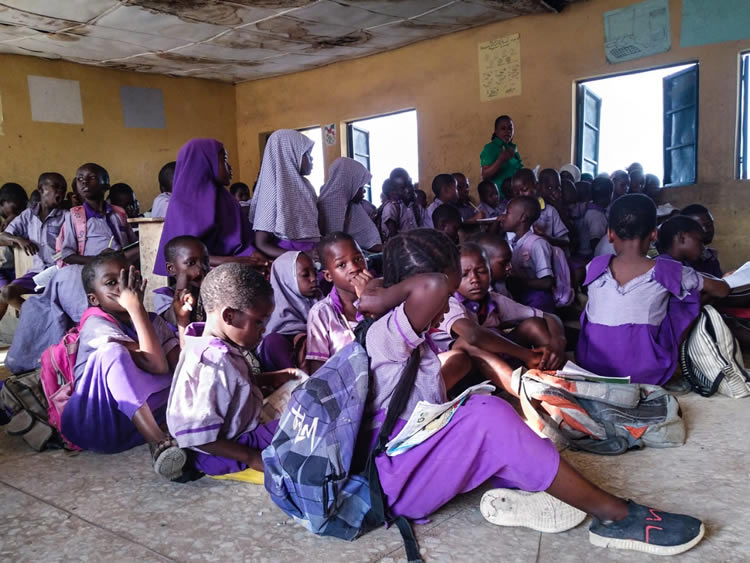
Education has long been recognized as the foundation for national development, yet in many parts of rural West Africa, the promise of literacy remains elusive. Across the dusty villages of Mali, Niger, and northern Nigeria, millions of children still wake up each day without access to formal schooling. Classrooms, where they exist, are overcrowded, under-resourced, and often led by untrained teachers. Girls, in particular, face the greatest barriers — forced into early marriages or domestic labor while their brothers are sent to school. The education gap between rural and urban communities continues to widen, leaving generations of rural children trapped in cycles of poverty and exclusion. The consequences of this divide are far-reaching, stifling innovation, deepening inequality, and slowing economic progress across the region.
For many rural families, the struggle to educate their children is not due to a lack of will but a lack of opportunity. In some areas, schools are located miles away, requiring children to walk long distances through unsafe terrain. Parents, already burdened by economic hardship, often cannot afford school fees, uniforms, or textbooks. Seasonal farming demands also play a role, as children are needed in the fields during planting and harvest seasons. For girls, cultural and religious norms sometimes discourage formal education, favoring traditional roles within the home. This combination of economic, social, and infrastructural barriers has kept literacy rates in rural West Africa among the lowest in the world, particularly for women.
Governments and international organizations have made efforts to close this gap, but progress remains slow. Programs like UNICEF’s “Education for All” and UNESCO’s literacy initiatives have helped raise awareness and increase enrollment rates, yet sustainability remains a challenge. Many rural schools depend on donor funding, which can fluctuate with political or economic changes. In some cases, newly built schools lack teachers or instructional materials, turning promising projects into empty shells. Corruption and mismanagement further erode the effectiveness of education budgets, leaving rural children once again without the resources they need to learn. The dream of universal education in West Africa often collides with the harsh reality of systemic neglect.
However, local communities are beginning to take matters into their own hands. In northern Ghana, for example, parent-teacher associations have formed cooperative groups to build makeshift classrooms and pay volunteer teachers. In Nigeria, radio learning programs are being used to teach literacy and numeracy to children in remote areas where schools are inaccessible. Similarly, mobile libraries in Sierra Leone and Liberia are bringing books to villages that have never had one. These community-driven initiatives, though modest, demonstrate the power of collective action in transforming education from the grassroots. When communities feel ownership over education, they become active partners in ensuring its success.
Technology is also emerging as a game-changer in bridging the literacy divide. Digital learning platforms, solar-powered tablets, and mobile education apps are slowly making their way into rural areas. NGOs and startups are using technology to provide access to quality learning materials even in places without electricity or internet connectivity. For instance, in Senegal, the “Sama School” initiative uses preloaded tablets to teach basic literacy and mathematics to children in isolated villages. These innovative approaches not only improve access to education but also prepare students for participation in the global digital economy. Yet, to scale these solutions, more investment in infrastructure and digital literacy is required.
The importance of educating girls cannot be overstated. Studies have consistently shown that when girls are educated, entire communities thrive. Educated women are more likely to participate in the workforce, make informed health decisions, and contribute to democratic governance. In regions like rural Niger and Chad, organizations such as Plan International are working to dismantle cultural barriers and promote girls’ education through advocacy and scholarships. Empowering girls to learn is not just a moral imperative — it is an economic strategy for lifting families and nations out of poverty. The future of West Africa depends on how well it nurtures the potential of its daughters as much as its sons.
Beyond access, the quality of education is another pressing concern. Many rural schools lack trained teachers and effective curricula that align with local realities. Teaching methods are often outdated, focusing on rote memorization rather than critical thinking or problem-solving. Children who do attend school may graduate without basic literacy or numeracy skills, leaving them unprepared for further education or employment. Improving teacher training, curriculum development, and assessment standards must become priorities if education is to fulfill its transformative promise.
Cultural preservation also plays a role in education reform. Too often, formal schooling systems in West Africa are modeled after Western structures that disregard indigenous languages and knowledge systems. As a result, many rural children struggle to learn in languages they do not speak at home. Incorporating local languages and cultural values into education can make learning more relatable and effective. In Burkina Faso and Senegal, bilingual education programs have shown significant improvements in literacy rates and student engagement. Recognizing that education should reflect the identity of its people is key to making it meaningful and sustainable.
Ultimately, the struggle for literacy in rural West Africa is a struggle for justice and equality. Every child deserves the opportunity to read, write, and dream beyond the limits of poverty. Bridging the education gap will require more than policies — it will require political will, community involvement, and global solidarity. When the world invests in the education of West Africa’s rural children, it invests in peace, progress, and the limitless potential of the human mind. The path may be long, but the journey toward universal literacy is one worth taking, for it leads to a future where no child is left behind.
Aisha Ahmad Bukar is a 300 level student from Kashim Ibrahim University (Formerly Borno State University, Maiduguri)