
Africa
Climate Change And The Disappearing Lake Chad: A Regional Crisis -By Rebecca Zubairu
The international community also has a crucial role to play. Global climate finance must prioritize regions like Lake Chad, where the effects of global warming are disproportionately severe despite minimal carbon emissions. Wealthier nations that contribute most to climate change have a moral obligation to support adaptation and mitigation efforts in vulnerable areas. By investing in green technology, infrastructure, and peacebuilding, the global community can help transform the Lake Chad Basin from a zone of crisis into a model of resilience.

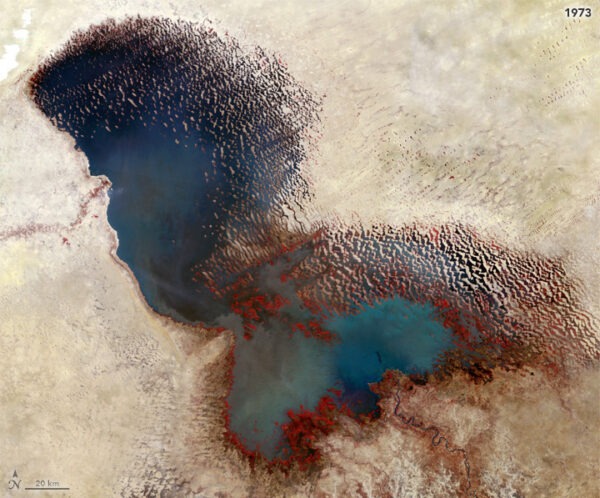
Lake Chad, once a thriving freshwater lake supporting millions of people across Nigeria, Chad, Niger, and Cameroon, is now a shadow of its former self. Over the past five decades, the lake has shrunk by more than 90%, transforming from a vast inland sea into scattered ponds and marshes. This dramatic reduction, driven by climate change, poor water management, and population pressure, has left devastating social, economic, and environmental consequences. For communities that rely on the lake for fishing, farming, and herding, the crisis has become a matter of survival rather than sustainability.
The shrinking of Lake Chad Is not just an environmental problem—it is a humanitarian catastrophe in slow motion. The loss of water has crippled agriculture, the main livelihood for millions of people in the region. Once fertile lands have turned barren, and fishing, which was once the economic lifeline for many, has declined drastically. This has forced thousands of residents to migrate to urban centers or neighboring countries in search of better opportunities. Unfortunately, this migration often leads to overcrowded settlements and increased competition for scarce resources, fueling tension and conflict among displaced populations.
The effects of the lake’s decline have also contributed to regional insecurity. The lack of livelihood opportunities has made young people in the Lake Chad Basin vulnerable to recruitment by extremist groups such as Boko Haram and the Islamic State West Africa Province (ISWAP). With promises of income and purpose, these groups exploit desperation to expand their ranks. As a result, the environmental crisis has become intertwined with violent extremism, creating a vicious cycle that threatens regional peace and stability. The lake, once a source of unity and cooperation among nations, is now a hotspot for insecurity and human suffering.
Women and children bear the greatest burden of this ecological disaster. With men migrating in search of work, women are often left behind to care for families under increasingly harsh conditions. Access to clean water, food, and healthcare has become a daily struggle. Malnutrition and disease have risen sharply, and school dropout rates among children—especially girls—continue to soar. These challenges compound existing gender inequalities, trapping many women in cycles of poverty and dependence. The environmental degradation of Lake Chad, therefore, cannot be separated from its social dimensions, especially its impact on women’s welfare and empowerment.
International organizations and regional bodies have launched numerous initiatives to save Lake Chad. The Lake Chad Basin Commission (LCBC) has been at the forefront of coordinating efforts to restore the ecosystem and manage shared water resources among member countries. Projects such as the Transaqua initiative, which proposes to divert water from the Congo River Basin to refill Lake Chad, have gained international attention. However, these ambitious plans face political, financial, and technical hurdles that have slowed progress. Without sustained political will and regional cooperation, such projects risk remaining on paper while the lake continues to vanish.
Climate experts have emphasized that addressing the Lake Chad crisis requires a multi-faceted approach that goes beyond water replenishment. Sustainable land use, reforestation, renewable energy adoption, and community-based adaptation programs are essential. Building resilience among local communities through early warning systems, irrigation projects, and capacity-building can help reduce dependence on the lake’s dwindling resources. Furthermore, climate education at the grassroots level is necessary to promote awareness about environmental stewardship and sustainable living practices.
The international community also has a crucial role to play. Global climate finance must prioritize regions like Lake Chad, where the effects of global warming are disproportionately severe despite minimal carbon emissions. Wealthier nations that contribute most to climate change have a moral obligation to support adaptation and mitigation efforts in vulnerable areas. By investing in green technology, infrastructure, and peacebuilding, the global community can help transform the Lake Chad Basin from a zone of crisis into a model of resilience.
Yet, local ownership remains key to any lasting solution. Communities around the lake have demonstrated remarkable resilience, forming cooperatives and community groups to manage shared resources and revive small-scale farming. Empowering such local initiatives through funding, training, and technology transfer can create sustainable change from the ground up. If governments and development partners work hand in hand with the people, the Lake Chad story can shift from one of loss to one of recovery. But time is running out—saving Lake Chad means saving millions of lives and securing the stability of an entire region.
Rebecca Zubairu is a 300 level student from Kashim Ibrahim University (Formerly Borno State University, Maiduguri)
























You must be logged in to post a comment Login