Global Issues
Climate Collapse Is Not a Natural Disaster: It Is a Humanitarian Failure of International Law -By Fransiscus Nanga Roka
The world treating breakdown of the climate as a natural disaster is a world that refuses to look at itself. For what is collapsing is not just the climate; it is the credibility of a legal system that claims to be on mankind’s side while failing in its duty towards individual men.And a system which cannot recognise even preventable suffering for what it is, when this happens next, does not just fall short; it exposes itself by standing naked.

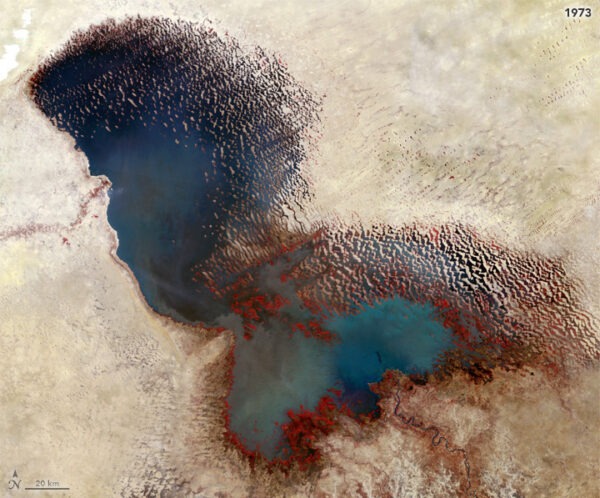
We have been told a convenient lie: climate collapse is a “natural disaster.” That is not the case. It is political, a result of decades of extracting policy tolerated under legal inertia and supported by a global system where human suffering is treated instead to be part of the collateral damage. Not nature gone mad: but law broken right in front of our eyes. When whole communities are made to disappear under floodwaters; when local economies are scoured by drought and famine; when coastlines are reconfigured as seas rise hard on top of all that comes disaster language. Disaster talk shifts attention from who is responsible for these problems onto those who suffer them. It connotes inevitability and denies any one group their power to act or redress grievances. But climate destruction is entirely non-random or impartial; rather it has an ever visible design, which is distinctly unequal in effect. Yet environmental law, particularly international humanitarian law (IHL) fractured in 1945, is unable to keep up. International humanitarian law was built for an era of total warfare. It regulates bombs; carbon is irrelevant. It controls occupation, not ocean rise. Its values are territorial and its conditions are conflicts recognized as armed violence by the parties concerned. Climate disaster by contrast has no borders or jurisdictions, is ongoing, and long drawn out yet makes no less impact for that. In the end we are left with a legal framework that may be roused from silence and wielded against missile attacks on a given country; at the same time it remains mute when whole populations are washed away into environmental destitution. This is anything but silence without consequences. It is leaving people to die. For instance think of the millions already uprooted by climate impacts from their homes. The 1951 Refugee Convention does not provide them with refugee status. They are not recognized as victims of armed conflict either. They are not even fully present within legal debate—marginalized, undefended, and invisible. The law has taxonomy for almost every type of harm or distress, except the one characterizing our century itself.
It is not a case of a gap, but a system fault. Worse still, the biggest emitters pay the smallest cost in terms of immediate impact. But it is the most vulnerable states, many of which have contributed little or nothing, that bear the heaviest burdens. This is not simply inequality. It is injustice by constitution. A system that does not attach accountability for foreseeable harm takes sides, it does not remain neutral. Global law proclaims universalism as one of its hallmarks. Yet when climate disaster approaches, it operates with blinkered eyes. It will impose legal obligations if violence is kinetic and visible; but it shrinks back, to cite a concrete example on maritime traffic management, when harm gradual lacks tangible form. It demands moderate conduct in war, but it accepts emission excesses. It acknowledges the duty to protect civilians in conflict, but it does not recognise a parallel duty to banish them by environmental destruction.
What does this say about our legal system when a bomb that immediately evicts inhabitants triggers global concern, but the rising ocean that slowly eliminates a nation does not? Half-baked truths are often cruel: international law has not fallen short because this problem is ultimately very complex. It has done so for the simpler reason that the impulse towards action, the weight of inertia due to inaction, are too weak in people who lack the power to change them. Legal regimes have responded by dividing up their responsibilities: climate agreements here, humanitarian principles there. The result is a jumble of soft obligations and deferred accountability. There is no binding system of protection for climate-induced harm as urgent human need. There is no enforceable requirement which makes high-emitting nations responsible for the humanitarian consequences of their actions. There is no mechanism that turns scientific certainty into legal duty.
Anyone who grows up in such a state can not help but believe that suffering is normal. In addition, the consequences are already visible: food is not secure because natural systems are breaking down and there’s no system for replacing their production once lost; people fight over water resources. As well, whole cultures might be eliminated by the disappearance of their homelands. But the dominant legal response today aims not at concrete protection but targets, pledges and talks.This cannot be called government; it is evasion.So if international law is to retain any claim of being legitimate, it must stand up against this failure directly.First, climate-induced migration must be considered and agreed within a legally binding framework, since it cannot be fair (for example) after the wave comes to make your state accept that all these internal refugees need solving rather than refugees from abroad. Second, the concept of Responsibility must be extended. States that do emit significantly higher levels of emissions than others should bear corresponding liabilities not as charity but as justice. Thirdly, the conceptual territory of human rights law itself has become necessary to expand, in showing that the greatest dangers to human security today are not always those brought about by weapons; at times they lie in systems. Altogether, the laws of the law must dispense with here lying neutrality. To stand neutrality in the teeth of climate breakdown is not being unbiased – it’s giving a licence.The world treating breakdown of the climate as a natural disaster is a world that refuses to look at itself. For what is collapsing is not just the climate; it is the credibility of a legal system that claims to be on mankind’s side while failing in its duty towards individual men.And a system which cannot recognise even preventable suffering for what it is, when this happens next, does not just fall short; it exposes itself by standing naked.
Fransiscus Nanga Roka
Faculty of Law Univeristy 17 August 1945 Surabaya Indonesia