Health and Lifestyle
Death at the Threshold of Life -By Kene Obiezu
Adequate provision should be made for mother and child to access quality healthcare before, during and after childbirth. Medical services during this crucial period should be made completely or at least heavily subsidized.
Families should also be properly educated about the need to access life-saving care during these crucial periods.
Reducing maternal and infant mortality to the barest minimum should be the starting point of the conversation for a country that aspires to grow.

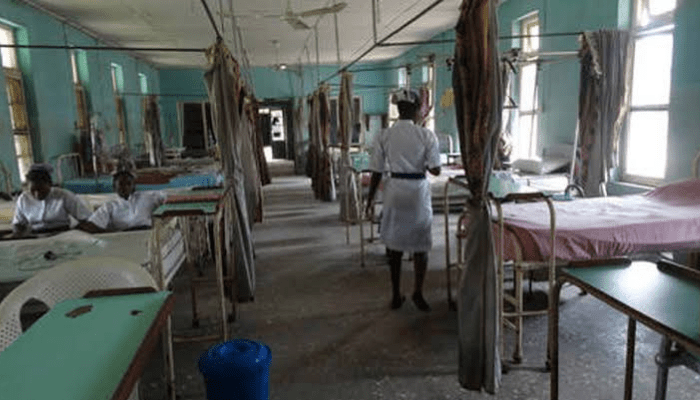
Some days ago, Nigerians were rocked by the heartbreaking story of how one Kemi Folajimi a pregnant woman died in February 2025 because her husband could not afford the sum of N500,000.00(Five Hundred Thousand Naira) upfront at a private hospital in Lagos.
They were directed to the General Hospital in Epe but the woman did not survive the journey.
The woman has gone down as one more victim in a country that is struggling badly at the moment.
As the Nigerian economy has gone into a spin, many families have been plunged into distress. For these families, which constitute the majority of Nigerians, every day is full of questions about how to settle mounting bills.
There is the question of house rent, clothing and feeding. There is also the question of medical bills, school fees, taxes, and other emergency bills that can quickly come up in a country of very few guarantees where things can change drastically and tragically.
For many families who used to be stable with steady and even multiple streams of income, new economic pressures have seen those streams dry up. For many who were barely clinging on, they have been forced to let go with the result being a plunge down the precipice of economic precarity.
Indeed, the chief reason the current crunch economic conditions are such a punch to the gut is that families have taken a direct hit. The pressure has simply been relentless.
As with every crisis that affects society, women in their role as caregivers have been most affected by the current economic crisis in Nigeria. In making their homes in these tough times, women are faced with a barrage of questions about how to make things work and how to keep the ship from breaking with meagre resources. It is taxing even the most industrious of women.
This unbearable pressure is proving especially backbreaking for women who have to bring forth new life in addition to making their homes, and being tasked with contributing to the growth and development of the society, all while remaining invisible.
For women in Nigeria, risk does not just come from the unpredictability of a society that is heavily and unjustifiably parochial, risk is also very present in childbirth.
In a country where women are made to shoulder all manner of burdens, conception, pregnancy, childbirth and post-natal period carry grave risks.
Nigeria’s healthcare system is broken. It has been broken for a while. Indeed, Nigeria’s decline as a country began when its health and education systems began to break down simultaneously.
For many poor Nigerians, and there are many, many illnesses are life-threatening, not because they are not treatable, but because medical care is either inaccessible or too expensive.
It is even worse for Nigerians in rural areas where primary healthcare centers lie in ruins. So, while those, they elect into office embark on medical tourism abroad for minor discomforts, many Nigerians die from these same discomforts.
Amidst rising cost of goods and services, how are families expected to cope? How are low-income families expected to take care of their children? In a country where social security is embarrassingly low, how are families who have no money expected to foot increasingly stratospheric bills?
Why is the government not asking serious questions about how families are resetting and juggling their priorities at a time when resources are extremely tight?
It is an unforgivable aberration that a woman who has carried a child to term should die during childbirth for any reason. It is a great anomaly that death should come at the point of childbearing.
Infant and maternal mortality is not just any kind of mortality, it is the worst kind of mortality. It is a mortality that indicts entire countries.
Adequate provision should be made for mother and child to access quality healthcare before, during and after childbirth. Medical services during this crucial period should be made completely or at least heavily subsidized.
Families should also be properly educated about the need to access life-saving care during these crucial periods.
Reducing maternal and infant mortality to the barest minimum should be the starting point of the conversation for a country that aspires to grow.
Nigeria cannot develop if the basic provisions that underpin any developed country continues remains criminally absent.
Kene Obiezu,
keneobiezu@gmail.com