My friend Adaora, a schoolteacher with hands calloused from grading papers and scrubbing floors, arrived here one sweltering morning with her son Emeka. The boy, just ten, had a laugh that could drown out the city’s noise. But now his smile was gone, replaced by a wince as he clutched his abdomen. “Appendicitis,” the doctor said. “Surgery. Tomorrow.”
The surgeon’s office was a closet-sized room with a flickering bulb. He handed Adaora a list: MRI scan, blood panels, surgical blades, gloves, syringes, antiseptics. “Buy everything,” he said flatly. “Our machines haven’t worked in months.”
We stared at the paper. “The hospital doesn’t have gloves?” I hissed. Adaora shook her head. “This is Nigeria. Even miracles require a bribe.”
We became scavengers. The MRI was done at a clinic five minutes away, its walls plastered with ads for prenatal vitamins and cheap data plans. The technician smirked as he took Adaora’s cash. “You’re lucky we’re here,” he said. “The teaching hospital’s MRI died last year. The government promised a new one, but…” He shrugged. “Na who dey alive go celebrate Christmas?”
Pharmacies picked us clean. A packet of gloves cost ₦5,000—more than Adaora earned in two days. Syringes were sold singly, like sweets. “Why not steal?” I muttered, sweating under the Lagos sun. She glared. “This is for Emeka. We do it right.”
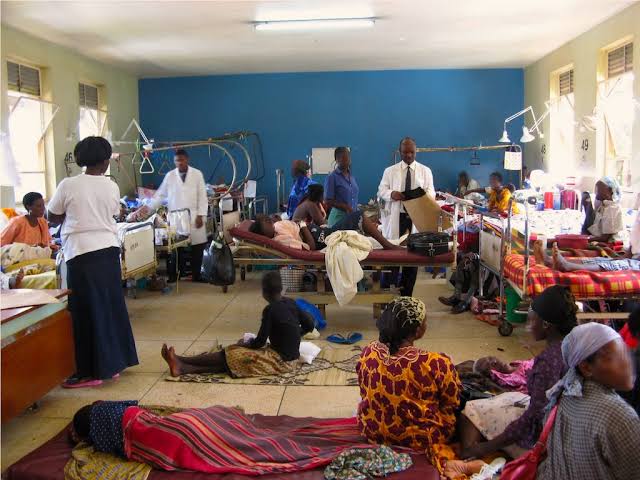
The hospital ward was a crypt. Fluorescent lights buzzed like angry flies. Beds lined the room, separated by moth-eaten curtains. Emeka’s bed had no pillow. The mattress bore stains the color of old nightmares.
A nurse tossed Adaora a bucket and a rag. “Clean it yourself,” she said. “The cleaners… well.” Her voice trailed off. We understood. The cleaners hadn’t been paid in months. They’d vanished, like the hospital’s dignity.
Adaora knelt. She scrubbed the bed frame, the walls, the floor, her prayers merging with the squeak of wet cloth. I fetched water from a bathroom down the hall—a room reeking of ammonia, its sink choked with cobwebs. When I returned, she was scraping black mold from the window sill. “This is how infections spread,” she muttered. “This is how people die.”
Families of other patients drifted in, bearing buckets of their own. A gaunt man in a threadbare shirt mopped near his wife’s bed; a teenage girl wiped flies from her baby brother’s face. No one spoke. The rhythm of scrubbing became our shared language.
That night, I cornered a young doctor smoking outside. “Why does it have to be like this?” I demanded.
He inhaled deeply. “You think we like it? We beg for supplies. We reuse sutures. Last month, a man died because we ran out of oxygen.” His voice cracked. “We’re trained to save lives, not to… to dig graves.”
He flicked his cigarette into the dark. “But your friend’s son? We’ll fight for him. We always do.”
Emeka trembled as Adaora stroked his hair. “Will it hurt, Mama?”
She forced a smile. “You’ll sleep. And when you wake up, I’ll buy you suya and Fanta.”
But when he drifted off, she collapsed in the hallway, screaming into her fists. “Why? Why must I choose between a surgeon’s fee and rent? Why must I clean the filth that could kill him?”
I held her as the hospital groaned around us—a symphony of coughing, weeping, and the hum of a lone generator fighting to keep the lights on.
Dawn came, pale and clammy. The surgeons arrived—three of them, their scrubs thin from too many washes. They wheeled Emeka away, his small hand clinging to Adaora’s until the doors swallowed him.
We waited. Hours dripped by like IV fluid. A woman across the hall wailed as a sheet was pulled over her husband’s face. A newborn’s cry pierced the air, sharp with life.
Finally, the head surgeon emerged, his mask dangling like a broken promise. “He’s okay,” he said.
Adaora sank to her knees, sobbing. The doctor hesitated, then added, “Your supplies… the gloves… they made the difference.” His shame hung thick in the air. A doctor thanking a mother for buying gloves.
Recovery was a battle. Emeka’s incision oozed. “Infection,” the nurses warned. Adaora bought antibiotics from a “pharmacy” in a roadside kiosk, praying they weren’t counterfeit. She cleaned his wound with vodka when antiseptics ran out.
The ward never slept. Rats scurried under beds. Power outages plunged us into darkness, and the generators, when they coughed to life, sounded like dying men. One night, an elderly patient gasped for breath, his family screaming for a ventilator that didn’t exist. He died before the nurses arrived.
I began to notice the staff’s quiet rebellions. A nurse smuggled in clean bandages from her cousin’s clinic. A janitor (who hadn’t been paid in weeks) still mopped the ICU, muttering, “God will reward me.” The surgeons pooled money to buy child painkillers.
“Why stay?” I asked the young doctor.
He smiled bitterly. “If we leave, who’s left?”
On discharge day, Adaora scrubbed the ward one final time. A new mother watched, her baby swaddled in Ankara fabric. “Thank you,” she whispered.
As we left, I glanced back. The walls were still peeled. The floors are still cracked. But for a moment, the ward gleaned—not from bleach, but from the stubborn love of those who refused to let darkness win.
Epilogue: The Laughter
Emeka’s laughter returned first—a sound so bright it seemed to startle the roaches scuttling into shadows. Adaora sold her jewelry to settle the bills. We never spoke of the cost.
Driving home, we passed the teaching hospital. Its gates still sagged. Its sign still lied. But I thought of the surgeon’s trembling hands, the nurse’s stolen bandages, the janitor’s unpaid labor.
Nigeria’s healthcare system is a corpse picked clean by vultures. But it’s people? They are alchemists, spinning despair into hope, one scalpel, one scrub rag, one defiant laugh at a time.
And in that truth, there is a glimmer of light—enough to keep scrubbing—May Nigeria win!




























You must be logged in to post a comment Login