Forgotten Dairies
Debate and Dialogue in Interfaith Relations -By Leo Igwe
Debate and dialogue are existential imperatives. Humans need wisdom in exercising these necessities. While humans must debate and dialogue in interfaith relations, they only need to decide when to do what: when to debate and challenge, and when to dialogue and cooperate for peaceful coexistence of all.

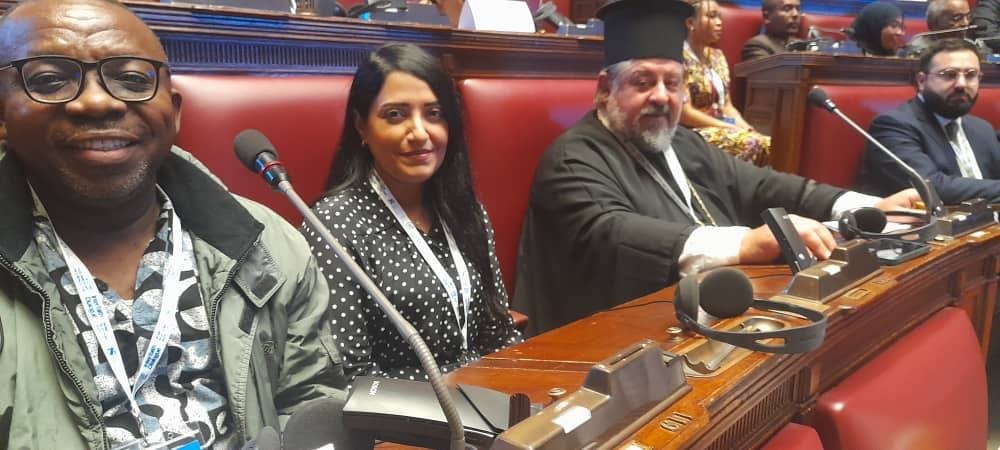
The Interparliamentary Union(IPU) conference on interfaith dialogue recently concluded in Rome, featuring a visit to the Vatican and an audience with Pope Leo XIV. I attended the event. For two days, parliamentarians and other delegates from over sixty countries met and discussed ways to strengthen trust and forge a common future for humanity. They exchanged views on how to deploy parliamentary diplomacy in promoting interfaith dialogue and peace worldwide. At various moments during the event, participants referred to the war in the Middle East, and the need for dialogue in resolving other conflicts linked to faith/belief. It was inspiring to see representatives of different faiths and beliefs, participants from Jewish, Christian, Muslim, Bahai, Sikh, Buddhist, and Humanist communities meet in one room. I represented Humanists International, the umbrella group of humanists, atheists, and agnostics worldwide.
It was gratifying to meet and interact with representatives of various faiths and to witness firsthand how dialogue can bring together faith groups that often debate, disagree and fight each other. It was pleasant to confer with belief communities that proffer opposing and conflicting cosmologies. The interfaith conference was an enriching experience; it caused me to ponder and reflect on the place of debate and dialogue in interfaith/belief relations.
In human relations, debate and dialogue are necessary. They constitute pillars of human intelligence, interaction, and wisdom. These facilities of exchange and conversations are critical to the growth and nourishment of people both individually and collectively. Debate and dialogue are like Siamese twins. They are ‘inseparable’ in human pursuits and undertakings. Debate and dialogue go together and help humanity renew, recreate, and reproduce. Culture, politics, science, religions, philosophies, technologies, and art are products of debate and dialogue. Civilizations are grounded, inspired, and driven by debates and dialogues.
In debates, humans argue, oppose, and try to win or win over others. Humans compete and contest other truth and knowledge claims. Debates highlight shortcomings, limitations, faults, and gaps in other views and positions. In debates, humans challenge claims and try to prove a point or their points. People demonstrate the superiority of their arguments, ideas, positions, and perspectives. In debates, humans persuade or are persuaded. Debaters try to prove each other wrong. Debate is the springboard of knowledge, and discovery, invention and innovation, truth and excellence.
But dialogue elicits different sentiments. It entails a different disposition and comportment. In dialogue, humans present and communicate views to understand each other’s position. Dialogue is collaborative. Humans work together despite their differences. They try to appreciate and acknowledge what is good, and common, what is right and true in others’ positions and opinions. Dialogue is an acknowledgment that nobody knows it all, and there is some value and validity in every position and proposition.
Dialogue compels humans to tolerate others, and accommodate different views and opinions. It opens the mind to other truths, and liberates humans from suffocating dogmas and orthodoxies. Dialogue nudges human beings to transcend their differences, and realize that humans have more in common, more that unite than divide them. That compulsion was evident during the sessions at the IPU event in Rome. Despite differences in faith and belief, participants sat together and ate together. Attendees mingled, shared jokes, worries, and laughter.
For instance, during the plenaries, representatives of faith/belief communities sat at the section of the hall meant for ‘religious’ leaders. One of the participants took note of this and asked me: So you have become a religious leader?” We all laughed. He took a photo of me and left. At various times, I sat or conversed with representatives of the Bahai, Sikh, Muslim, Christian, and church of Scientology communities. A UN representative told me that she found it interesting that at some point I was sitting with an Imam from Iran. (I also sat with an Alexandrian Coptic bishop for Mozambique and Zambia). Her face lit up when she saw me at breakfast the following day getting ready to join others going to see the pope. “Are you also going to see the pope?”, she asked me while beaming with smiles. I replied yes. She said, ok, while nodding her head. I said jokingly to her: “Look, I share the same name with the Pope”. She responded, “I did not ask you why”. We all laughed. In matters of faith/belief, humans must learn disagree without being disagreeable.
Dialogues do not preclude debates. Debates are not antithetical to dialogues. Faiths and beliefs are too important to humans in their everyday lives to leave them undebated, undiscussed, unexamined, and yes unchallenged. It is a laudable idea and duty to criticize and question other faiths and beliefs. However, the conference on interfaith dialogue reminds us of what matters at the end of the day. That whether we win or lose the debate, whether we think others are right or wrong; whether we consider other faiths or beliefs as totally or partially true or false, sensible or nonsensical, fact or fiction, human beings are one people, and one humanity.
Debate and dialogue are existential imperatives. Humans need wisdom in exercising these necessities. While humans must debate and dialogue in interfaith relations, they only need to decide when to do what: when to debate and challenge, and when to dialogue and cooperate for peaceful coexistence of all.
Leo Igwe sent in this piece from Rome, Italy.