Forgotten Dairies
El-Rufai: From Governor to Political Blogger -By Ammar M. Rajab
El-Rufai’s new role as a blogger is ironic, given his history of suppressing free speech. While he once used state power to silence critics, he now finds himself in the position of an outsider trying to shape the political narrative from the sidelines. His reinvention exposes the hypocrisy of Nigerian politics, where yesterday’s oppressor can suddenly claim to be a champion of democracy.

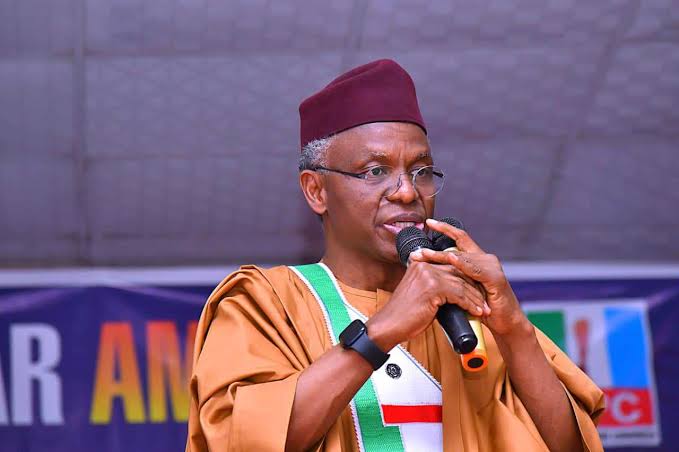
Nasir El-Rufai, the former governor of Kaduna State, once stood as a powerful force in Nigerian politics, known for his brash rhetoric and authoritarian style. From 2015 to 2023, he ruled Kaduna with an iron grip, silencing opposition, deepening ethnic and religious divides, and implementing policies that many deemed inhumane. However, after being denied a ministerial position in President Bola Ahmed Tinubu’s administration, El-Rufai has reinvented himself as a political blogger—an ironic twist for a man who once crushed dissent with ruthless efficiency.
El-Rufai’s fall from grace was swift. Initially nominated as a minister in Tinubu’s cabinet, his confirmation was stalled by the Senate over alleged security concerns. For someone who once saw himself as a kingmaker in Nigerian politics, this rejection was a bitter pill to swallow. Stripped of formal power, El-Rufai has turned to online spaces, using social media and public discourse to critique the very system he once dominated. His new role as a political commentator reveals an uncomfortable truth: a man who once silenced opposition now seeks to be heard.
El-Rufai’s tenure as Kaduna governor was marked by heavy-handed policies that disproportionately targeted groups and individuals who opposed his rule. One of his most infamous acts was his brutal suppression of the Islamic Movement in Nigeria under Sheikh Ibraheem Zakzaky. In December 2015, hundreds of Islamic movement activists were massacred in Zaria by the Nigerian military. Rather than seeking justice, El-Rufai went a step further by banning the movement, and demolishing its properties.
Southern Kaduna, a region predominantly populated by ethnic and religious minorities, also suffered immensely under his watch. Communities faced relentless attacks from armed militias, with thousands killed and many more displaced. Instead of acting decisively to protect lives, El-Rufai dismissed the crisis with inflammatory remarks and policies that further alienated the victims. His controversial statement that he had “paid off Fulani herdsmen” to prevent reprisals was met with outrage, as violence in the region continued unchecked.
El-Rufai’s intolerance extended beyond ethnic and religious groups to activists, journalists, and politicians who dared to challenge his authority. A notable case was that of Kaduna-based journalist and activist Luka Binniyat, who was arrested and jailed for exposing attacks on Southern Kaduna communities. His crime? Writing an article that criticised the government’s handling of the security crisis.
Similarly, former federal lawmaker Shehu Sani, once an ally of El-Rufai, became one of his fiercest critics and suffered relentless persecution. Sani accused El-Rufai of using state resources to harass and intimidate opposition figures, ensuring that only his loyalists could thrive in Kaduna politics. Many other activists, students, and union leaders faced arbitrary arrests and threats simply for expressing dissenting views.
Now that he is out of power, El-Rufai has rebranded himself as an online commentator, offering political insights and critiques. But this sudden shift raises an important question: Is he truly committed to democratic ideals, or is he simply a bitter politician struggling to stay relevant? His online presence, marked by subtle attacks on the Tinubu administration, suggests the latter.
El-Rufai’s new role as a blogger is ironic, given his history of suppressing free speech. While he once used state power to silence critics, he now finds himself in the position of an outsider trying to shape the political narrative from the sidelines. His reinvention exposes the hypocrisy of Nigerian politics, where yesterday’s oppressor can suddenly claim to be a champion of democracy.
Nasir El-Rufai’s transition from a feared governor to an online political commentator is a classic case of political karma. While he once crushed opposition with impunity, today he struggles to find relevance outside the corridors of power. If El-Rufai truly seeks to be taken seriously in his new role, he must first acknowledge the injustices of his past. Until then, his blogging remains a desperate attempt to stay politically relevant in a country that has not forgotten his legacy of repression.

Continue Reading