
Forgotten Dairies
Gowon and the Asaba Massacre -By Pius Mordi
At the 50th anniversary forum, Soyinka and Kukah lamented the slaughter. “The Asaba massacre was a black spot in Nigeria’s history”, the clergy man stated. But Soyinka was more unequivocal. “The Asaba massacre was a crime against humanity and there should be recompense, then Nigeria can move on”, the Nobel Laurette said. Some of the principal actors in the killing spree were invited to the anniversary, but they failed to show up. To them, it is a non-issue not worth revisiting or for them to offer any apology.

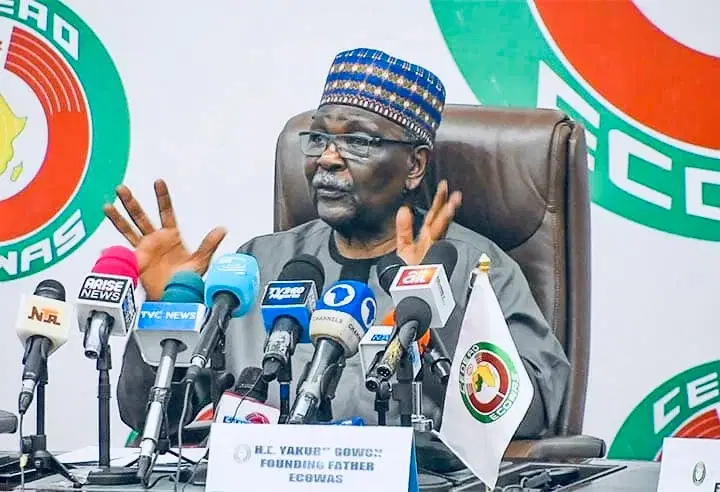
I have not read General Yakubu Gowon’s book. So, I cannot comment on it. Having been touted as his version of the events that defined the civil war, it should have something to say about an incident that happened outside the then territory of Biafra.
On October 6, 2017, the people of Asaba held a public forum to mark 50 years of what is known as the Asaba Massacre. Many prominent Nigerians were there at the Grand Hotel venue, including Nobel Laurette, Professor Wole Soyinka and Bishop Matthew Hassan Kukah, bishop of Sokoto Catholic Diocese.
In October 1967, federal troops entered Asaba, a bustling town on the western bank of River Niger and capital city of today’s Delta State, in pursuit of retreating Biafran soldiers who had left the town earlier and blown up the bridge linking the town with Onitsha and the east.
An egalitarian and enlightened community, the people gathered in the Ogbeosowe Square on October 5 to welcome the federal troops.
Dressed gaily in the customary “Akwaocha”, a traditional fabric made of white wool and reserved for special occasions, they sang “One Nigeria”, leaving no one in doubt of where their loyalty laid. Like the rest of today’s Anioma nation, they are Igbo but were not part of the Biafran venture. They are Nigerians and proudly so. One of their sons, Chief Philip Asiodu, was one of the prominent office holders in the Nigerian civil service at the time. He later became one of the super permanent secretaries.
Thousands of men and women were at the square to welcome the troops. Somehow, their commanders thought otherwise and separated the men from the women and children. The men were isolated and summarily slaughtered by the federal soldiers. From October 5-7, those not caught up in the initial killings were smoked out and slaughtered. At the end of the spree, more than 1,000 men had been killed.
News of the atrocity was suppressed by the Nigerian government with the complicity of Britain. And for good reasons. It was an atrocious war crime, the type that had not been seen previously in Africa. Even though the Nigerian government carried on as if the killing was a legitimate military exercise and refused to acknowledge the crime ever since, just as the perpetrators have bluntly refused to acknowledge their crime, the people of Asaba have not forgotten. During the October 6, 2017 50th anniversary, witnesses and survivors spoke about the collective trauma of the people, but not with bitterness. They have been healing since then, a process that could have been made wholesome if the Nigerian government and the commanders who ordered the soldiers to slaughter unarmed civilians who believed in Nigeria had offered soothing words. Their crime was that they are Igbo. What the people who spoke at the forum sought to explain was the long afterlife of trauma, the reconstruction of memory and how it intersects with justice, and the task of reconciliation in a nation where a legacy of ethnic suspicion continues to reverberate.
Having not read Gowon’s “My Life of Duty and Allegiance”, I don’t know if he considered the Asaba Massacre a subject worthy of attention in his 880-page book. But it was and still is. If the civil war had happened in modern times, charges of war crime would have cropped up as was the case following the Rwanda genocide. Late Emma Okocha’s book, “Blood on the Niger” graphically captured federal soldiers’ atrocities in Asaba.
At the 50th anniversary forum, Soyinka and Kukah lamented the slaughter. “The Asaba massacre was a black spot in Nigeria’s history”, the clergy man stated. But Soyinka was more unequivocal. “The Asaba massacre was a crime against humanity and there should be recompense, then Nigeria can move on”, the Nobel Laurette said. Some of the principal actors in the killing spree were invited to the anniversary, but they failed to show up. To them, it is a non-issue not worth revisiting or for them to offer any apology.
I have read some reactions to Gowon’s book leaving the impression that his version of how the country went into a fractricidal war perhaps less than altruistic. Gowon’s book, whatever the reactions it may attract, is good historical treasure. If Odumegwu Ojukwu had written the book he had earlier promised before he joined his ancestors, there could have been a countervailing version to place Gowon’s book. Despite the failure of Ojukwu to write what he called The Book, the story of the lead up to the war, how it was prosecuted, and the day after the cessation of hostilities are on the public domain.
A reference by Gowon in his book to the atrocities committed in Asaba by federal troops would have been a healing balm. Did he? Soyinka posed a question: “What about those who gave the order, those who pulled the trigger? We should also ask, where is restitution? It is immoral to expect a people to pretend a tragic part of their history did not happen”. At N75,000 said to be the price of the paperback version of the book, I may not be able to buy one. At least not now. As the saying goes now, ‘ebin pa wa’ (hunger is killing us).


















You must be logged in to post a comment Login