Africa
Electric Vehicles in Nigeria: Hype or Hope? -By Babatunde Yusuf
But if Nigeria is to make the shift, the conversation must move from symbolism to substance. Pilot programs are not enough. The FG and state governments must fund charging infrastructure, offer import duty waivers on EV components, and build technical capacity for EV maintenance and assembly. This requires coordinated action across energy, transport, and industrial sectors.

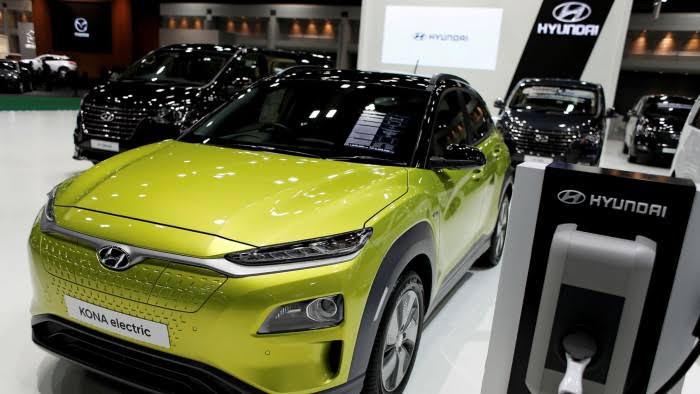
Over the past few years, electric vehicles (EVs) have taken the global auto industry by storm. In 2023 alone, over 14 million EVs were sold worldwide which accounts for nearly 18% of total car sales, according to the International Energy Agency (IEA). From America to China to many advanced countries ANF even some African countries, governments have been rolling out policies to phase out internal combustion engines and promote cleaner alternatives. But in Nigeria, the conversation around EVs remains muted and this calls for serious concerns.
Unlike other serious countries, our journey towards EVs adoption has barely begun. Although companies like Jet Motors and Stallion Group have introduced electric buses and sedans but they’re not getting enough support which makes their market presence unyielding. Since EVs are programmed around charging, the charging infrastructure is also nearly non-existent. A 2022 report by the Nigerian Energy Support Programme showed that there are fewer than 10 public charging stations in the entire country, mostly concentrated in Lagos and Abuja. Imagine that for a country of over 220million population, obviously that’s not enough to inspire consumer confidence.
The economic argument for EVs is also challenging in Nigeria’s context. The average EV costs significantly more than the typical tokunbo (used) petrol car. Even with lower running costs, the upfront price is a barrier for most Nigerians. When over 60% of Nigerians live below the poverty line, and the average new car sells for over ₦15 million, the notion of buying an electric vehicle becomes implausible for the majority.
Then there’s the issue of electricity itself. Nigeria suffers from chronic power shortages, with national grid electricity barely reaching 5,000MW for a population of over 220 million. National grid collapse, frequent blackouts and unreliable supply make the idea of charging a vehicle at home seem far-fetched. Unless grid stability improves significantly, large-scale EV usage is not feasible.However, there are glimmers of hope. Nigeria has some of the largest lithium deposits in Africa key raw material for EV batteries. If properly harnessed, this could offer a strategic entry point into the EV supply chain. Countries like Zimbabwe and the Democratic Republic of Congo are already leveraging their mineral wealth to attract battery manufacturers. If the FG and state governments do not act swiftly, Nigeria risks missing out if it doesn’t act fast.
Moreover, the federal government did announce in 2021 the National Automotive Industry Development Plan (NAIDP) 2021–2031, which includes incentives for EV manufacturing. But implementation has been slow. There is no clear roadmap, no dedicated EV policy framework, and no tax incentives for EV buyers or assemblers. Without these, private players have little motivation to invest. As for the environmental argument for EVs, well, that is compelling. Nigeria’s major cities like Lagos, Port Harcourt, Kano suffer from rising air pollution, much of it from vehicle emissions. According to the World Health Organization, Lagos alone records PM2.5 levels nearly seven times higher than recommended. Reducing fossil fuel vehicles could help improve urban air quality and public health, especially among low-income communities who live close to roads and traffic hubs.
But if Nigeria is to make the shift, the conversation must move from symbolism to substance. Pilot programs are not enough. The FG and state governments must fund charging infrastructure, offer import duty waivers on EV components, and build technical capacity for EV maintenance and assembly. This requires coordinated action across energy, transport, and industrial sectors.
Babatunde Yusuf is the CEO of Mapleby Autos and can be reached via maplebyautos@gmail.com